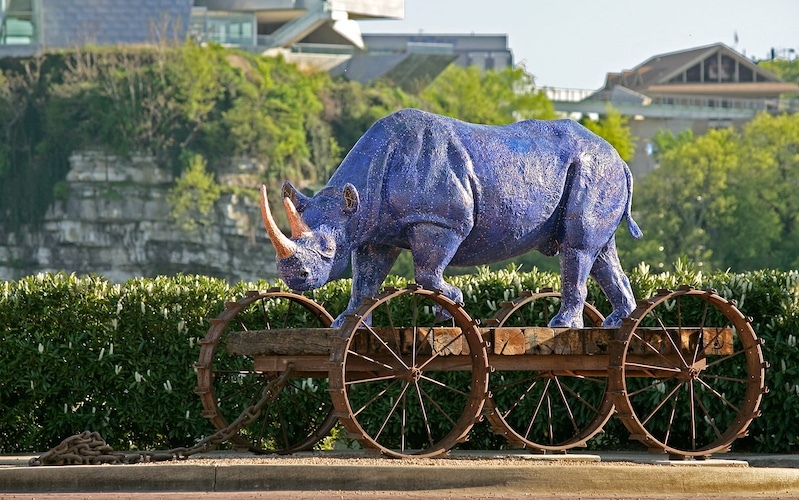
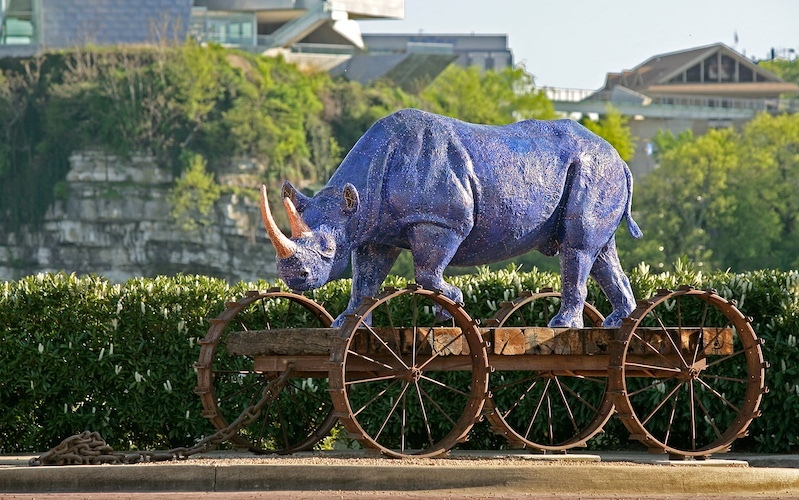
 Rhino Pull Toy/Blue Boy Pull Toy #1 by John Petrey. Photo courtesy of the City of Chattanooga's public art program
The ribbon cutting is over. The artist has gone home. The photos have been taken, and the new artwork has officially joined your community.
Now comes the part of public art management that lasts for decades: taking care of it.
As public art collections grow, so do the responsibilities that come with them. Artwork needs to be inspected and maintained. Artist contracts and fabrication details need to remain accessible. Values change. Staff members leave. Buildings and neighborhoods evolve. And new artworks continue to enter the collection.
For public art programs working with limited staff, budgets, and time, long-term stewardship requires more than responding to problems as they arise.
In our webinar, Public Art Beyond Installation: Managing a Growing Collection for the Long Term, we spoke with Austin Center, Public Art Collections Specialist for the City of Chattanooga, about how his team manages a collection of more than 200 public artworks.
When Austin stepped into his role, information about the collection lived across multiple spreadsheets, physical and digital files, insurance records, and years of institutional knowledge. His first task was understanding what the city actually had.
The lessons from Chattanooga offer a useful roadmap for any organization responsible for public art.
1. Start With a Physical Inventory of Your Public Art Collection
If your collection information is spread across spreadsheets and folders, it can be tempting to begin by cleaning up the data.
But before you reorganize the records, verify the collection itself.
When Austin began taking inventory of Chattanooga’s public art, he started with the city’s insurance spreadsheet and compared it against several other lists he found. Then he went out and physically looked at the artworks.
His goal was simple: put eyes on every piece.
That process helped confirm whether an artwork was still where the records said it was, provided an initial look at its condition, and revealed just how much public art existed across the city.
In fact, the inventory process continued to uncover artworks later. While developing content for Black History Month, Austin learned that community centers contained murals that weren’t represented in the collection records.
Best practice: Treat an existing spreadsheet as a starting point, not necessarily the source of truth. Verify locations, compare records across departments, and physically inventory the collection when possible.
For municipal collections, insurance and asset-management records can also provide valuable sources to cross-check against your own inventory.
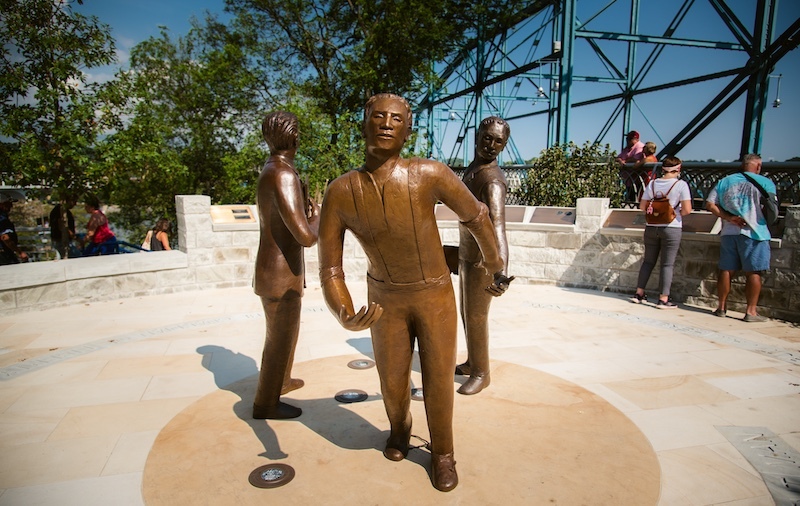 Ed Johnson Memorial by Jerome B. Meadows. Photo courtesy of the City of Chattanooga's public art program
2. Build a Complete Record for Every Public Artwork
Knowing an artwork’s title, artist, and location is only part of managing it.
Years after installation, you may need to know what materials were used, who fabricated a component, what the artist agreed to, how the work should be maintained, or what rights and responsibilities were established when it entered the collection.
For Chattanooga, one of the first priorities was locating and digitizing artist contracts and donation agreements. The city also had conservation reports for many artworks, which became another important part of the record.
Photographs, contracts, conservation reports, fabrication information, appraisals, invoices, and other documentation create a history that future staff can use to make informed decisions.
That history becomes especially important when something goes wrong.
Austin shared an example of an artwork that eventually needed to be sandblasted and repainted. Because the work was documented, he could look back at what had been done, including the contractor involved.
Best practice: Think beyond what you need to know about an artwork today. Preserve the documentation someone may need five, ten, or 30 years from now.
At a minimum, consider keeping:
- Artist and fabricator contact information
- Contracts and donation agreements
- Materials and fabrication details
- Installation documentation
- Photographs
- Condition and conservation reports
- Maintenance instructions and history
- Contractor quotes and invoices
- Purchase, insurance, replacement, and appraisal values
3. Keep Public Art Maintenance Records With the Artwork
A maintenance record shouldn't disappear into a facilities folder after the work is complete.
For every intervention, document what happened, when it happened, who did the work, what it cost, and any supporting reports, quotes, or photographs.
Chattanooga uses Artwork Archive to create maintenance records tied directly to individual artworks. That allows Austin to see the history of a work over time while also looking across the entire collection.
This creates a valuable feedback loop. Instead of simply knowing that an artwork needs work today, staff can see what has already been done and how much has been invested in it.
The data can also support budgeting. Austin demonstrated how Chattanooga can look at maintenance expenses over a particular period and use that history to help project future needs.
Best practice: Treat every maintenance project as collection data. Recording costs, contractors, dates, treatments, and supporting documentation creates a history that can inform both future conservation decisions and future budgets.
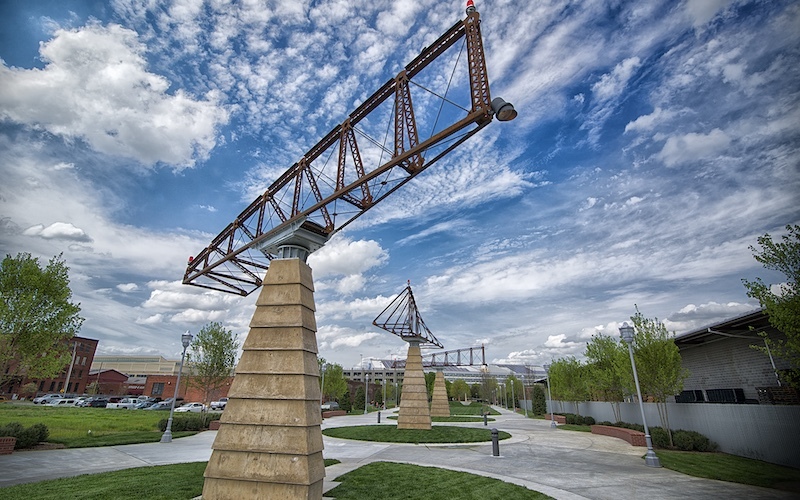 The Main Terrain by Thomas Sayre. Photo courtesy of the City of Chattanooga's public art program.
4. Create a Framework for Prioritizing Public Art Maintenance
Every artwork may need care, but most public art programs don't have the resources to address everything at once.
That means stewardship requires prioritization.
Chattanooga developed a hierarchy to help determine where limited maintenance dollars should go. Among the factors Austin considers are:
Historical significance. Is the artwork connected to an important person, event, or part of the community’s history?
Financial value. What is the purchase, insurance, or replacement value of the work?
Civic significance. Is it a monumental or highly visible artwork that people strongly associate with the city?
Those considerations are then weighed alongside the artwork’s condition, age, maintenance needs, and the resources required to care for it.
The goal isn't to declare some artworks worthy of care and others unworthy. It is to create a defensible way to make difficult decisions when resources are finite.
Best practice: Establish criteria for prioritizing maintenance before an urgent situation forces the decision. A consistent framework can help staff explain why certain projects need attention first and advocate for funding with evidence behind the request.
5. Plan for the Long-Term Care of Public Art From the Start
Some of the best maintenance decisions happen before there is anything to maintain.
Austin shared how his role has increasingly become part of conversations about new commissions because choices made during fabrication can determine what happens five, ten, or 15 years later.
Materials, coatings, placement, fabrication methods, and environmental exposure all affect the long-term cost of stewardship.
In one Chattanooga example, an artwork eventually had to be sandblasted and repainted. Looking back, Austin noted that involving someone with knowledge of materials earlier in the commissioning process could have led to a more durable paint choice and reduced future maintenance.
Chattanooga has also built maintenance funding into newer commissions, setting aside 10% of a project’s price for a shared maintenance fund.
Donations can create the same stewardship challenge. A free artwork is not necessarily free to own. Installation, insurance, inspections, conservation, and eventual treatment all carry costs. Chattanooga asks for maintenance funding as part of its donation process as well.
Best practice: Include long-term stewardship in commissioning and acquisition conversations from the beginning. Ask not only, “What will it cost to create this artwork?” but “What will it take to responsibly care for it?”
6. Know When to Consider Deaccessioning Public Art
Long-term stewardship also means recognizing when keeping an artwork in the collection may no longer be feasible.
For Chattanooga, safety comes first. If an artwork poses a risk to the public, it requires immediate attention.
Beyond safety, Austin described other factors that can trigger a larger conversation: the cost of repair compared with the work’s value, changes to the site surrounding the artwork, new building or engineering codes, and whether an artwork can reasonably be relocated or restored.
For example, an older work may have been fabricated under codes that no longer apply. Repairing or rebuilding it could require new engineering, architectural drawings, or construction that effectively turns the treatment into an entirely new project.
These decisions shouldn't happen informally. They should be guided by an established deaccession policy, applicable laws and artists' rights, and communication with the artist when possible.
Best practice: Create a deaccession policy before you need one. Establish how your organization will evaluate safety, condition, maintenance costs, site changes, significance, legal obligations, and artist rights so difficult decisions follow a consistent process.
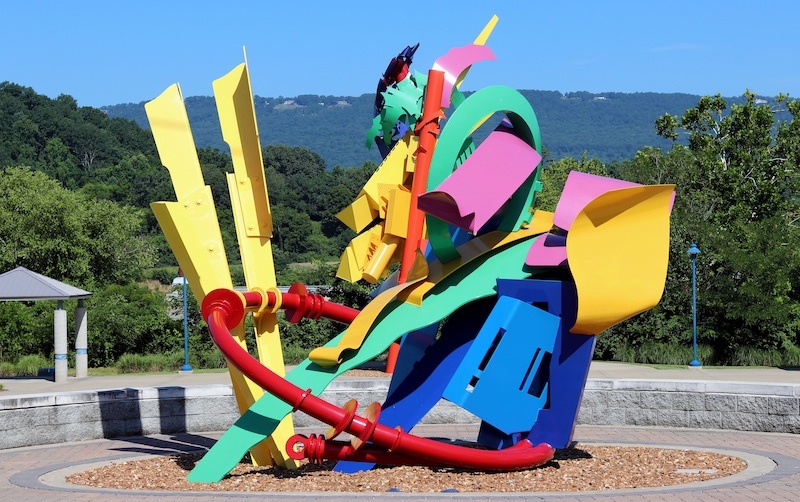 Resurgence II by Albert Paley. Photo courtesy of the City of Chattanooga's public art program
7. Organize Your Public Art Collection Around Real Workflows
A collection management system shouldn't just replicate the structure of an old spreadsheet.
Think about the questions you regularly need to answer.
Which artworks are on parks property? Which are bronze? Which need a particular type of maintenance? Which are located in the arts district? Which works are in storage? Which are being considered for deaccession?
Chattanooga groups artworks in ways that support real workflows.
When Austin needed a contractor to clean and wax bronze sculptures, he could pull together the bronze works as a group and share locations, images, and needs rather than requesting quotes one artwork at a time.
Artworks on parks property can be grouped for coordination with the parks maintenance team. Works in Chattanooga's arts district can become the foundation of a walking tour.
The same collection data can serve many purposes when it is structured well.
Best practice: Don't organize records only for cataloging. Create categories and groupings that reflect maintenance responsibilities, geography, materials, departments, programs, public engagement, and other ways your team actually uses the information.
8. Protect Public Art Records From Staff Turnover
Public artworks can remain in place for generations. The people managing them won't.
That makes institutional knowledge a collection stewardship issue.
Austin encountered files tied to email addresses belonging to former staff members and contractors. Some information was difficult or impossible to access years later. Even something as simple as an intern creating a spreadsheet can become a problem if the file remains connected only to that person's account.
And the risk isn't limited to files. Knowledge about why a decision was made, which contractor performed a repair, or how a material should be treated can disappear when the person who knows the answer leaves.
Centralizing that information creates continuity.
The next person shouldn't have to reconstruct the collection from old spreadsheets, inboxes, folders, and memories.
Best practice: Build your systems for the person who will have your job next. Store collection records, documents, maintenance history, contacts, and decisions in an organizational system rather than relying on individual accounts or institutional memory.
Better artwork records create more possibilities
Centralizing collection information isn't only about making administration easier.
Once Chattanooga had reliable information in one place, the team could use it in new ways.
They could pull artist and artwork details for new interpretive signage—and identify missing information while doing so. They could create walking tours using artworks grouped by neighborhood. They could quickly answer questions about maintenance costs during meetings.
They could also begin asking bigger questions about the collection itself.
Who are the local artists represented? How many works are by women or artists of color? Where are there gaps? How can the collection's data support grants, education, public programming, or a better understanding of Chattanooga's cultural history?
The information collected for stewardship becomes the foundation for telling the story of the collection.
And that's ultimately what long-term public art management is about.
The work doesn't end when an artwork is installed. Installation begins a relationship between an artwork, an organization, and a community that may last for decades.
The better you document that relationship today, the better equipped your organization will be to care for it tomorrow.
Watch the Webinar: Public Art Beyond Installation
Want to hear how these strategies work in practice?
Watch Public Art Beyond Installation: Managing a Growing Collection for the Long Term to hear Austin Center, Public Art Collections Specialist for the City of Chattanooga, share how his team manages more than 200 public artworks—from inventory and maintenance planning to deaccessioning, public engagement, and preserving institutional knowledge.
You'll also see how Chattanooga uses Artwork Archive to centralize collection information, track maintenance and costs, organize artworks around real-world workflows, and make that information easier to use across the city.


