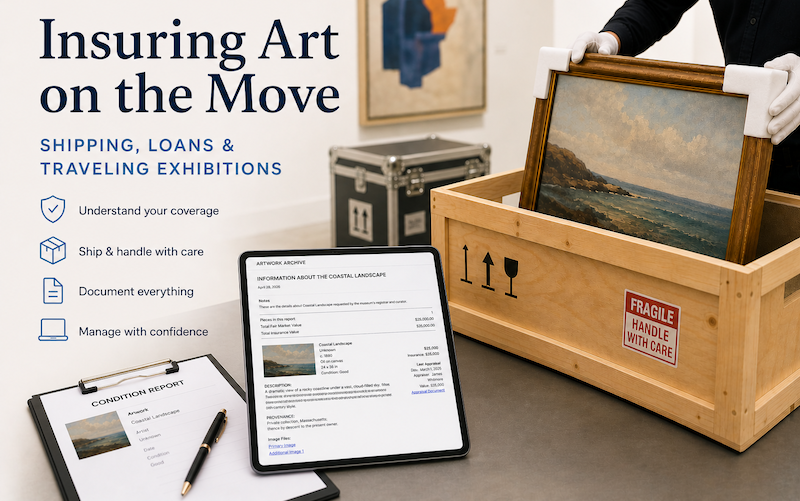
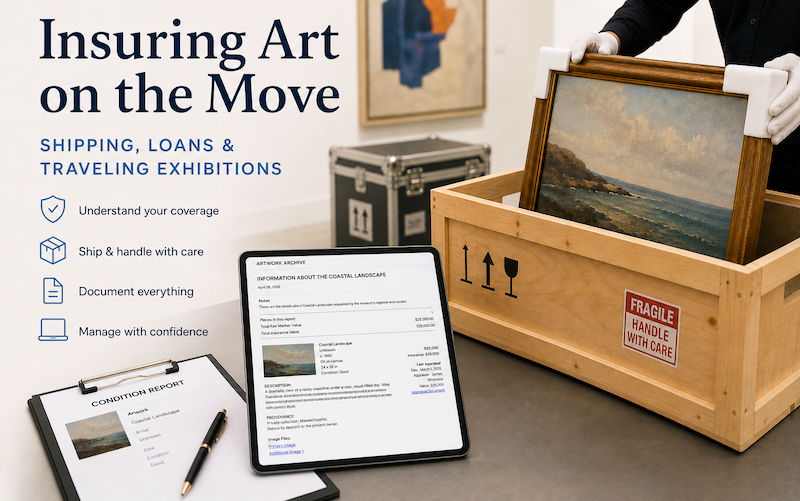
Art doesn’t stay put, and neither do the risks. In fact, loss during transit is the leading cause of fine art insurance claims.
Whether you’re sending a painting across town for framing, coordinating a traveling exhibition, or lending works to another institution, every move introduces the possibility of damage, theft, or loss. And while these risks are well known, what’s often less understood is how to properly prepare for them and what to do if something goes wrong.
In a recent webinar with insurance expert Adrienne Reid of Huntington T. Block, we explored how collectors, galleries, and institutions can better protect their artwork in transit. The takeaway was clear: successful risk management isn’t just about having insurance, it’s about preparation, documentation, and coordination.
Below, we break down the key lessons and practical steps to help you safeguard your collection when it’s on the move.
Why transit is the highest-risk moment for artwork
Even in the most controlled environments, artwork is vulnerable during transit. Handling, packing, climate changes, and installation all introduce variables that can’t be fully eliminated, only managed.
In fact, transit damage is one of the most common causes of insurance claims in the art world. Small oversights—like improper packing, unclear loan agreements, or gaps in documentation—can quickly become costly problems.
That’s why understanding both your insurance coverage and your internal processes is essential.
Key Art Insurance Terms Every Collector Should Know
Insurance policies for art can be complex, but a few key concepts come up repeatedly:
- Wall-to-wall coverage: Protects artwork from the moment it leaves one location until it arrives safely at another and is installed.
- Nail-to-nail coverage: Similar to wall-to-wall, often used in exhibition contexts, covering the entire duration of a loan.
- All-risk policies: Broad coverage that includes most causes of loss unless specifically excluded.
- Declared value: The agreed-upon value of the artwork, which directly impacts coverage and premiums.
Understanding these terms helps ensure there are no gaps in protection, especially when multiple parties (shippers, lenders, venues) are involved.
How to Reduce Risk When Shipping and Handling Artwork
While insurance provides a safety net, prevention is always the goal.
Best practices include:
- Using professional fine art shippers when possible
- Ensuring proper packing materials and custom crates
- Confirming climate control requirements during transit
- Minimizing unnecessary handling or transfers
Equally important: clarity around who is responsible at each stage of the journey. Miscommunication between lenders, carriers, and venues is one of the most common sources of risk.
Art Insurance for Loans, Consignments, and Traveling Exhibitions
Not all art movement is the same and neither is the coverage.
Loans
Typically involve shared responsibility between lender and borrower. Agreements should clearly define:
- Insurance responsibilities
- Valuation
- Condition reporting expectations
Consignments
Often tied to sales, with coverage sometimes split between gallery and owner. It’s critical to confirm:
- Who holds the policy
- Whether coverage includes transit and storage
Traveling Exhibitions
Introduce layered complexity:
- Multiple venues
- Extended timelines
- Repeated packing/unpacking
In these cases, consistent documentation and centralized records become even more important.
What to Confirm Before Shipping or Moving Artwork
Before any artwork moves, take time to verify:
- Insurance coverage (including transit and installation)
- Shipping arrangements and carrier responsibilities
- Loan or consignment agreements including condition reports
- Environmental and security conditions at the destination
And perhaps most importantly: ensure you have clear, accessible documentation
What Documentation Do You Need for an Art Insurance Claim?
If something goes wrong, your ability to file and support an insurance claim depends heavily on your records.
This includes:
- Condition reports (before and after transit)
- High-quality images
- Provenance and valuation records
- Shipping and handling documentation
Without these, even valid claims can be delayed or denied.
Why a Collection Management System Is Essential for Art Insurance and Risk Management
This is where many organizations fall short. It's not because they lack the information, but because the information is scattered across emails, spreadsheets, and file folders.
A centralized collection management system like Artwork Archive brings all of this together in one place, making it easier to manage risk before, during, and after transit.
1. Maintain Artwork Condition Reports and Documentation
Accurate condition documentation provides a record of an artwork before and after it travels. With Artwork Archive, organizations can:
- Store detailed artwork condition reports
- Attach packing, installation, and condition images
- Maintain a visual record of an artwork’s condition over time
- Keep supporting documentation connected to the artwork record
If damage occurs, these records can help establish an artwork’s prior condition and provide important documentation for an insurance claim.
2. Centralize Artwork Inventory and Valuation Records
Insurance and risk management depend on having accurate information about the objects in your care. A collection management system can keep important records together, including:
- Artwork valuations
- Provenance records
- Insurance information
- Images and object details
- Supporting documents
Instead of searching across multiple systems when an insurer, lender, or other stakeholder requests information, staff can access the relevant collection records from one centralized source.
3. Track Artwork Locations, Loans, and Movement
Knowing where an artwork is at any given time is especially important when objects regularly move between storage, exhibitions, galleries, and other institutions.
Centralized location and loan records can help teams track whether artwork is:
- On-site
- In transit
- In storage
- On loan
- At an exhibition or another venue
For loans and traveling exhibitions, this visibility can help organizations coordinate artwork movement across multiple locations while maintaining a clear record of where each object has been.
4. Generate Reports for Art Insurance and Claims
When an insurer, lender, or venue requests documentation, having organized collection data makes it easier to respond quickly.
Artwork Archive can be used to generate reports for:
- Insurance documentation
- Loan and consignment records
- Exhibition object lists
- Artwork inventories
- Valuation and collection records
Information that might otherwise take hours to assemble manually can be pulled from existing collection records, helping teams respond to insurance, loan, and reporting requests more efficiently.
How Better Collection Documentation Reduces Risk
A collection management system is not just about convenience. Clear, centralized documentation can make a meaningful difference when artwork is damaged, lost, or involved in an insurance claim.
When condition reports, valuations, images, loan records, and shipping documentation are accurate and easy to access, organizations can respond more quickly and provide insurers, lenders, and other stakeholders with the information they need.
Strong collection documentation can help:
- Support art insurance claims with clear records
- Resolve questions about condition, value, or responsibility more efficiently
- Reduce risk throughout loans, shipments, and traveling exhibitions
- Give staff a reliable record of an artwork’s history and movement
And just as importantly, your team can operate with greater confidence.
Protecting Artwork in Transit: What You Need to Know
Protecting artwork in transit involves more than reacting when something goes wrong. It means putting systems in place that reduce risk and uncertainty before an artwork ever leaves its location.
In practice, that means understanding your art insurance coverage, following best practices for fine art shipping and handling, clearly defining responsibilities among lenders, carriers, and venues, and maintaining accurate, accessible documentation throughout the process.
Whether artwork is traveling for a loan, consignment, exhibition, or sale, preparation is one of the most effective forms of protection. With clear records, defined responsibilities, and the right systems in place, you can move artwork with greater confidence and be better prepared if something unexpected happens.
Plan for Risk and Protect Your Collection
Art will always move. Exhibitions travel, collections evolve, and opportunities arise.
The goal isn’t to eliminate risk entirely. The goal is to be ready for it.
When your documentation, systems, and processes are aligned, you’re not just protecting your collection, you’re protecting its future.


