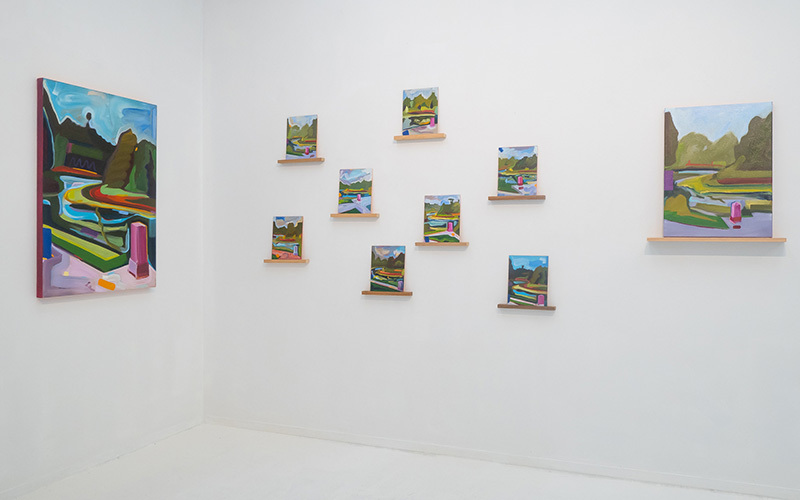
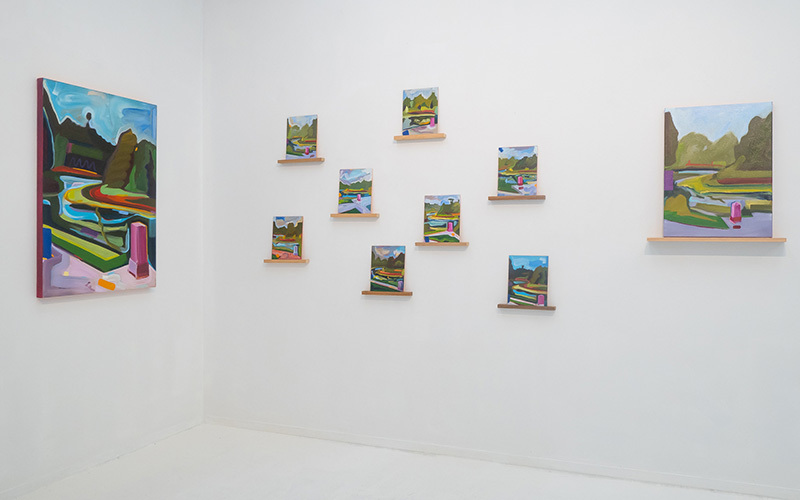
 Left unchecked, dust, pests, moisture or mold can damage your prized art collection. Photo courtesy of artist Peter Gynd.
How Proper Art Collection Care Can Prevent Damage and Deterioration
Collectors and museum professionals care about their art.
They want their art to shine for today’s audiences, and they want their pieces to survive for future generations. They are willing to do everything they can to protect their collections, but sometimes, they don’t know all the risks they need to look out for.
To break down these different threats, and explain how to protect against them, Artwork Archive recently partnered with Dyani Feige, Director of Preservation at the Conservation Center for Art & Historic Artifacts for the webinar More than Just Dusting: Collections Housekeeping, Mold Prevention, and Integrated Pest Management.
Dyani is an expert in preventing damage before it starts, and she has insights that every collector can learn from gleaned over a career helping museums, archives, and other cultural collections safeguard their works.
She explains that there are 10 key ways that art collections suffer damage and deterioration, from disasters like fires and floods to causes as simple as dust. So while you may be paying close attention to the catastrophic dangers that threaten your collection, it’s important to not overlook the slower, sneakier forms of damage.
Luckily, there are simple ways to mitigate risk from all these agents of deterioration.
What Are the 10 Main Threats to an Art Collection?
When it comes to protecting and preserving an art collection, understanding what causes damage is the first step. Conservation professionals identify 10 main agents of deterioration that can put artworks and cultural collections at risk.
“These categories help us more clearly identify ways to block or reduce harmful forces and lower the risk of damage to collections,” Dyani explains.
The 10 Agents of Deterioration:
1. Physical Forces
2. Theft and Vandalism
3. Fire
4. Water
5. Pests
6. Pollutants
7. Light
8. Incorrect Temperature
9. Incorrect Relative Humidity
10. Custodial Neglect
When people think about threats to an art collection, dramatic events like fires, floods, or theft often come to mind first. But many forms of artwork damage and deterioration happen gradually.
Exposure to pests, pollutants, excessive light, improper temperature and humidity, and poor collections care can cause significant damage over time. These risks may be less obvious, but they are an important part of preventive conservation and art collection management.
Protecting a collection therefore requires more than preparing for emergencies. Along with security and fire prevention, regular collections housekeeping, environmental monitoring, pest management, and proper art storage and handling can help prevent deterioration before it becomes irreversible.
Effective Housekeeping Guidelines to Keep Your Art Collection Damage-Free
“Housekeeping is a really heavy hitter in the fight agains the 10 agents of deterioration,” Dyani told Artwork Archive. “Having a regular housekeeping program helps to mitigate directly against things like pests and pollutants and indirectly for some of the other agents.”
According to Dyani, effective housekeeping begins with an understanding of the levels on which housekeeping should operate:
- The Building Level
By keeping your building envelope well sealed, by using good filtration in your HVAC system, and by practicing good housekeeping across your facility, you are protecting your collection on the building level. - The Enclosure Level
By using stable materials to display, wrap, and support your objects, you’re adding protection on the enclosure level. Make sure that every material that comes into contact with your object—the outer box, interior box, primary contact layer, etc.—provides an additional layer of protection. - The Object Level
To protect your artwork on the object level, you should create and follow safe handling guidelines for the object, wear gloves or ensure the object is only handled with clean and dry hands, and practice good housekeeping on the object!
“Having housekeeping practices in place helps strengthen all three levels,” Dyani explains, “and is an important part of the many, often interrelated steps we can take to promote good, long-term health and safety for collections.”
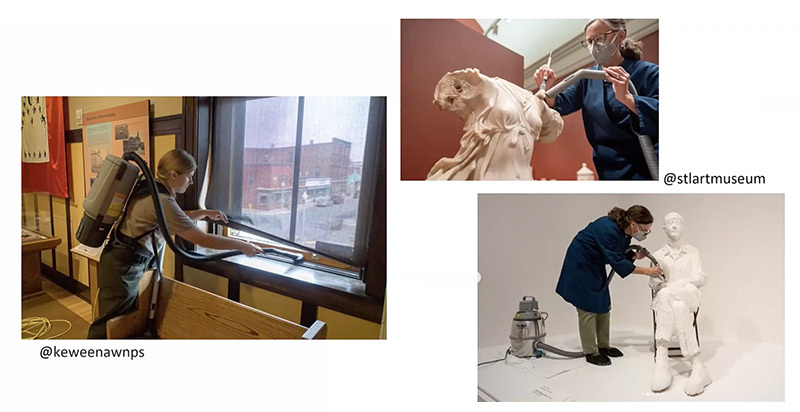 Museums and cultural institutions should use HEPA-filtered vacuum cleaners to ensure their housekeeping efforts aren't releasing more dust back into their spaces. Presentation slide courtesy of Dyani Feige.
Case Study: How Dust Can Damage Your Art Objects
To get an idea of how effective housekeeping can protect your objects, consider a threat every collection is familiar with: dust.
“Time and resources are limited, and the dust will always come back. Probably before you even finish cleaning that one gallery,” Dyani commiserates. “But that doesn't mean that we disregard it.”
Dust is made up of a variety of organic and inorganic materials, including pollen, human skin and hair, textile fibers, dirt, road dust, and millions of dust mites. Dyani knows all of these materials well: “In addition to being unsightly and giving the appearance that maybe we are being neglectful in caring for collections, dust can cause many harmful issues from a preservation standpoint.”
The organic materials in dust can attract water vapor, increasing the relative humidity around an object and making it susceptible to mold and other pests. The inorganic material can react with the materials of the object itself, causing discoloration and material breakdown.
According to Dyani, “good housekeeping practices are very relevant for other key parts of an organization or collections work, including exhibitions, security, facilities, and operation operations. And it's especially crucial for your pest management efforts and preventing and detecting infestations and mold outbreaks, which can cause serious damage to collections and be a health hazard to individuals as well.”
The best way to prevent dust from accumulating? Creating an achievable housekeeping plan that safely and regularly cleans your object and notes its condition in case any minor conservation efforts are needed—before they become major issues.
How Artwork Archive Helps You Manage Art Collection Maintenance
“Housekeeping is one of those topics where it's really helpful to think of it as a marathon and not a sprint,” Dyani says. “What I mean by that is that housekeeping is an ongoing responsibility, and it really works best when it's woven into your ongoing schedule and practices in the long term as opposed to bursts of cleaning up here and there."
Dyani urges collections to conduct their housekeeping processes on a regular basis—and it’s also important to ensure that no object gets missed.
The first thing to do within your Artwork Archive account is to create your housekeeping schedule by adding Deadlines and Reminders for your housekeeping routine. Decide the schedule you’re going to follow for your housekeeping and use these deadlines to make sure you’re keeping on track.
Once it comes time to perform your housekeeping on an object, Artwork Archive allows you to log that in the piece’s Maintenance Record. Within each piece’s Maintenance Record, you’ll be able to see all conservation efforts and housekeeping tasks that have been performed on the object.
How to Track Art Collection Maintenance with Artwork Archive
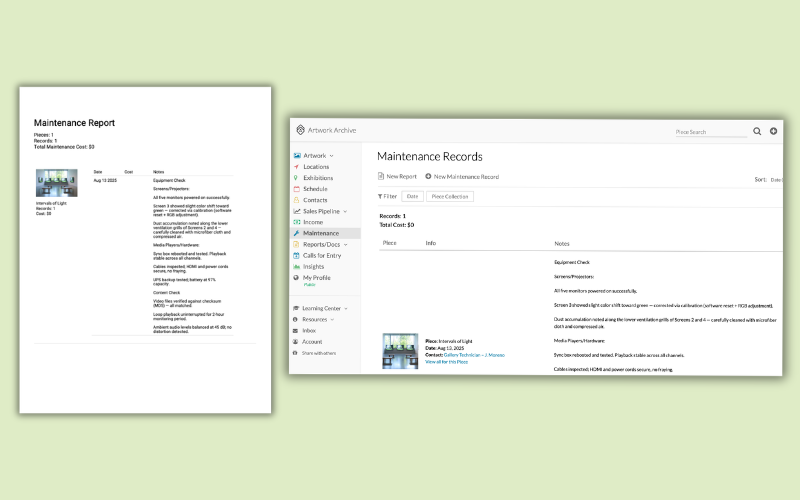
Keeping maintenance records in messy spreadsheets or—even worse—on perishable paper forms is a recipe for lost information. With Artwork Archive, you can create a Maintenance Record of every event, and generate Maintenance Reports to see a full history of an object's care.
Keeping good records and condition reports ensures that your object receives the care it needs—and none that it doesn’t. “Recording the actions taken is a really helpful policy for several reasons, including that it helps guard against collections being unnecessarily handled or overcleaned,” Dyani explains.
The easiest agent of deterioration that you can avoid, Dyani says, is custodial neglect—which comes from not having a complete inventory of your work and not having thorough information about your collection: “Basically, not working with a system like Artwork Archive.”
How to Create a Housekeeping Protocol That Will Protect Your Art Collection
There’s so much more to learn from Dyani Feige’s expertise in this hour-long webinar, including proper vacuuming protocols, what types of materials to look out for when storing your artworks, and which products to avoid when caring for your collection. Click here to watch the full webinar for yourself:
Protect Your Art Collection with Artwork Archive
Book a free demo of Artwork Archive to see how our Maintenance Reports, Schedules and Deadlines, and other features can ensure your collection remains protected and damage-free.