 Illustration courtesy of Nadia Snopek
Across museums, hospitals, public art programs, and cultural organizations, many arts programs are operating with small teams and limited resources. In these environments, institutional knowledge often lives with a single person whether it’s in their inbox, on their desktop, or simply in their memory.
And when that person leaves, critical information can leave with them.
The result is more than inconvenience. Transitions can delay installations, interrupt programming, create communication gaps, and leave remaining staff scrambling to piece together workflows and records.
The challenge is especially common in arts and health programs, public art initiatives, and small collecting institutions, where staff frequently wear multiple hats and systems evolve organically over time. As discussed in a presentation for the National Organization for Arts in Health, "When Teams Shift: Leveraging Technology to Keep Arts Programs Going," many organizations are now recognizing that documentation and centralized systems are not just operational tools, they are essential to program sustainability.
The Risk of Letting Collection Knowledge Live With One Person
For museums, public art programs, healthcare collections, universities, and other collecting organizations, staff turnover can quickly become a collections management challenge when institutional knowledge lives with one person instead of within a shared system.
Organizations may not realize how much critical collection information depends on a single staff member until that person retires, changes roles, or leaves. They may have been:
- the only person who knew where artist contracts and collection documents were stored
- the primary contact for artists, donors, conservators, or other stakeholders
- the person managing exhibition and loan schedules
- the only staff member familiar with artwork maintenance and conservation histories
- the person responsible for generating collection reports
- the one who remembered which donors, grants, or funding sources supported particular artworks
When this knowledge isn't documented in a centralized collections management system, a staff transition can mean more than losing an employee. Organizations can lose access to important collection records, contact histories, documentation, and context around past decisions.
The result can be interrupted programming, inconsistent collection records, communication gaps across departments, time spent reconstructing information, and additional pressure on remaining staff.
For organizations already operating with lean staffing, these disruptions can have long-term consequences.
Artwork Archive Tip:
Cloud-based collection management systems like Artwork Archive help organizations reduce reliance on institutional memory by centralizing artwork records, artist contacts, documents, reports, and project histories in one shared, accessible platform.
What Staff Turnover Reveals About Your Collections Management Systems
While staff transitions can be stressful, they often reveal where collections management systems are most fragile. Files may be stored in personal folders, naming conventions may vary from one record to the next, spreadsheets may be outdated, and important workflows may never have been formally documented. Artist communications, inventory records, and access permissions can also become difficult to locate or understand once the person who managed them is no longer there.
But staff turnover can also create an opportunity to identify and address these gaps. A transition can reveal which parts of your collections management infrastructure depend too heavily on individual knowledge and where more consistent systems are needed.
The Collections Management Practices That Support Continuity
Organizations that navigate transitions successfully often share a few key practices:
- centralized documentation
- shared access to systems
- standardized workflows
- consistent recordkeeping
- cross-training among staff and interns
- cloud-based access to information
Arts and health programs featured during the NOAH presentation offer real-world examples of how stronger systems can preserve continuity during staff transitions.
Case Study: How Duke Arts & Health Managed Collections Through Staff Transitions
At Duke University’s Arts & Health Program, staff transitions did not derail operations because the program had already centralized its collection and exhibition management processes within a shared digital system.
The team used Artwork Archive to centralize artwork records, artist information, exhibition planning, location tracking, and collection documentation within one shared cloud-based system.
When a coordinator left, the program was still able to continue curating installations and engaging artists because records remained accessible to interim staff and volunteers. Remote access also allowed new contributors to step in more seamlessly.
Artwork Archive Tip:
Because Artwork Archive is cloud-based, teams can securely access records, images, reports, and schedules remotely, making it easier for interim staff, volunteers, and cross-department collaborators to stay informed during transitions.
One team member noted that detailed documentation and standardized processes became valuable guides during the transition, offering both continuity and opportunities for improvement.
Another emphasized how a cloud-based arts database helped the team better understand the scope of the collection by tracking locations, donor information, and storage status in one place.
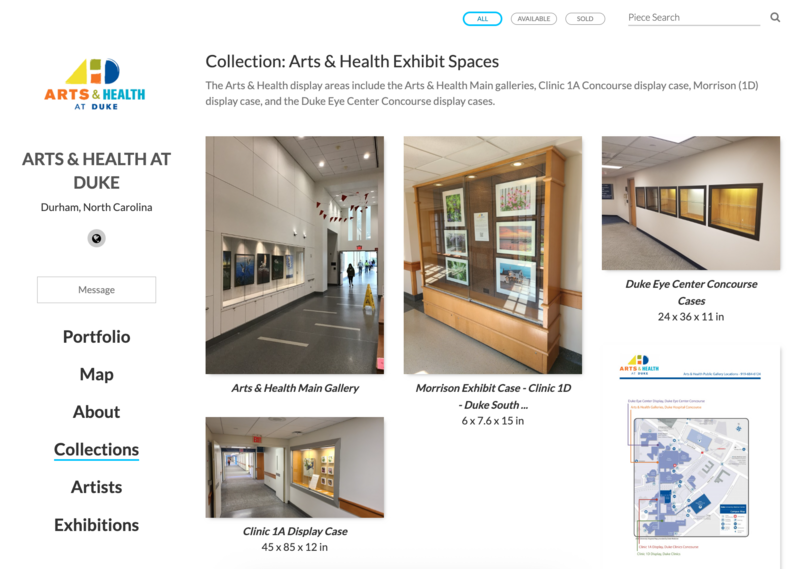 Arts & Health at Duke showcases its artworks, artists and exhibitions online to provide access to those within and outside of the hospital. See their Artwork Archive Public Profile here.
Case Study: How New York City Health & Hospitals’ Arts in Medicine Turned Staff Turnover Into Training
New York City Health & Hospitals’ Arts in Medicine program offered another example of sustainable knowledge-sharing practices.
To support continuity, the program:
- Created a Collection Guide documenting procedures and best practices
- Developed training materials for interns and future staff
- Used a rotating intern model where current interns trained incoming cohorts
- Held regular meetings to review collection and archival needs
- Centralized collection data in a shared system
Their takeaway was simple but important: documenting processes and using shared systems turns turnover into training rather than disruption.
This mindset shift is critical for organizations with limited staffing. Sustainable programs are not built around one person knowing everything. They are built around making information accessible and transferable.
Artwork Archive supports long-term continuity by allowing organizations to create shared institutional records that remain accessible across changing staff, interns, and volunteers, helping teams preserve knowledge over time instead of rebuilding workflows from scratch.
Why Art Collection Documentation Is Essential to Long-Term Stewardship
Documentation is sometimes treated as a task that happens “when there’s time.” In reality, it is one of the most important forms of risk management an organization can invest in.
Accurate, centralized records support collection stewardship, maintenance planning, donor relations, insurance documentation, exhibition coordination, reporting and advocacy, onboarding and training and public transparency.
A well-documented program is a sustainable program.
Good documentation protects institutional memory while reducing stress during inevitable periods of change.
For instance, with a collection management system, you can attach contracts, donor records, condition reports, exhibition histories, and images directly to artwork records, helping staff quickly locate information without searching across multiple drives or filing systems.
What Effective Collections Management Systems Actually Do
Technology alone does not solve organizational challenges. But thoughtfully implemented systems can reduce friction and create stability.
Effective art collection management and continuity tools should help art organizations:
- Centralize artwork records, artist information, collection documentation, and project data
- Give staff, interns, and volunteers appropriate shared access to collection information
- Automate collection reports, maintenance reminders, and administrative workflows
- Preserve institutional knowledge through consistent documentation and recordkeeping
- Support remote and hybrid collections management with cloud-based access
- Maintain continuity during staff turnover, onboarding, and organizational transitions
Importantly, these systems are not just about collections.
They also support artist engagement, volunteer coordination, partnership management, installation planning, risk management, advocacy reporting and most importantly, staff well-being.
Small Art Collection Management Changes That Improve Staff Continuity
Organizations do not need to overhaul everything overnight to improve continuity.
Some of the most effective changes are also the simplest:
- Document collections management processes and workflows as they happen
- Ensure more than one staff member can access essential collection records, documents, and systems
- Automate repetitive tasks such as reporting, reminders, and routine collection workflows when possible
- Cross-train staff, interns, and volunteers so important collection knowledge is shared across the organization
- Audit collection records regularly to identify missing information, outdated documentation, and inconsistencies
These small shifts can significantly reduce disruption during future transitions.
Artwork Archive Tip:
Even small workflow improvements, like using shared digital records, standardized templates, or automated reminders in Artwork Archive, can significantly improve continuity and reduce stress during staff transitions.
Build A Collection Management System That Outlasts Staff Changes
Turnover is a reality across cultural organizations, hospitals, museums, and public art programs. But losing staff does not have to mean losing momentum, relationships, or institutional knowledge.
Organizations that invest in shared systems, clear documentation, and accessible workflows are often better equipped to navigate change with resilience.
Because sustainable programs are not built on one person remembering everything.
They are built on systems that help teams carry knowledge forward together.