
 An appraisal protects your collection now, and in the future. Image courtesy of Miguel Rodríguez Sepúlveda.
Collectors rely on accurate appraisals to set insurance coverage, calculate tax filings, manage estate planning, and so much more—is yours overdue?
A disaster strikes your art collection and you need to have clear records for your insurance claim. You’re working with your tax advisor and need updated information on your assets. You’re planning for the future of your collection and need the right documentation to prepare for estate planning, or donating from your collection.
In all of these situations, having an accurate and up-to-date appraisal of your collection is absolutely essential.
To answer why art appraisals are important, who is qualified to conduct an appraisal, and what you should expect during the appraisal process, Artwork Archive recently partnered with appraisal expert Shanna Hennig of Winston Artory Group for an in-depth webinar exploring the lifecycle of art appraisals. We learned a few things that every collector should know about the appraisal process—here are are top takeaways.
Read on to hear why you should consider scheduling an appraisal for your collection—then watch the full webinar: The Why and When of Art Appraisals.
Why Art Appraisals Are Important
Art collectors often hold 5–10% of their overall portfolio in art and collectibles, but this portion of their portfolio tends to only get about 1-2% of their planning attention.
That means that a large chunk of their net worth could be undervalued and unprotected in the case of an emergency. Without a qualified appraisal, collectors are essentially navigating their financial landscape through guesswork
“We have a lot of conversations with collectors who speculate on the value of their treasured items based upon what they paid for something, or how old it is, what they've read or heard on the news, or just based on vibes,” Shanna tells Artwork Archive. “Foundationally, the appraisal can provide you the clearest path to sound decision-making around collection planning.”
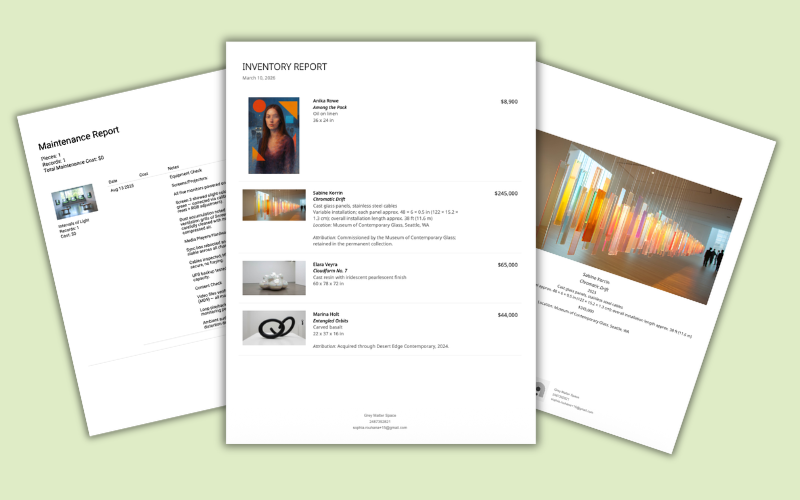 Thinking of beginning an appraisal for your collection? “It really starts with an inventory,” Shanna Hennig says—get yours started today with Artwork Archive.
Why You Should Get an Art Appraisal
A common misconception: an appraisal isn't a dollar amount you assign to an artwork, it’s a document that you create for a specifically defined purpose at a specific point in time. So the first question you need to ask yourself is, why are you seeking an appraisal?
1. Insurance Coverage and Claims
The most common reason people seek an appraisal is to figure out appropriate insurance coverage for their collection. Natural disasters, such as the recent fires in Los Angeles, or the floods and freezes in other parts of the country, have revealed that too many collectors are woefully unprepared for an emergency.
They frequently do not know exactly what they own, what it’s worth in today's market, or how their policy actually protects them. A current appraisal ensures that, in the event of a total loss, the collector has the funds to compensate for the loss of the item.
“Ultimately, it's up to the collector to determine their risk tolerance,” Shanna explains, “but the insurance policy and the appraiser's insights on the current state of the market can help the collector to make these informed decisions around appraisals and coverage.”
2. Estate Planning and Tax Filing
In the next two decades, as older Americans age and pass away, approximately $84 trillion will get transferred to their descendants. Nearly $2 trillion of that will be in tangible assets like art. Preparing for that eventuality might feel like a difficult conversation, but really you can think of it as a gift to your children and heirs.
Appraisals are required when filing estate tax returns, when substantiating charitable tax deductions, and will ensure that any assets you have now can be equitably distributed among your heirs.
3. Financial Decision Making
Whether you’re considering a sale, a donation, or even a prenuptial agreement, an appraisal provides a benchmark value that protects you from overpaying for an asset, or selling one for less than its true value. It's an easy way to ensure you don't get left holding the bill in any art exchange.
Want to see where your collection stands today?

With Artwork Archive's Reports, you can create inventory lists, consignment reports, invoices, and more with the click of a button. Simplify taxes, streamline insurance quotes, and track your collection's growth by giving Reports a try for free with a 14-day trial of Artwork Archive.
When You Should Get an Art Appraisal
A common myth in the art world is that appraisals only need to be updated every five years. But in today’s volatile global market, values can fluctuate wildly, and you don’t want to be left with an undervalued collection.
Instead, think of scheduling your appraisal based on your collection category and external “trigger events.”
A knowledgeable appraiser will look for specific indicators that a collection’s value might have shifted. That can be record-breaking auctions, in which a single high-profile sale can reset the entire market for an artist. It can be a major museum exhibition that dramatically increases an artist’s standing in the market. Or it can be new research, like a rigorous Catalog Raisonne, that authenticates a collector’s artwork.
At the same time, what kind of art you collect also plays a role: an emerging artist’s value can shift much more quickly than a long-established artist.
Even a specific genre of art can shift rapidly in certain circumstances: Shanna gave us the example of the early 20th-century British-Mexican surrealist Leonardo Carrington, whose work has just exploded in value in recent years: “In 2024, she had a work sell at auction at Sotheby's for $28 million, smashing her record of $3.3 million that was set just 2 years prior. That's [more than] a 700% increase in just 2 years.”
Who You Hire to Perform an Art Appraisal Matters
Too many collectors are relying on valuations set when they purchased a piece, or by loosely tracking market trends. But an appraiser can help you get so much more out of your appraisal.
A qualified appraiser is one that understands the purpose of your appraisal, and regularly deals in the type of property being appraised.
For example, if your appraisal is purely for insurance purposes, the appraiser will determine the Retail Replacement Value, to ensure that your collection is properly covered. But if you’re seeking an appraisal for estate planning, or to sell or donate your work, you’ll need a Fair Market Value appraisal.
“If you use your Retail Replacement Value appraisal that you acquired for insurance coverage, and you send that to your attorney for estate planning, it’s very likely that your objects will be overvalued for planning purposes,” Shanna explains. “And if you send your Fair Market Value planning appraisal to your insurance agent to put on your insurance policy, it’s very likely that you will end up being underinsured for an object.”
If you develop a good working relationship with an appraiser, they’ll also be able to advise you on when conservation may be necessary to maintain the value of your collection, and can help you track down any provenance details that you may be missing.
Shanna recommends seek out a qualified, credentialed appraiser who is experienced in your specific collection type: you can find appraisers through the American Society of Appraisers or Appraisers Association of America, two organizations that accredit art appraisers specifically.
And remember: to prevent conflicts of interest, a reputable appraiser will charge either an hourly rate or a per object rate—never a rate based on the valuation of the object itself!
Want more tips like this for your next appraisal process? Watch the full webinar, The Why and When of Art Appraisals:
Any Art Appraisal Starts With a Robust Art Inventory
Regardless of why you’re seeking an appraisal, there’s one thing you need to have in place before you begin any appraisal process: “it really starts with an inventory,” Shanna explains. “It's the best place to start, and it's the easiest place to start before an appraisal.”
Time and again, Shanna says, she has seen an estate plan that is leaving a pearl necklace to one relative, “and then you open the jewelry box, and there are 5 strands of long pearls, and you're not quite sure which one was intended.”
How Artwork Archive Can Help
The more robust your inventory is, the better it’s able to protect your collection and your heirs. Have an image, description, location, paperwork, provenance notes, invoices, and any other relevant materials for all of your artworks in once place, like in Artwork Archive’s Inventory Management System, ensures that you are effectively protecting your collection and making it legible to your heirs.
Having the correct documentation within your Artwork Archive inventory—including all your past appraisals—can really speed up any insurance claims, should disaster strike your collection.
On top of all that, when you have robust documentation for all your artwork it can also help to boost the valuation of your art. An object that has complete provenance information, regular condition reports, and updated appraisals will always be more appealing to collectors than an object without that documentation.
Want to learn more about how Artwork Archive can help you get the most out of your next appraisal?
Watch the full webinar featuring Shanna Hennig of Winston Artory Group, The Why and When of Art Appraisals: Your in-depth guide to navigating market shifts and collection needs.
Then try a risk-free 14-day trial of Artwork Archive to learn how our professional-level collection management tools make appraisals simpler and more effective.