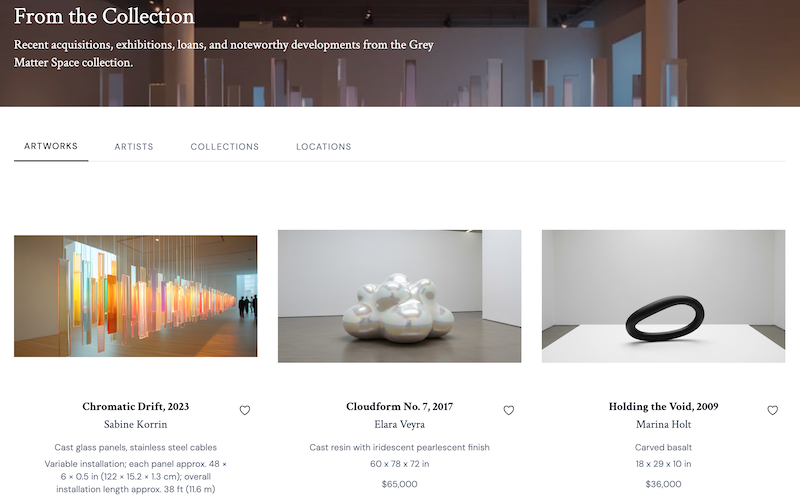
 Image of an Artwork Archive Private Room–one of the many ways to quickly and easily share information about objects in your collection.
If every collection request sends you searching through folders, spreadsheets, and email threads, it may be time to rethink how you share information.
A professor wants information for an upcoming class. A curator asks if an artwork is available for loan. Leadership needs a report for the next board meeting. An insurer requests updated documentation. Marketing needs a high-resolution image by the end of the day.
None of these requests are unusual. The challenge is responding quickly and consistently.
When collection information lives across spreadsheets, shared drives, filing cabinets, and email threads, even a simple request can become a time-consuming research project. Staff spend valuable time searching for files, verifying information, recreating reports, and assembling the same documentation over and over again.
The good news? A centralized collection management system can turn these recurring requests into repeatable workflows.
Here are five of the most common collection requests and how organized records make each one easier to manage.
1. Research & Scholar Inquiries
Collection information is valuable far beyond your own institution. Researchers, educators, students, and community members regularly request access to artwork information, images, and supporting documentation.
Without a centralized system, staff may need to search multiple folders for images, verify metadata, and assemble email attachments for every inquiry.
Instead, consider creating a curated digital viewing space or shareable collection that includes:
- Artwork images
- Object details
- Artist biographies
- Provenance and exhibition history (when appropriate)
- Related documents or scholarship
Not only does this reduce staff time, but it also expands access while minimizing handling of fragile objects and allowing scholars to begin their research remotely.
Artwork Archive Tip:
Private Rooms make it easy to create digital study collections for scholars, educators, and students, giving them access to artwork images, object information, and supporting materials without requiring an in-person visit or large email attachments.
2. Exhibition & Loan Requests
Many exhibition conversations begin with a simple question:
"Are these artworks available?"
Answering that question often requires checking locations, current exhibitions, loan status, condition information, dimensions, and images before a formal loan request is even submitted.
When records are centralized, staff can quickly:
- Identify available works
- Review loan status and locations
- Share images and object information
- Assemble a selection for curators to review
- Update shared information as conversations evolve
Rather than sending multiple PDFs and large email attachments, institutions can maintain a single source of truth that supports the entire loan process.
Artwork Archive Tip:
Instead of emailing multiple PDFs and image attachments as the exhibition plans evolve, create a Private Room with your selected works. Curators can browse images, artist information, and object details in one place, and you can update the selection at any time without starting a new email thread.
3. Insurance & Risk Management Documentation
Insurance requests often arrive with deadlines.
Whether preparing for a policy renewal, documenting a loss, or updating a rider for a particular location, institutions need current information immediately.
That documentation may include:
- Object images
- Current valuations
- Condition reports
- Location information
- Supporting documents
- Inventory lists
If those records are already attached to each object record, generating professional documentation becomes a matter of minutes instead of hours.
More importantly, comprehensive records reduce risk during moments when time matters most.
Artwork Archive Tip:
Save a reusable insurance report template that includes images, valuations, locations, and condition notes. When an insurer requests updated documentation, you can generate a current report in minutes instead of rebuilding it from scratch.
4. Leadership & Board Reporting
Leadership teams rarely need every detail about the collection; they need clear, accurate summaries.
How many acquisitions were added this year? What projects are in progress? What conservation work is planned? Which departments are requesting loans?
Too often, collections staff answer these questions by exporting spreadsheets, counting records manually, and building presentations from scratch.
With organized data, reporting becomes a natural byproduct of day-to-day collection management.
Dashboards, filters, and reusable report templates allow teams to spend less time gathering information and more time analyzing it.
Artwork Archive Tip:
Before building a report from scratch, check your Artwork Archive Insights dashboard. Collection activity, acquisitions, locations, valuations, and other key metrics are already being tracked, making it easy to answer leadership questions with accurate, up-to-date data.
5. Public Access & Discovery
Not every collection request comes through email.
Sometimes the best way to respond is to make collection information available before anyone has to ask.
Traditionally, publishing a collection online can require significant staff time, IT support, duplicate data entry, and ongoing website maintenance. Every new acquisition or updated record becomes another manual task, increasing the risk that public information falls out of date.
With Artwork Archive, you can quickly publish your collection online through a customizable Public Profile or embed selected collections, artist pages, exhibitions or public art maps directly into your existing website. Because the information is pulled directly from your collection database, updates only need to happen once—eliminating duplicate work and ensuring your public-facing content stays current.
This approach not only saves staff time but also makes it easier for researchers, students, visitors, and community members to discover and explore your collection on their own.
Artwork Archive Tip:
Use website embeds to feature rotating exhibitions, campus collections, public art maps, or permanent collections without relying on your web team for every update. As records are added or edited in Artwork Archive, your website automatically reflects those changes, keeping collection information accurate and up to date.
Accessibility is an essential part of creating meaningful public access. Artwork Archive's public-facing profiles and embeds are designed to support WCAG 2.1 AA standards, helping museums, universities, and public institutions meet Title II ADA accessibility requirements while providing a more inclusive experience for all visitors.
By reducing administrative effort and improving discoverability, organizations can spend less time maintaining web content and more time connecting people with their collections.
Better Access Starts with Better Records
Across each of these scenarios, one theme remains consistent: access depends on organization.
When collection information is centralized, complete, and easy to share, institutions can:
- Respond to requests more quickly
- Reduce duplicate work
- Improve consistency across departments
- Preserve institutional knowledge through staff transitions
- Expand access for researchers, educators, lenders, and the public
Collection management isn't just about storing information—it's about making that information useful when someone needs it.
Whether you're supporting a scholar, preparing a loan, updating insurance records, reporting to leadership, or opening your collection to the public, organized records create a stronger foundation for access, stewardship, and collaboration.
Want to See These Workflows in Action?
Watch the Webinar: Collection Access Made Easy: How to Simplify Requests and Streamline Sharing
From scholar inquiries and exhibition requests to insurance documentation, board reporting, and public access, this webinar walks through practical, real-world examples of how to streamline collection requests and make sharing information easier.
Watch the on-demand recording to see these workflows in action and learn how Artwork Archive's Reports, Private Rooms, Insights, and Public Profiles can help your team save time, reduce repetitive work, and make collection information more accessible.