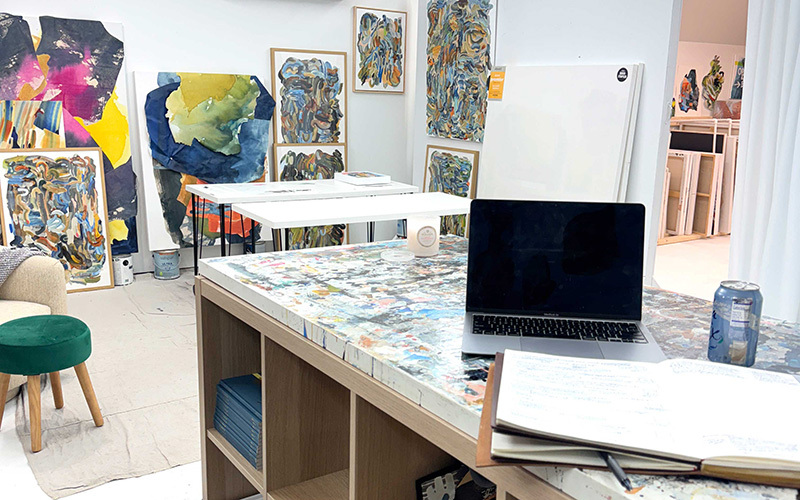
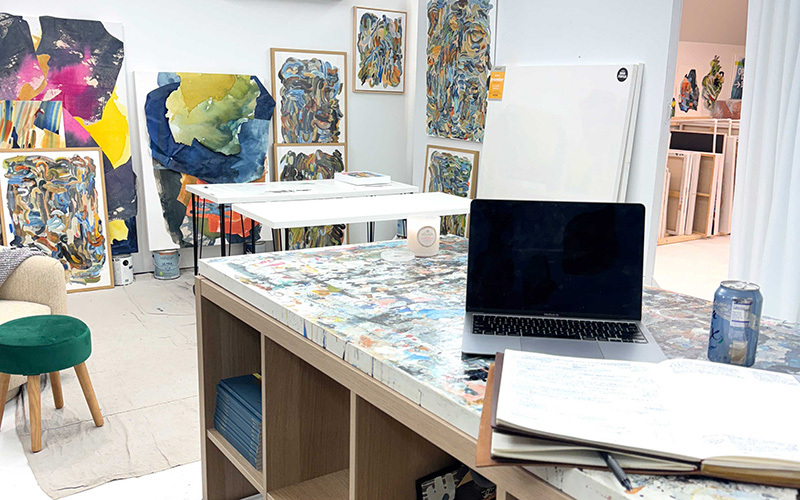
 Stop sending your work as email attachments—follow this simple five step process instead. Image courtesy of Ellen Sherman.
When you find yourself chatting with someone and they say, “I’d love to see more of your work,” they’re giving you an opportunity—and not one that comes along every day.
But most artists start to let the opportunity slip away on the very next step. Most artists follow up with an email and a few JPEGs of the artwork attached. That’s a reasonable response, but it's just not the most effective one.
Think about the collector or consultant who’s on the fence, or juggling five other artists’ work that week. The moment someone has to hunt through attachments, scroll through email threads, or match filenames to artwork details, looking at your work starts to feel like a chore.
There’s a better way to share your work—we’ll show you how in 5 simple steps.
Why Email Attachments Aren’t a Good Way to Share Your Artwork
When you send someone a batch of attached JPEGs, those files show up in their inbox without your vital context, with no consistent sizing, and no info about medium, dimensions, or price unless you type it out separately. We've all done it, but it's not the best way to share your work.
The story behind the work, how the pieces fit together, whether they’re framed, their scale, pricing, medium, and the context that helps someone understand what they’re looking at—all of that is missing.
The fact is that a gallerist or consultant looking at ten artists a day wants something they can look through quickly and understand instantly, not a confusing folder of loose files they have to open one by one.
With an email attachment, you also can’t update it after you hit send. If you sell a piece, change the price, or want to swap in a better shot—tough luck. You lose your control over presentation, which can lead to blurry photos, cut-off previews, and worst of all, images that just won’t download. An email with large attachments can also be flagged as spam by many email providers, and might not get sent at all if it exceeds an email provider’s size limit.
There’s a better way to follow up. Using Artwork Archive’s Private Rooms, you can create a curated portfolio of your work in a simple package that provides your recipients with everything they need to make an informed choice.
You’ll be able to share dimensions, medium, project context, and much more, all in a professionally designed, sharable link. Here are the five steps you should take any time you share your work with a collector, gallery, or client.
Step 1: Follow Up With The Collector Within 48 Hours
Art collectors value professionalism, and a key way to show that you’re on top of your art practice is by being prompt in your responses to inquiries. Skip the generic thank you email, and focus instead on the work they expressed interest in. Being specific in your response shows that you were paying attention in your conversation, and that you’re thoughtful about the different types of work you make.
Then ask one revealing question: “Were there pieces that stood out to you?” Or “Are you collecting in a particular direction right now?”
This question does two things at once: it keeps the conversation open, and it gives you more context for who you’re talking to. Their answer tells you what to send (and what to leave out).
Step 2: Curate Your Artwork Based On The Collector's Answer
Using their answers to your first email, create a custom Private Room tailored to their expressed interests. If they responded strongly to a theme in your work, or a medium, or even to simple things like a general size or color, those are all valuable data points that you can use to create your selection.
When you’re creating your Private Room, keep in mind that who you’re talking to is just as important as what they’re interested in. Here’s how to tailor your room to every type of inquiry:
Collectors:
If you’re emailing a collector, keep it simple. Send 3-5 images of a coherent body of work that’s in their price range and aligned to their taste and interest. This gives them clear, easy steps to follow to make a sale.
Art Consultant:
Art consultants want to see a bigger range than collectors, since they’re often working with clients with different tastes and spaces. Send 6-10 images with different size options and installation-oriented images. They can use these images to forward to their client without additional explanation or editing.
Gallerist:
With a gallerist, you want to keep it focused on what they could potentially show in their space. Send them 4-6 images of a single body of work, not highlights from your entire career. This signals a clear understand of your art practice and lets them know which project you’re most interested in showing right now.
Visual Learners: This Video’s For You.
Want a quick guide to creating your own Private Room? Watch this short video to learn more:
Step 3: Make Your Artwork Look Good
This is where using a Private Room to share your artwork gets fun:
- Add a room Name to identify the room. Let’s say you’re sending a project called Subtle Measures to a gallerist who wants to see more of the work. Your room Name will be: “Subtle Measures: A Selection for Gray Walls Gallery.” Your room Name is your internal way of keeping track of your Private Rooms.
- Add a Header Title and Header Subtitle to your Private Room: for example, the Header Title can be “Subtle Measures” and the Header Subtitle can be “A selection of paintings and works on paper for Gray Walls Gallery.” This is what the gallerist will first see when they open your Private Rooms link.
- Add a Header Image to really make the room sing: this is an image that stretches across the top of your Private Room. Good Header Images are details of artwork, studio images, images of you at work on your art—anything that gives a feel for your practice without giving too much away.
- Fill out the Description field with more detailed information about the series. This can be a project description, it can include some of your artist bio, and it can include any information you want to share about framing, shipping, or other details.
Once you’ve selected your pieces and filled out these simple fields, it’s time to share the link with your gallerist.
Step 4: Give Your Collectors Context And a Next Step
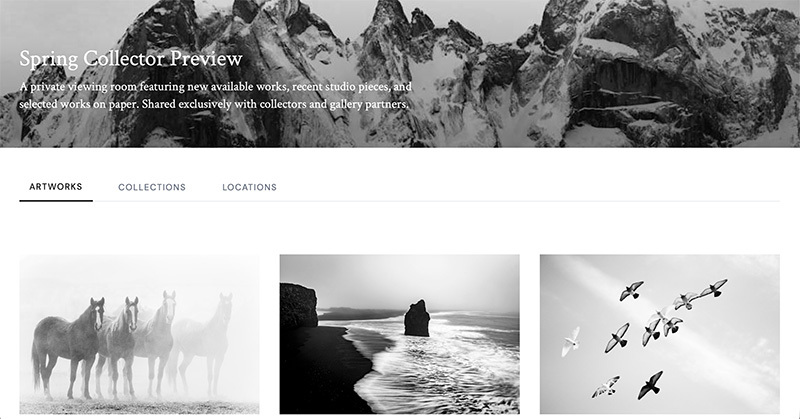 A Private Room is the perfect way to share all the details about your work with collectors, curators, and clients.
Share your Private Rooms link with your contact, and include two short sentences about the Private Room: In your first sentence, tell them why these pieces are right for them, and in the second tell them what you want them to do next.
For example, to the collector who loved your recent work, you can say “Based on what you mentioned, I pulled together a few pieces from my recent series exploring [your themes]. Favorite any that feel like a good fit, and I’ll be in touch later this week!”
When the collector receives your link, they can open it from any computer (no pesky file downloads), and can easily indicate which pieces they’re interested in by hitting the heart icon next to the piece to “favorite” the piece. This lets you see exactly which pieces they're responding to.
Step 5: Follow Up With The Collector 5-7 Days Later
If your email doesn't get a response, it's time to follow up. Remember: This is a light touch, not a sales push. You want to remind them you’re still there and that they’re still top of mind without adding unnecessary pressure.
Something like, “Wanted to check in, any thoughts on what you saw?” Or “Added a couple new pieces since I sent that over, worth another look if you have a minute.”
A lot of artists worry that following up will make them seem too salesy, but it’s really a courtesy to whoever you’re messaging: you’re telling them that you value their interest, and you’d like to continue the conversation with them. Plus, everyone gets busy and loses track of emails from time to time, so this puts your conversation front and center for them if they’ve misplaced your original email.
Want to learn more about Artwork Archive’s Private Rooms?
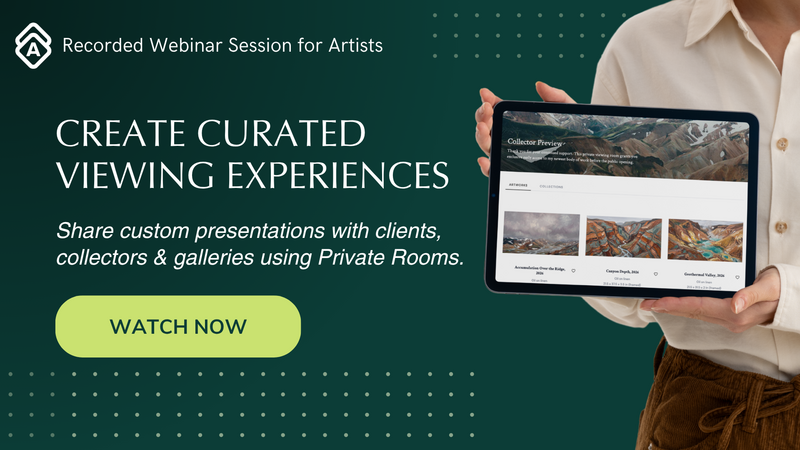
Watch this full webinar video to learn how to create customized, branded, and professional curations of your work, along with best practices for presenting your artwork and much more.
Why Sharing Your Artwork Through Artwork Archive’s Private Rooms Works So Well
Every step in this workflow signals to the person who has expressed interest in your work that you took what they said seriously enough to respond specifically to them.
With your thoughtfully curated Private Room, you can also build their confidence in your work, provide meaningful context about the pieces, and make it easier for them to acquire your work. Creating that kind of simple, professional presentation is exactly what Artwork Archive’s Private Rooms were built for.
If you happen to sell a piece after sharing your link, or need to update some details about a piece, you can easily make those changes to your Private Room at any time—try doing that with a sent email!
Want to get started with your own Private Room? Explore our in-depth guide on creating your own Private Room, watch our full webinar, and try creating a Private Room for yourself with a risk-free 14 day trial.