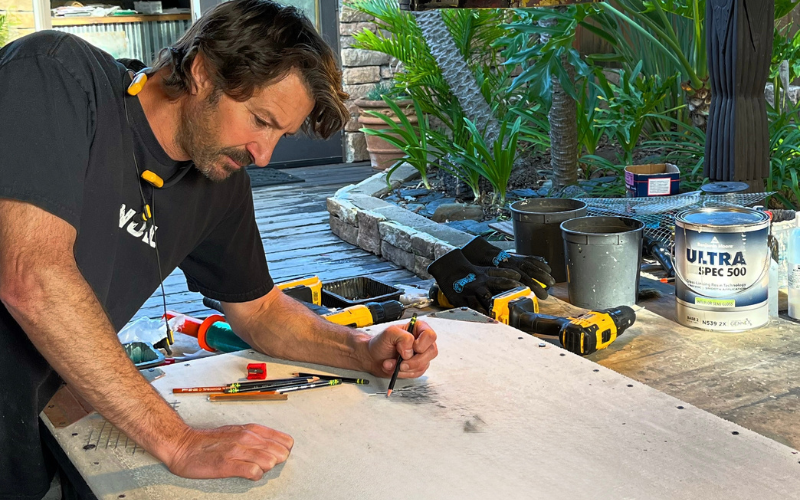
How Trevor Mezak Turns Reclaimed Materials Into Abstract Art
Surf. Surge. Salt. Instinct. Rust. Reclamation. These are the elements and processes Featured Artist Trevor Mezak celebrates in his work.
As a jack of all trades, Trevor Mezak works with materials more akin to those found at a construction site.
Reclaimed wood, concrete slabs, metal, nails, screws, and gunpowder are all ultimately transformed into abstract, painterly gestures of pure texture. Self-taught and shaped by early experiences working alongside his father, Mezak learned to use tools and work with his hands before he ever thought of himself as an artist.
The ocean holds equal weight in his practice. Mezak is a devoted surfer who regularly tests prototype boards, and his relationship with the water's unpredictability and power feeds directly into how he works in the studio.
Grounded in a deep appreciation for the natural world and the industries that share in its raw power, Trevor Mezak's work is an exchange of energies, from the world into his hands and onto the surface.
We got a chance to chat with Trevor Mezak about how he builds paintings from reclaimed wood, concrete, and found metal, why he lights his work on fire, and how he and his wife stay on top of a practice that spans multiple galleries and active consignments.
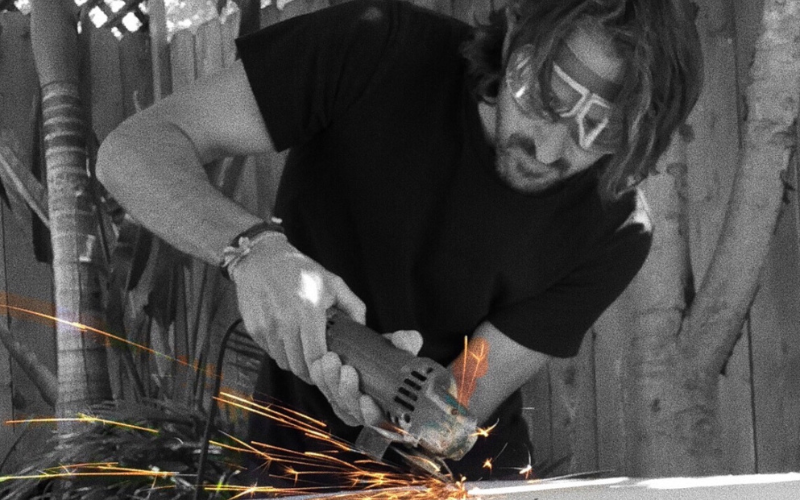
Trevor Mezak with a work in progress. Photo courtesy of the artist
How a Found Object Becomes the Start of a Painting
"I come up with a lot of my ideas while laying in bed," Trevor Mezak says. "By the time I begin painting, I've usually mapped out the entire piece in my head." His studio is simply where his idea meets its materials.
The reclaimed wood, the found metal, the fragments of physical life that end up in his paintings, those materials accumulate across his days, collected like others collect thoughts. "By the end of a day, my pockets are usually full of objects I've found at the beach or picked up while walking my dog."
Some of those objects find their way into works already in progress. "Other times," Mezak notes, "I’ll build an entire piece around a specific found item." Once the materials are gathered and an idea is mapped, the studio work begins.
Why This Artist Sets His Paintings on Fire
"Pretty much everything I do is unconventional," Mezak acknowledges. "I think some people are surprised to learn that I light the work on fire."
As one of his favorite parts of the process, he burns gunpowder into each painting to create scorched lines and textures that no other tool could leave behind.
The process around it is layered and patient. Charcoal drawing first, then texture built up across the surface. He likes to experiment with how the paint moves and spreads across the cement, watching what the material does before deciding what comes next. Then the burn. He keeps three paintings going at once, each in a different stage of completion. At a certain point, he physically removes a finished piece from the studio so he stops reworking it. The discipline to stop, it turns out, is as hard-won as the discipline to begin.
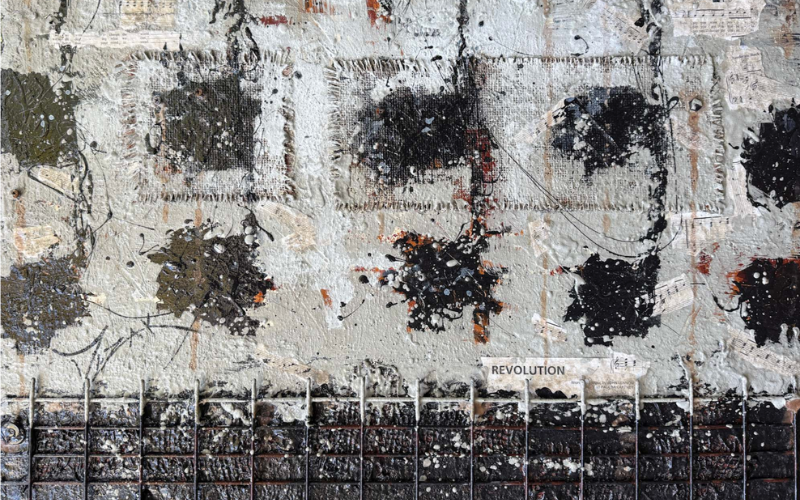
Trevor Mezak, Revolution, 2026, 24 x 30 in
Why Artists Shouldn’t Let Galleries Dictate Their Work
At various points, galleries encouraged him toward subjects they believed would sell. They had opinions about themes collectors responded to, and which direction his work should go. Listening to their advice, he painted ideas he wasn't passionate about. They didn't sell.
"When I returned to painting what inspired me, I felt a sense of freedom and my passion to work came back," Mezak recalls. "These are the pieces that my clients gravitate to. These are the pieces that have a story."
The lesson shapes how he thinks about what he'd tell an artist just starting out: "Develop your brand from the beginning," he suggests. Know the colors and subjects that inspire you, and stay true to them. "Don't let outside opinions dictate what you should paint. Your strongest work will come from authenticity."
💡 Stop Guessing Where Your Work Is:
Artwork Archive keeps a running location history for every piece, which gallery has it, where it was before that, and what it was priced at along the way. Useful for gallery conversations. Essential for provenance and insurance.
How Artwork Archive Keeps Trevor Mezak’s Art Business Organized
On the operational side of things, Trevor Mezak's wife handles the business, and a gallery director's recommendation eventually led her to Artwork Archive. She found everything she needed was organized in a single place, from Consignment Reports to Certificates of Authenticity, and uses the reporting features almost daily.
Mezak has found his own uses for the platform. "Being able to quickly search for a piece by name and instantly see which gallery it's in, along with current pricing information, makes conversations with galleries and clients much more efficient and professional," he explains.
💡 Send Galleries What They Need in Minutes:
Keeping galleries informed and collectors properly documented doesn't have to mean hours assembling files. Consignment reports pull straight from your inventory, current location, pricing, images, all of it, into a clean document you can send without building it by hand.
Trevor Mezak's work is built from materials other people walk past, finished with fire, and draws in those who recognize a story when they see one.
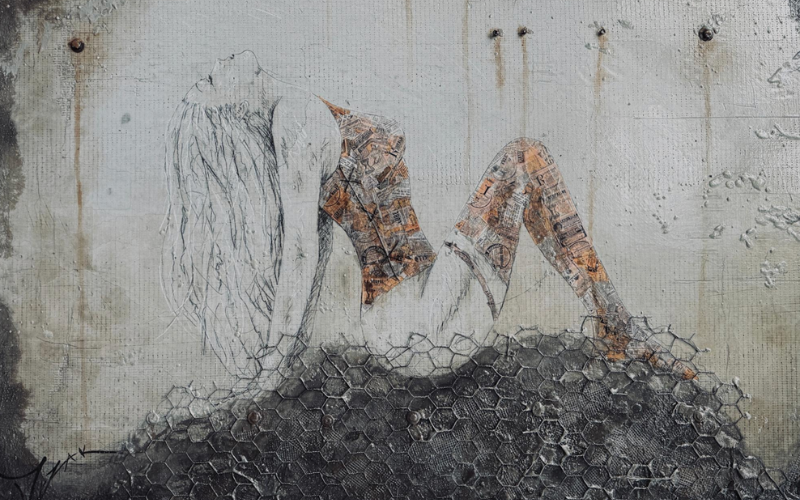
Trevor Mezak, Allure, 2025, 36 x 48 in
No matter what season of your art career you're in, getting serious about your art career doesn’t need to feel overwhelming. A bit of structure now can mean more time and headspace for the work you actually want to be doing.
Artwork Archive helps artists build an online portfolio, stay on top of their inventory, and create things like tear sheets and invoices in just a few clicks. Start a free trial and see how it fits into your own process.