For many artists, the commercial art world feels like a black box.
Having your work placed in corporate offices, hotels, healthcare facilities, and private collections can bring new visibility to your work and important new revenue to support your studio’s bottom line. But getting your foot in the door can be tricky.
That’s where art consultants come in.
Art consultants are the experts that commercial art clients turn to when they need new works for their collections. These consultants often have long-standing relationships with multiple clients who rely on their experience and deep networks to find the perfect artists for their needs.
For artists, art consultants can open new doors, steer you toward the right opportunities, and help you expand your art’s reach.
But how do consultants find new artists in the first place? What separates the artists they hire once from the artists they keep calling back? And is this even the right path for the kind of work you make?
We asked three leading art consultants about what they look for in the artists they are considering working with, what they value in a working relationship, and how artists can impress art consultants with clear communication and prompt professionalism. Here is what they want artists to know.
How Artists Can Get Discovered By Art Consultants
Consultants are always scouting. They have projects to fill, clients waiting, and they need fresh work that fits a specific brief. The artists who get hired are the ones who are easy to find quickly, and whose work is clear and cohesive.
A few things matter more than the rest:
Make Your Location Easy for Art Consultants to Find:
Consultants and their clients almost always prefer to source work locally. Existing businesses use local art as a way to give back to the community that supports them. Businesses new to an area use it to build a sense of place and connection.
Abby Frank, Director of Client Services at TurningArt, says that working locally also keeps shipping costs down and ensures that an artist can be present for installation, if needed. Whatever the reason, make your city or region obvious on your public profile, your website, your social profiles, and anywhere else your work appears online.
Keep Your Public Profile Clear and Current:
An artist’s website does not need to be elaborate. It just needs to be clean, easy to navigate, and tell a clear story about you and your work. A consultant should be able to land on your homepage, understand your style within seconds, see strong images of recent work, and find your contact information without hunting for it. And several consultants told us that they want to see your most recent work first, so that they can see what you’re most excited about right now.
Wait, a Public Profile Is That Easy?
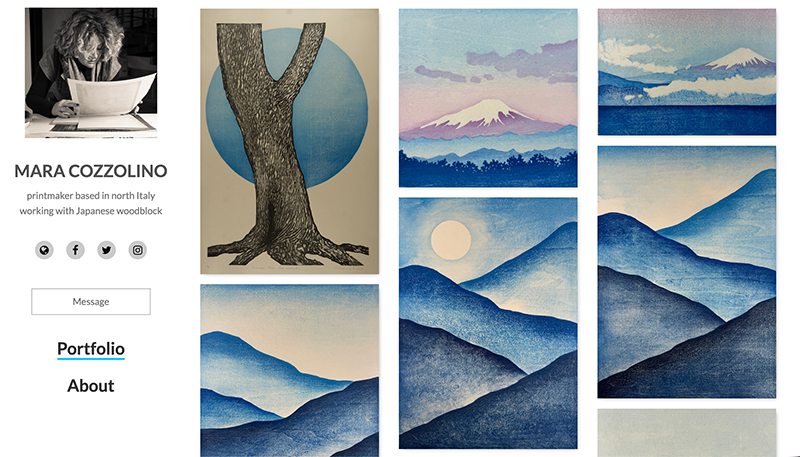
In the commercial art world, visibility is everything—especially when it comes to catching the eye of busy art consultants. Artwork Archive’s Public Profile acts as your polished, professional digital gallery, allowing you to turn your inventory into an elegant public landing page that showcases the true depth of what you are capable of as an artist.
With the ability to organize your masterpieces into custom collections, you can present a cohesive artistic narrative that highlights your skills, range, and unique vision. It’s a beautifully simple, low-maintenance way to elevate your online presence, build credibility, and ensure your creative capabilities stand out to the clients who will matter the most for your career. Set yours up for free today.
Keep Your Artist Social Media Professional and Focused:
Most consultants use Instagram regularly to discover artists—Abby Frank calls social media an “amazing” tool to research artists. So it pays to treat it like a professional channel. Use location tags, relevant hashtags, and keep your feed focused on your work. As Kate Sweeney, Founder and Director of London-based consultancy Perspective, tells us, “When learning about an artist’s work, the picture of the family dog or the meal they ate the night before can be distracting.” So save the personal posts for a separate account.
Your Art World Network and Referrals:
Artists, you’ve heard it countless times: Networking matters. Forming new relationships and fostering existing ones is essential for all aspects of an artist’s life, and that’s nowhere as true as it is when connecting with art consultants.
A surprising amount of consultants’ new artist discovery happens through referrals. Other artists, gallerists, arts organizations, and previous clients all feed consultants names. The more relationships you build across the art world, the more likely your name comes up at the right moment. Being introduced by a trusted source also means you arrive pre-vetted, which saves the consultant time and gives you an immediate edge over a cold submission.
What Art Consultants Look for in Professional Artists
Once a consultant finds you, the next question is whether you are ready for prime time. The consultants we spoke with said that the artists who get serious consideration share a handful of traits.
A Cohesive Body of Work:
Consultants pitch your work to clients who want certainty about what they’re getting from an artist. A clear, consistent style across your portfolio tells them you have a defined artistic identity and that future pieces will land in a similar register.
Strong Images of Your Artwork:
This is non-negotiable. Consultants present your work to clients through digital portfolios, slide decks, and proposals, and bad photos can kill client interest on the first slide. Invest in proper documentation, ideally professional, and make sure each piece is shot cleanly with accurate color. A professional portrait of yourself also helps.
A Clear, Concise Artist Statement:
On your website, on social media, on your Artwork Archive Public Profile, aim to tell your story in a paragraph or two, not a thesis. Including career milestones helps to flesh out how you’ve grown as an artist as well. As Kate Sweeney puts it:
“How you present yourself and your work is critical. The organizations and clients on the other end of the pitch don’t work well with conceptual. They want to get it right out of the gate.”
A Proven Ability to Execute:
This is where Gavi Wolf, CEO and Co-Founder of New York’s Indiewalls, gave us some of the most useful advice we heard.
“Execution is critical,” he explains. “The ability to show you have a deep grasp of your craft and the ability to execute a project can really open doors.”
He encourages artists to document not only the final product, but the stages it takes to get there: “The more examples we see of that versus conceptual renderings, the more we can trust that you will deliver.”
If you have completed commissions, installations, or large-scale work, show that journey from the very beginning to finished piece, not just the end result.
Prompt, Professional Communication:
Art consultants work on deadlines, often tight ones, and they need to know you will reply within a day or two, not a week.
“Being prompt in responding to emails can make a big difference,” Kate Sweeney advises. Quick, professional communication signals respect and reliability. It also separates you from the artists who go silent for weeks and then wonder why the opportunity moved on.
Become an Artist Consultants Want to Work With Again
Getting hired once is good. Becoming a consultant’s go-to artist for a particular style or type of project is where real career building can start to happen. A few things keep art consultants coming back to the artists they love to work with:
Flexibility and Adaptability:
Projects shift. Budgets change. Client tastes evolve mid-project. The artists who consultants turn to again and again are the ones who can adapt to these speed bumps without losing their voice. “Projects and budgets are subject to change, and we really appreciate those artists who are able to evolve with the project,” Gavi Wolf says.
A Strong Understanding of Art Logistics:
Shipping, crating, art handling, insurance, lead times, budgets: the details that can make the difference between an artwork successfully installed and a damaged piece that never sees the light of day. The more you understand about what it takes to physically get your work in front of a client, the more confidence a consultant has handing you a project.
Staying On Top of Your Finances Has Never Been Easier:

Managing the financial side of a creative career can be daunting, but Artwork Archive’s Income & Expense Tracking feature takes the headache out of art business accounting. Designed specifically for artists who want more control over their finances, this intuitive tool allows you to seamlessly log expenses, categorize spending—from studio supplies and framing to shipping and travel—and tie costs directly to specific artworks or clients.
By centralizing your financial data, you can easily generate comprehensive expense reports, track your net income, and stay perfectly organized for tax season. It’s a powerful, straightforward way to gain total clarity over your studio’s cash flow, allowing you to spend less time crunching numbers and more time creating. Give it a try for free today.
Digital Fluency:
None of the consultants we spoke with expects you to be a tech wizard. But they do expect you to send a high-resolution image and get on a video call without troubleshooting for ten minutes. Be comfortable with Zoom, email, basic cloud storage, and digital file sharing.
Knowing When (And How) To Stay in Touch:
This goes back to effectively maintaining your network. Sending periodic updates about new work or completed projects helps keep you top of mind. There's no need to overload your contacts, either: a thoughtful quarterly check-in with a few new images and a brief note tends to land well.
What Art Buyers and Clients Want From Artists Today
A lot of artists fear that working in the commercial art world will mean tailoring their work to the client and diluting their personal vision. While being mindful of a client's needs is part of the job, it's important to remember that clients are choosing to work with you because of your individual voice. Here are a few things that clients are actually interested in:
Local Artists:
Already covered above, but worth saying again because it shapes so much of what gets selected and why.
Work That Feels Distinctly Human:
As AI has flooded the 2D art world with generated images, many clients have responded by leaning into work with clear evidence of the human hand.
“More and more we are seeing clients gravitate toward work with dimensionality, tactility, and any other elements that set a work apart from the traditional flat work on a wall,” Gavi Wolf noted. Texture, mixed media, sculptural elements, and visible craft all carry more weight than they did just a few years ago.
Sustainability:
Corporate clients in particular are increasingly factoring environmental impact into who they hire and what they buy. If sustainability is part of your practice through materials, process, or message, make it visible in your story. It can be a real differentiator on the right project.
Site-Specific and Commissioned Artwork:
Clients are increasingly interested in commissioning works that could only be made for their particular space. If you are open to commissions and able to scale your work for architectural environments, say so clearly on your website and in your communications.
Is Working With Art Consultants Right for Your Art Practice?
It’s worth pausing to be honest with yourself about whether this path fits you and your work.
Most consultants serve corporate, hospitality, and healthcare clients. Those clients tend to want work that is welcoming, calming, or energizing without being polarizing.
Strongly political, religious, or socially provocative work is generally not what they’re sourcing. If political or socially charged work is central to your practice, that’s not a problem: it just means the consultant route may not be your primary path, and that is completely fine.
Galleries, direct-to-collector sales, nonprofits, public art commissions, grant-funded projects, and independent exhibitions can all be better fits for that kind of work. The art world has many doors. The consultant door is one of them, not the only one.
Take a moment to really consider your work. Going all-in on a path that does not match your work tends to lead to frustration, so it’s a good idea to think about your practice, your goals, and where your voice naturally fits.
Your Next Step Toward Working With Art Consultants
The steps you need to take to get on an art consultant’s radar are not a mystery. It just takes a combination of being easy to find, easy to evaluate, easy to work with, and easy to recommend.
All of the art consultants we spoke with shared that the artists who succeed in this space treat it as a long-term relationship business and conduct themselves accordingly.
If that sounds like the kind of work you want to do, the rewards can be substantial. Steady project work, exposure to clients you would never meet on your own, and the kind of repeat business that builds a sustainable career.
Want to take the next step in your art career?
Professional tools create professional opportunities. Start a free trial of Artwork Archive today to create a sleek public portfolio, organize your inventory, and generate polished reports that show art consultants that you’re an artist who is ready for their next commission. Get started today with a risk-free 14-day trial and present your art to the world with the credibility it deserves.