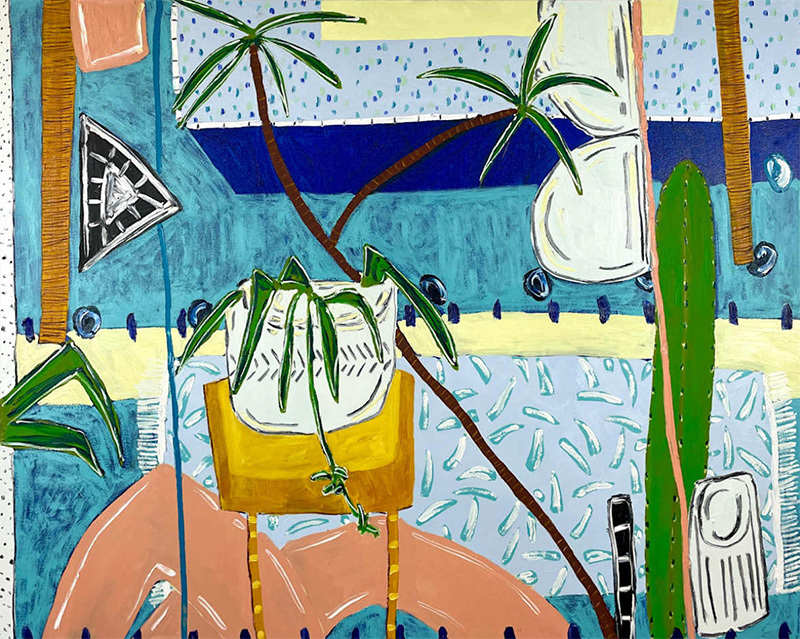
 Alec Cumming's bold, sun-drenched abstractions capture the rhythm of color, light, and place. Alec Cumming, Awaking sun moment, Oil On Canvas, 122 x 152 cm.
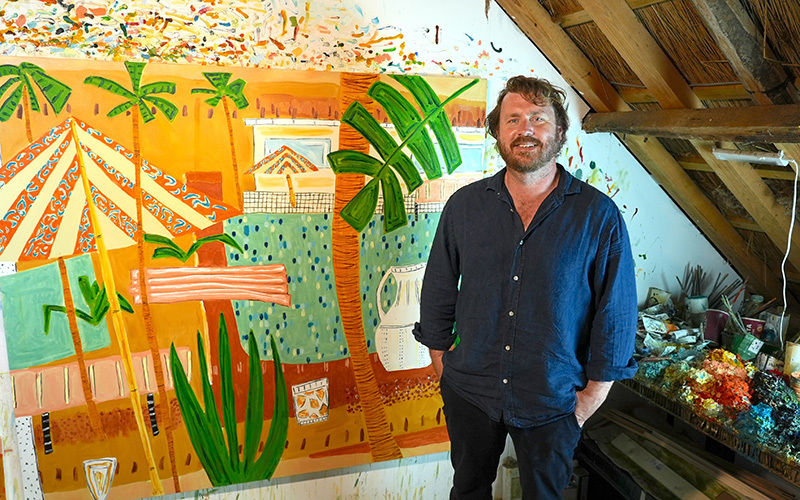
UK-based painter Alec Cumming creates vibrant, playful, and engaging compositions that explore how fleeting moments in the physical world translate into painted scenes.
This week's featured artist draws inspiration from a global map of experiences, shaped significantly by several years spent working in India and his ongoing explorations of places like California and Sri Lanka.
Alec is particularly driven by a desire to explore how light in these locations defines a composition, and finds himself drawn to that bright, harsh light that makes colors pop, or the soft, shimmering haze of a hot afternoon.
As he builds a "bank" of imagery through drawings, photographs, and sketchbook entries, he's constantly questioning how these disparate influences can merge into a "pan-global" vocabulary.
Within his paintings, there are shapes and forms that suggest a narrative without strictly defining it—a specific fabric, the architecture of a city street, a glimpse of a poolside afternoon, a table laden with drinks and paraphernalia.
These, he says, "are the everyday moments we engage in when we are at our most calm," and Alec remains fascinated by that curious thing the brain does when the eye lingers on a single point of reference.
We caught up with Alec Cumming to learn more about his creative process, what changed his relationship with the color green, and the moment he realized he needed a better system for managing his art career. Read on to learn more from his full interview with Artwork Archive.
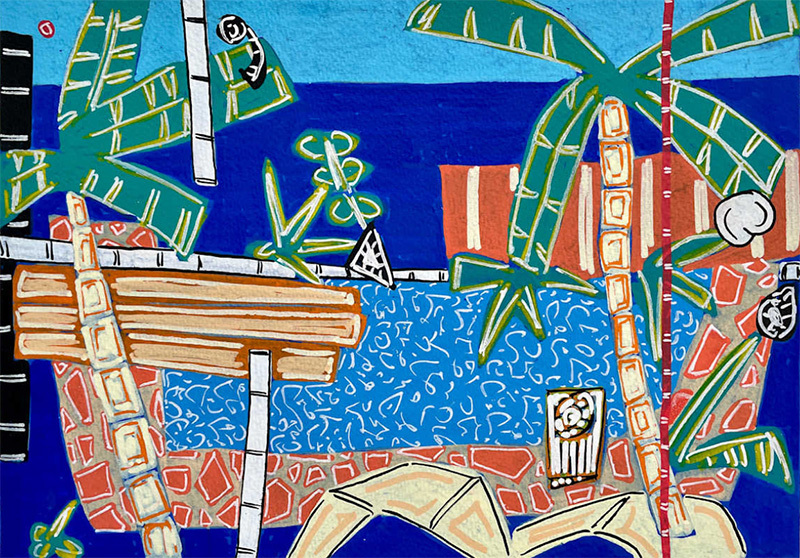 Alec Cumming, Everything sales on the wind, Acrylic ink on paper, 20 x 28 cm.
Finding Artistic Inspiration Through Travel
Though he’s based back in Norfolk in the UK these days, Alec’s work is deeply influenced by his travels around the world.
He spent three years in India, and has undertaken voyages to Sri Lanka, California, and other locales.
What attracts him to these far-flung places is evident in his work: hot sun, verdant plants, the patterns of rest and relaxation on a summer afternoon.
“It’s really interesting to see the change in my work when different locations are explored,” he tells Artwork Archive.
At the time when he first visited Sri Lanka in 2018, he rarely used green in his work. But his experience of being immersed in the jungles, tea plantations, and palm groves there quickly changed that.
“Since then green has become something I enjoy handling in my paintings,” he recalls. “Similarly, the architecture of California, and the light, are very specific elements of inspiration and have really inspired me over the past few years.”
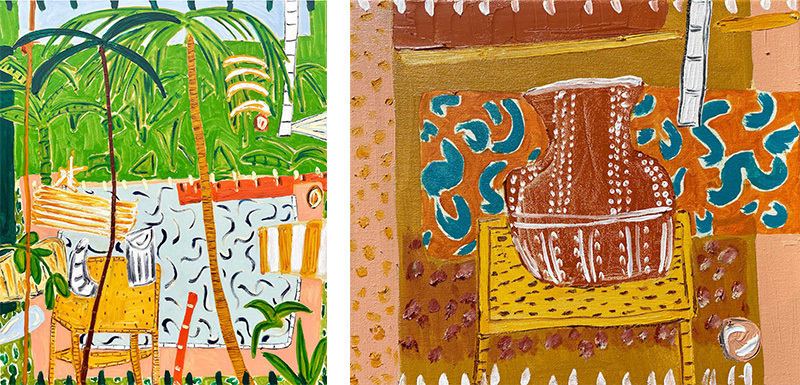 Alec Cumming, Poolside light, Oil On Canvas, 107 x 92 cm, and Sun pot, Oil On Canvas, 30 x 36 cm.
Building a Painting Through Color, Composition, and Intuition
As he has traveled the world, his working method has been to build up an image bank across years and continents. Back in his studio, he’ll transform these raw materials into his signature blocky, relaxed paintings.
He begins by staining a canvas with turpentine and a light color. “This helps to make sense of the canvas and gives a good base rather than an empty white canvas,” he tells Artwork Archive.
Then he sits with the canvas, playing with the possibilities, not unlike daydreaming under an umbrella on a sandy beach. “After that I lay rough marks,” he explains, “then move to picking objects and elements that help create the composition and focus the end goal of the piece.”
That snap of focus is important to him: he’s not after a photo-realistic picture, but rather a subtle balance between all the elements coming into alignment.
It’s a gut feeling more than anything else for him: “When I feel a painting is finished is that point when the focus is clear, almost like when you focus a camera, you kind of need to allow yourself to be free at that point with the process but equally aware that the moment needs to be captured and stopped at that very stage.”
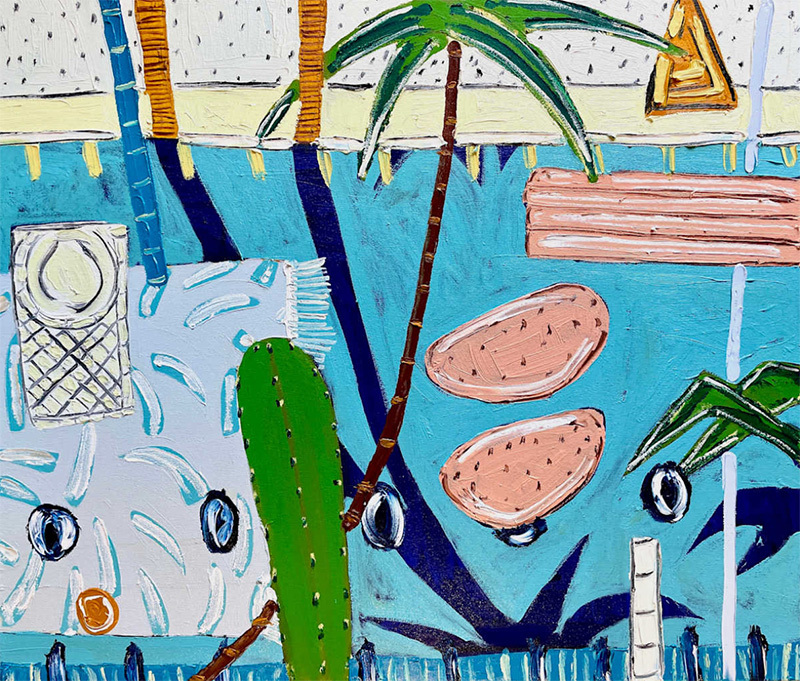 Alec Cumming, This mind that wanders, Oil On Canvas, 60 x 70 cm.
How Alec Uses Visual Memory to Inspire His Art
Waking in a beach-side bungalow, lounging around a pool at midday, whiling out a monsoon in a humid hut, these are the feelings that Alec’s colorful paintings evoke. They’re calm canvases, relaxed in the way only sun-baked skin relaxing in the shade can be.
He lets the painting process itself be a bit of a surprise, based on the sensations he can recollect from being in a particular place. “I love thinking about visual memory in that sense, racking my own memory bank for something visual, or even a feeling to capture on the canvas,” he shares.
It could be the tiniest thing in a photograph: a sun lounger out in the sun or the pattern on an each towel, a succulent plant’s curve or a terrazzo table’s geometric design. “Basically anything that pulls you instantly back to a moment,” is how he describes it, “and you linger there for a while losing yourself in it.”
But each painting is less about a specific place and more about a sensation he can recall. “When I draw from my bank of images and memories, it’s more lyrical than representational,” he offers. “The works are about how I vocalize that sensation.”
For him, the paintings are all about an inner calmness and peace, and a lot of his studio practice is about cultivating that serenity as he goes about the work: “It’s about looking inside yourself and painting from that calm.
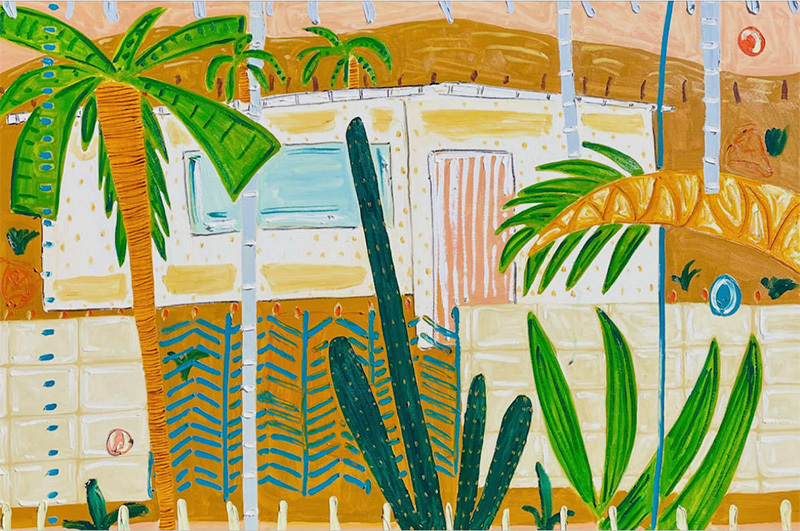 Alec Cumming, Baked earth and warm buzz, Oil On Canvas, 99.8 x 152 x 4 cm.
How Alec Manages a Growing Art Career
As Alec has grown as an artist, he has developed a healthy understanding of what success looks like. Yes, he enjoys showing his work in galleries, and yes, it’s always gratifying to close another sale to an enthusiastic collector. But for him the real success comes from being able to live the life he has chosen.
“I feel lucky these days in that when I sell works to collectors I buy myself more time in the studio,” is how he thinks of true success. “To be able to go to the studio every day feels like a privilege and to me is a marker of success and it drives me to create more, pushing my work and ideas further.”
But to make the most use of his time in the studio, he’s had to lean on some key tools.
“For years I struggled to wing it with artworks out on consignment and making records of what had sold,” he remembers, “but it became incredibly confusing as my career progressed.”
“About a ten months ago, I realized that my paintings were going off to several different locations at once and it was becoming more difficult to keep track of them with all my different galleries,” a feeling of overwhelm that many artists can relate to.
He searched around for ways to control this consignment chaos and stumbled upon Artwork Archive. He learned that by inputting his art inventory into Artwork Archive, everything else became that much easier.
📦 Keep Track of Every Piece Out on Consignment
When your work is out with several galleries at once, it’s easy for pieces to get scattered across different locations with no single place to check what has sold or where a painting actually was. That's where having a robust inventory in Artwork Archive saves the day.
Picture a gallery calling to ask if a specific painting is still available. Instead of digging through spreadsheets and email threads, you pull up the piece record and see its current location, consignment status, and sale history in seconds.
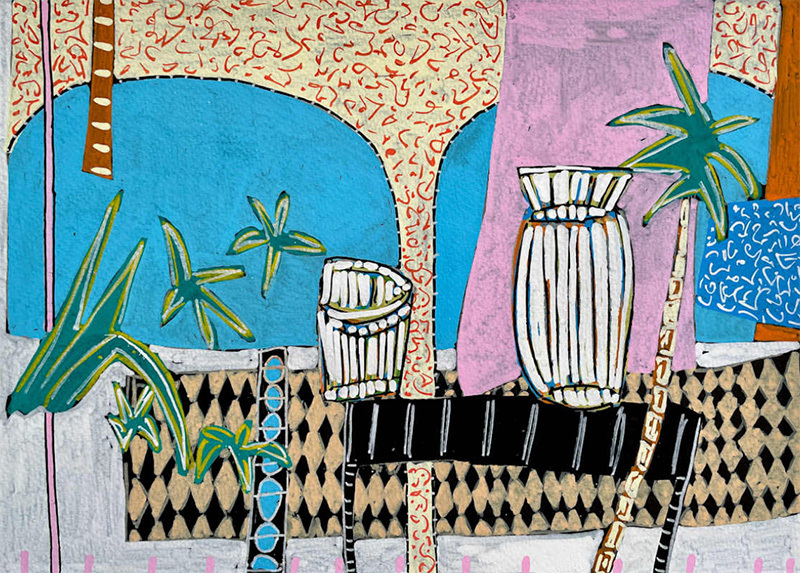 Alec Cumming, Making sense of the afternoon haze, Acrylic ink on paper, 20 x 28 cm.
The Art Inventory System Behind Alec’s Growing Career
With Artwork Archive, all of a sudden he was able to use his inventory to create presentation-worthy documents of available works.
He was able to create Private Rooms to share curated selections of his artworks with his clients.
He was able to respond to gallery inquiries quickly and efficiently, letting them know that he was an artist they could trust to deliver on his promises.
He was able to assign his individual artworks to each gallery he worked with, so that he never lost track of his pieces again.
“Learning how to keep record of works with something like Artwork Archive has been a game changer for me,” he says now with satisfaction.
It’s allowed him to feel confident and in control of his art career, and no longer worry all the art business admin that used to take up his days, “meaning I can get back to painting more quickly!”
🏠 Give Every Gallery Its Own Curated Room
Building trust with a gallery often comes down to how easily you can show them the right work at the right moment. Alec used Private Rooms to do exactly that, sending curated selections to clients without cobbling together attachments or links each time.
Say three galleries are each considering different bodies of work. One Private Room shows a curator your recent travel-influenced series. Another shows a collector the smaller studies they've already expressed interest in. Each room stays specific to that relationship instead of one generic portfolio doing all the work.
Alec’s Advice for Artists: “Stick to Your Guns!”
Alec has been surprised by how much his travels have fed into his painting, but for him, it all goes back to his guiding ethos for art making.
“Be honest in the work you make,” he urges artists who are trying to find their way. “There’s often a desire to follow trends within painting, but the best trend is honest work that comes from you.”
He had to shift his mindset so that he could really embrace the direction his art wanted to go in, and not be swayed by what other people thought his art should be.
“If there’s one thing I was told when I was still studying is that you should always listen to advice but ultimately go with your gut,” he recalls. “People who love art will see the honesty within your work and I feel truly great art starts with authentic approach to image making.”
As he continues to travel around the world, collecting experiences and adding to his image bank, he’ll be following the advice he’d give to any artist that asked: “allow yourself to come to terms with your own language in art and not be afraid to let those ideas unravel at their own pace.”
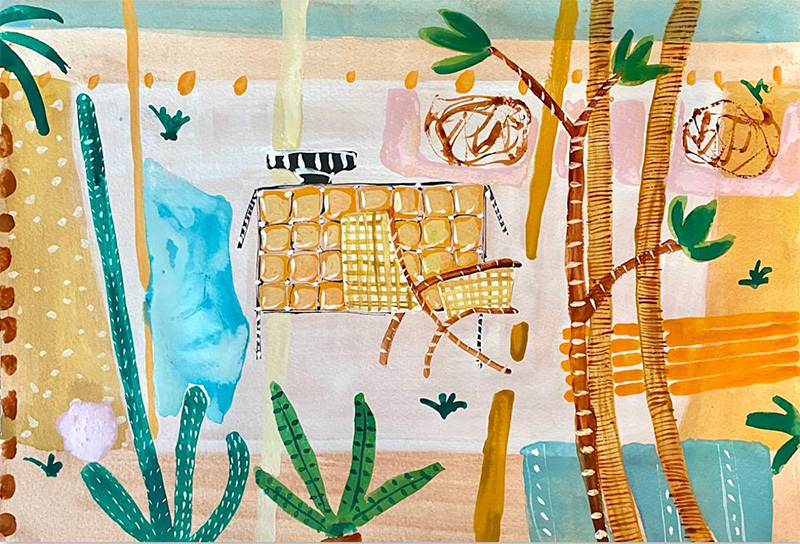 Alec Cumming, Saguaro basking, Gouache and watercolour on paper, 30 x 40 cm.
A few years ago, Alec was tracking consigned work across multiple galleries with no single place to check what had sold or where a piece actually was. Today, he pulls up a record in seconds and gets back to painting. If your inventory is still scattered across spreadsheets and email threads, Artwork Archive can bring it all into one place. Try it free for 14 days and start your next artwork with one less thing to manage.