 Learn how Portfolio Pages, QR Codes, Address Labels, and Certificates of Authenticity can elevate your presentation and impress collectors. Image courtesy of Ana Žanić.
You’ve done it! The dates are set, the gallery is ready, and your solo show is officially on the calendar.
But as the opening approaches, a different kind of work begins. Will you be ready when a collector asks for a Certificate of Authenticity on the spot, or when the gallery demands a consignment list by EOD? Will you be ready when unexpected requests come up? Are you prepared to take advantage of everything this opportunity has to offer?
Don’t worry, you’re not alone. Many artists, even the ones who have been showing their work in galleries for years, still feel like they’re playing catch-up as exhibition deadlines approach. They generally feel unsure what to prepare in the lead up to the show, they feel confused about how to relay information about their work during the show, and they leave to the last minute all the necessary follow-up required after the show to turn this opportunity into a step up in their career and a financially rewarding experience overall.
That’s where these artist documents come in. By breaking down each stage of the exhibition process into a discrete artist document, you’ll be sure to have everything you need in order to make your next exhibition a success.
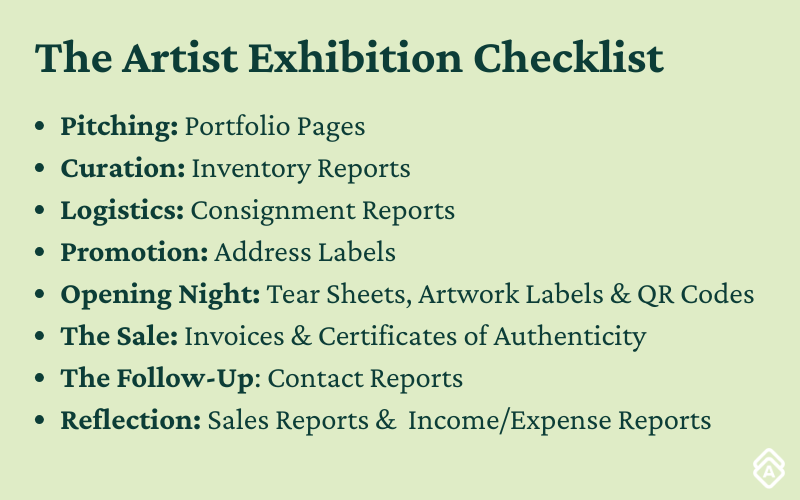
Read on to learn how you can pitch galleries with sleek Portfolio Pages, work out which pieces you’ll show with Inventory Reports, nail down responsibility with Consignment Reports, promote your show with Address Labels, keep exhibition visitors informed with Artwork Labels and QR Codes, follow up with your newly expanded network with Contact Reports, and much more.
Create Professional Artist Portfolios That Impress Gallerists
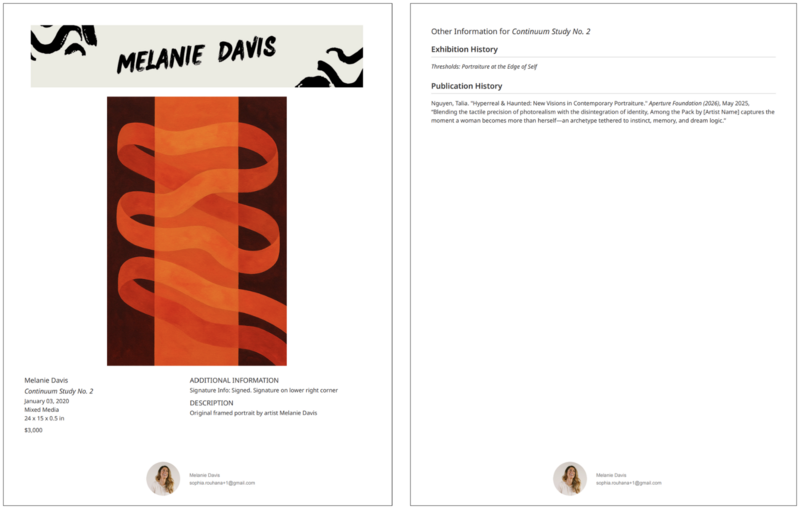 Portfolio Pages feature large, presentation-worthy images of your artwork, along with all the information galleries need to say "yes" to your work.
You’ve been in the studio honing your pieces for months now, and you’re finally ready to show them with the world. There are a few galleries you’ve worked with in the past, and a few new ones you want to reach out to. But how do you take the first step of sharing your work with them? Your website needs updating, your Instagram is too cluttered right now.
You need a clean document that will impress your contacts, and you need it to be easy to create.
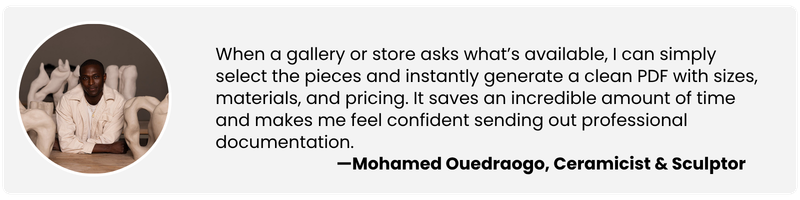
Enter Artwork Archive’s Portfolio Pages. With a Portfolio Page, you can curate custom collections of your artwork and generate sleek PDFs that you can easily share with potential gallery partners.
A Portfolio Page features a large image of an artwork, along with the piece’s title, dimensions, medium, and any other information you choose to share. It can include that piece’s Exhibition History, Publication History, details about signature or pricing, and it always includes your contact information at the bottom.
You can add as many pieces as you want in a single Portfolio Page report, creating one PDF that you can use to share the recent pieces you are most excited about. That means you can stop wrestling with complicated design software and start pitching galleries with the confidence that your branding matches the quality of your work.
You can even add a custom Cover Page that can include a headshot and your artist bio, which is a great place to add any information about the body of work you're sharing.
Use Inventory Reports to Curate Your Next Art Exhibition
The next step is where the magic happens. A gallery has responded to your outreach, they love the work you’ve been making and want to narrow down the pieces they could show.
With Artwork Archive’s Inventory Reports, you can select as many pieces as you like to create a document that contains thumbnails of your pieces along with key information like dimensions and pricing. You can sort your pieces by medium, year, or any other criteria.
With the clean Inventory Report in hand, you’re making it simple for your gallery to pick their favorite ones, making you the kind of organized artist galleries want to work with again. Pair the Inventory Report with an online Private Room, and the curation process gets even more intuitive.
How Consignment Reports Protect Your Art Once it Leaves Your Studio
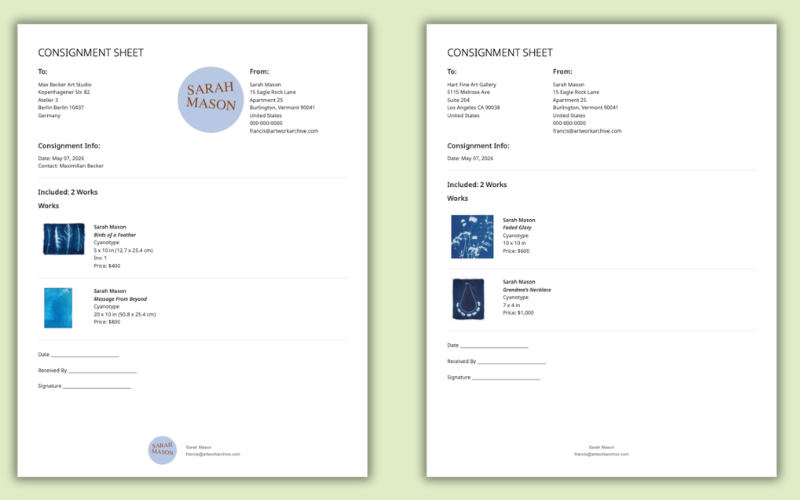 Consignment Reports make it easy for you and your gallery to agree on the key terms that make a working relationship stronger.
Once you and the gallery have decided which pieces will be included in the show, it’s time to work out the details of the loan. When will the show open? How long will the show last? How will the gallery care for the works during the duration of the show? What are the pieces’ standard prices, and how big of a discount are you authorizing the gallery to offer to prospective collectors?
All of those details can be worked out in your Consignment Report. This document details exactly which pieces you’re handing over to the gallery, how long they’ll hold them, and all the other details you have agreed upon. Your gallery signs and dates the report when they receive the works: this creates peace of mind for you, and galleries will appreciate having clear terms for the relationship.
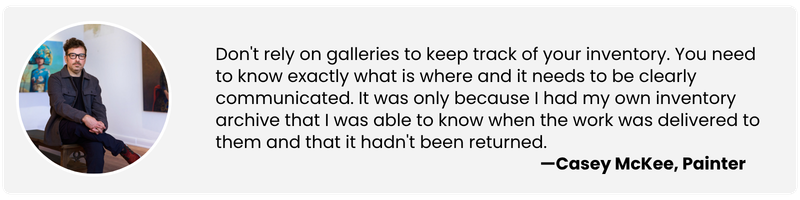
Plus, in the worst case scenario that a gallery shuts down, or misplaces an artwork (it happens!), you’ll have clear documentation of which pieces you have loaned to the gallery, and what their prices were—good protection to have, if you need it.
Streamline Your Promotion and Outreach to Pack the Gallery
The show opening date is set and you’ve dropped off your pieces—now it’s time to spread the word.
With Artwork Archive's Contact Relationship Management tools, you can track all your contacts: visitors who came to previous shows, collectors who have expressed interest in your work in the past, gallerists whose roster you admire, plus your artist friends and your family.
All these people want to hear when you have new work you want to share, and all of them will appreciate a personal invitation to your show. Your community is what makes your art career possible, and it’s what gives meaning to such important milestones as a solo show!
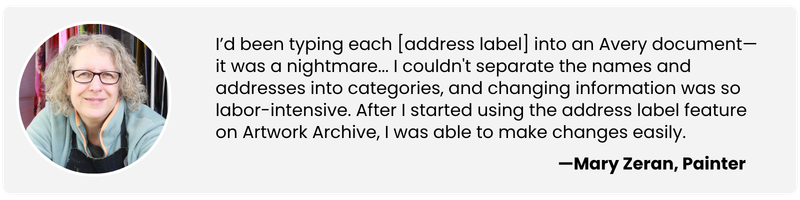
As you’re preparing for the opening, send out postcards to all these people using Artwork Archive’s Address Label creator: with this tool, you can easily turn your Contacts into printable, stickable, mailable labels.
You just select all the contacts you want to mail postcards to (this is where Groups comes in handy), choose the size you’re working with (Artwork Archive supports both US Letter and International A4 paper sizes), and your Address Labels will automatically generate in a printable PDF that you can use on address lable sheets you can purchase at any office supply store. This is a huge time saver when it comes to mailing out your show invitation.
Printable Artwork Labels and Tear Sheets Take the Guesswork Out of Exhibition Presentation
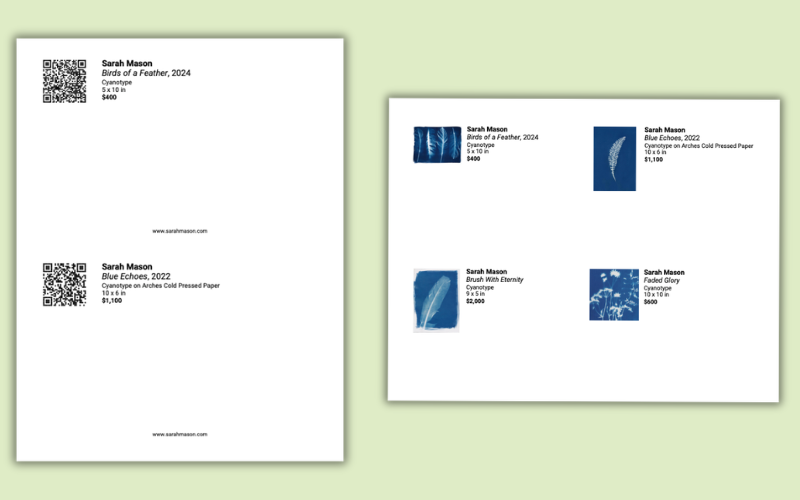 Artwork labels that generate with the click of a button—not hours of data entry. Plus, add QR codes so visitors can scan and purchase directly from their phones.
When the show opens, your visitors want to know everything they can about your art. They want to know about the artist, they want to know what ties these works together, they want to know the titles of the pieces on the walls. And since your show has been so professionally put together, they’ll want to know the prices of the pieces on view.
Give visitors an easy entry point to your creative process by printing out copies of a Tear Sheet to place at the front of the gallery for them to pick up. A Tear Sheet shows thumbnails of the works in your show, and can also display customizable information including dimensions, creation date, and price.
Like Portfolio Pages, Catalog Pages, Exhibition Reports, and a selection of other Reports, you can include a Cover Page for your Tear Sheet that shows your headshot, bio, and any other information you want to share about the show. Think of this packet as the price list that visitors can carry around as they experience your show. (Bonus points for printing this in color!)
Even better, you can use Artwork Archive to create Artwork Labels to stick next to each piece in the show.
These labels are highly customizable to show all the information you want, nothing you don’t. For example, you can display Framed Size, your artist website URL, email, and phone number, and you can choose between serif and sans serif fonts.
You can even add QR codes so that visitors can open a link on their phone that goes straight to the artwork page on Artwork Archive, or to a custom payment site to purchase pieces.
Track Your Artwork Sales With Income and Expense Reports
Congrats, the opening was a success and you sold out the show! It’s a great feeling to see the positive reactions flowing in. It’s even nicer when you get to walk away with a good profit from the show.
To see exactly how you fared on this exhibition, you can use Sales Reports to see which pieces you sold, how much you sold each for, and how much you earned in total from the show. If you work with multiple galleries, or show in different cities, this can be a useful way to track which locations are working well for your art business and which might need a bit more attention.
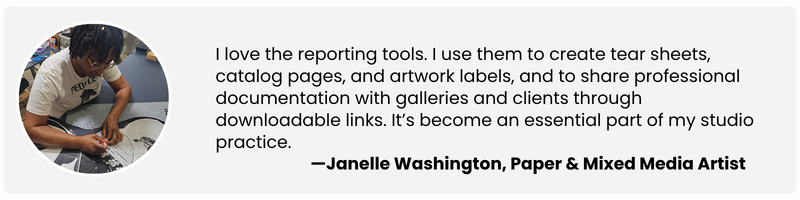
Sales are great, but it’s important to have a holistic view of your art business as well: that’s where Income and Expense Reports shine. With these reports, you’re able to see how your sales income factors into the bigger picture of your overall business health. You can run reports for custom time periods to see how you’ve been doing in the past month, the past 12 months, or for an entire calendar year, for example.
For this show, framing costs, studio rent, printing costs for the show invitations all took a chunk out of your sales revenue—but looking at your full Income/Expense Report you see that you came out well ahead.
Build Collector Confidence with Certificates of Authenticity
When you hand over your pieces to the lucky new owners of your artworks, there are a few steps you can take to make these collectors feel valued.
Creating and printing out an Invoice provides your collector with a tangible record of the sale, which they can file away for their own records. This is also the place where you can itemize all the different charges—and perks—that you're including with the sale.
Depending on the situation, you can list the original price, the discount you're offering to this collector, shipping costs, framing costs, even an automatically calculated tax rate. It's an easy way to reassure your collector that this sale is professional and well-documented.
The second Report to add at the time of sale—and one that too many artists forget about—is a Certificate of Authenticity (COA).
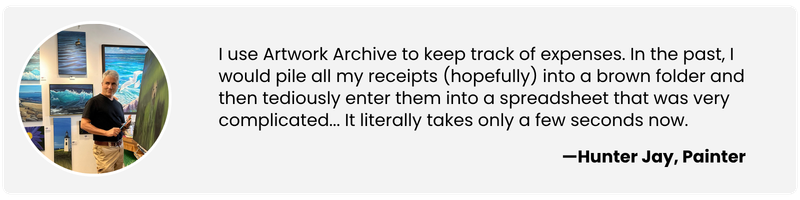
A COA is the document that verifies that the work is a legitimate, unique artwork from your studio. This lets your collector know that their purchase is easily verifiable, and it allows you to retain copyright to the piece and protects your work against unlawful reproduction. Plus, a collector often appreciates having an official, signed document memorializing their purchase (consider printing these on nice paper for an elevated feel).
Artists: Don't Forget to Follow Up With Your Collectors After the Show
You’re glad you included QR codes on the Artwork Labels for this show, because a bunch of people followed those links and signed up for your newsletter. You also had some great conversations with people at the opening and got their contact information, which you diligently added to your Contacts in Artwork Archive.
Now’s the time to thank those people who attended the opening and update your audience on the success of the show.
The first step here is find the people who you want to reach out to (you can easily sort your Contacts by Groups—for this show, add all the new contacts you received to a Group like “Gray Space Gallery Summer 2026 Show Attendees”).
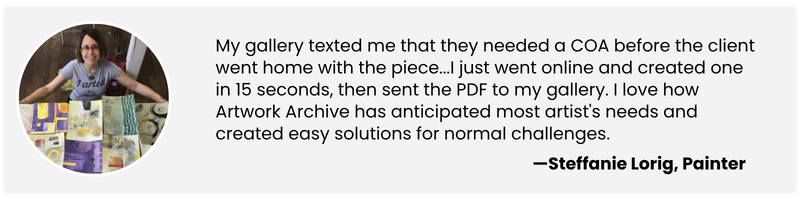
Then you can create a Contact Report to get all that information in one PDF. You can also export all those contacts as a CSV file to add to your newsletter, or turn them into Address Labels to send out a personal, physical message.
💡 Pro Tip: It’s always worth sending a personalized “thank you” to anyone who purchased one of your pieces. Small touches like these make collectors feel like valued members of your community, increasing the likelihood they’ll continue to support your career in the future.
How Artwork Archive Reports Take the Headache Out of Artist Documents
The best part is, you don’t have to create all of these documents from scratch. Artwork Archive makes it absolutely simple to create all the documents a working artist may need in their creative career, with customizable fields that can be tailored to any art business.
You can even save your tweaks to the documents as Templates, so you can be sure to reproduce the exact form of your document you may need at any time.
Any artist who has had a collector ask them for a Certificate of Authenticity on the fly, or had a gallery request a rundown of their inventory by the end of the day, or even just a friend asking for an invoice for their print purchase, knows how valuable having these documents at your fingertips really can be.
All of which means that your days of messing around in word processing apps or paying for expensive design software subscriptions are over. Everything you need for your art documents lives in one place, alongside your entire inventory, your contacts, and the calls for entry that you’ve applied to.
Stop Playing Catch-Up. Start Building Your Art Career.
Your art deserves a presentation as thoughtful as the work itself. Join the thousands of professional artists who use Artwork Archive to manage their inventory, impress their collectors, and get back to what matters most: creating their art.
Build Your First Report: Start Your 14-Day Free Trial