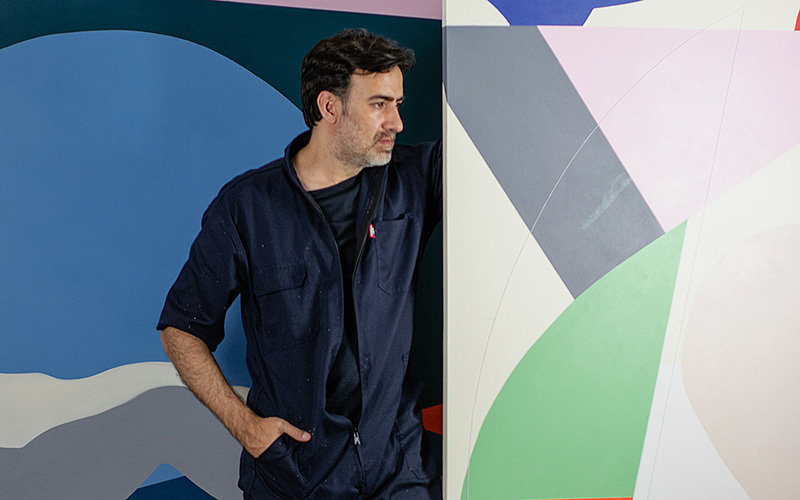
 Featured artist Aníbal Vallejo has learned that a little structure can tame the chaos of freedom.
“Color is deeply personal. It comes from the subconscious, which is why each person experiences it differently.”
Fragments of memory and identity are woven into the very fabric of Featured Artist Aníbal Vallejo's work.
The Colombian artist's practice elegantly bridges the gap between painting, textile, and conceptual investigation, creating layered surfaces that explore the delicate passage of time.
Working with the precision of a researcher, Aníbal begins each project with a deep dive into his subjects before translating his findings into expansive sequences of paintings: "This allows me to keep moving forward even if one piece becomes challenging; I simply move on to the next, which helps maintain momentum in a process that can often feel complex."
Read on to see how Featured Artist Aníbal Vallejo weaves personal experience into his conceptual canvases, how he manages the balance between creative freedom and self-imposed discipline, and how Artwork Archive helps him run his art business like a professional.
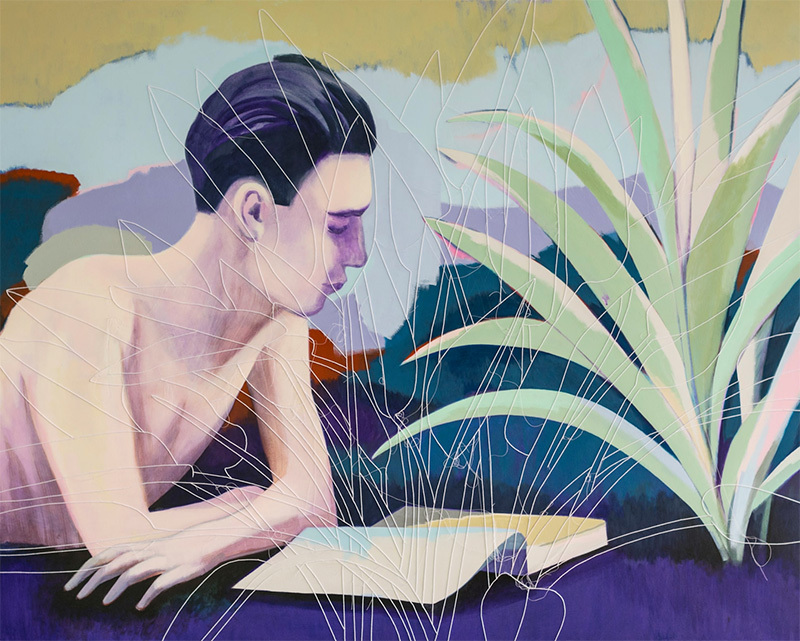 Aníbal Vallejo, Untitled #536, 2018, Acrylic and Hand Embroidery on paper
How Aníbal Bridges Art and Fashion
In Aníbal’s work, the arrangement of a shirt on a figure, or the gathered folds on a pair of pants, belie a deep understanding of how fabrics should sit on a person. It might not come as too much of a surprise, then, to learn that he has degrees both in visual art and in fashion design.
What might be more surprising is how compatible he has found these two educations to be with his painting: “They are two different worlds, though closely related, and in many ways they nourish and enrich one another.”
He received his degrees in Colombia, and later moved to Europe to continue honing his painting craft, before finally setting up his studio in New York City, where he currently lives and works. Along that journey, what fashion design has brought to his paintings is a sense of groundedness. “Fashion contributes to my work through material diversity and through a particular way of approaching the object,” he tells Artwork Archive.
In his canvases of figures reclining, dancing, swimming, or just existing, it’s not unusual for paint to be embellished with threads and embroidery. He works across figuration and abstraction, with carefully constructed portraits existing alongside energetic studies of color relations. His works in acrylic, watercolor, graphite, and oil show an artist deeply in tune with his process of creation.
He finds the creative foundation of fashion quite similar to that of art: both begin with a spark—an idea or concept—that necessitates a search for specific materials and the careful curation of a color palette.
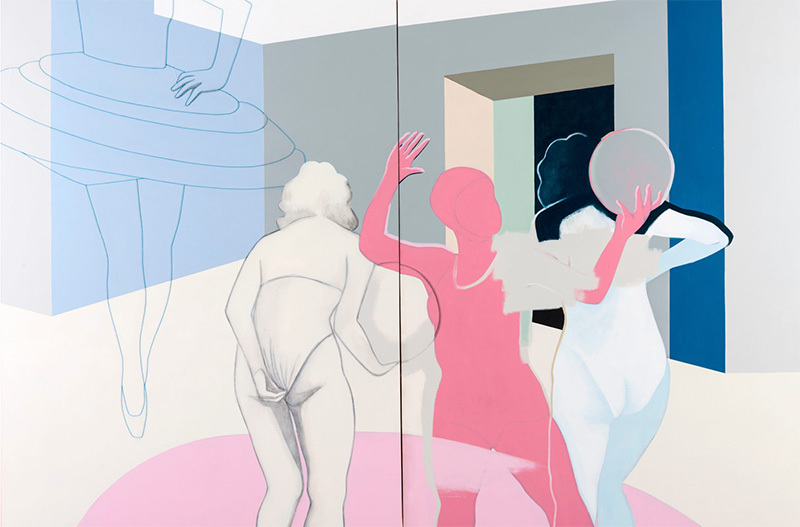 Aníbal Vallejo, Untitled #496, 2017, Oil and Hand Embroidery on Canvas
The Question That Defines Aníbal’s Entire Art Practice
In Aníbal’s work, color is never just color.
Instead, he uses color as a language of its own, using it to evoke memory, feelings, and deep psychological inquiry.
“Color is deeply personal,” he shares. “It comes from the subconscious, which is why each person experiences it differently.”
Whenever he stands before one of his canvases, he is asking himself a question that might seem simple, but actually contains a whole life of artistic exploration: How does one color work next to another?
“It’s a basic question, yet it defines an entire painting,” he explains. “What does this painting have that the other one doesn’t?”
This question distils the soul of a painting. It’s the search for harmony, a balance that can change the entire emotional temperature of a room.
Whether working with a vibrant palette or more muted tones, he’s searching for that specific frequency where the colors begin to speak to one another.
“From there, I begin exploring the infinite variations that exist, while trying to ensure they function within my internal palette,” he offers. “Something I can’t fully describe, but which ultimately forms the foundation of my painting.”
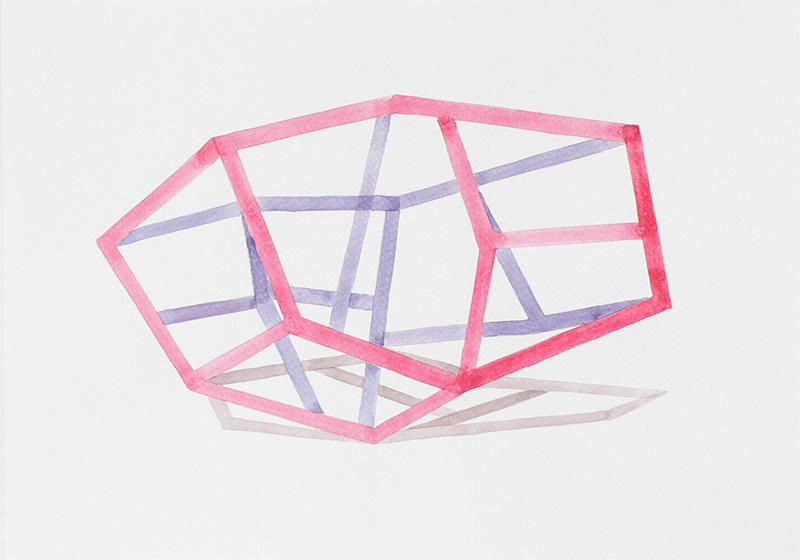 Aníbal Vallejo, Untitled #257, 2015, Watercolor on Paper
How Aníbal Creates Structure In His Art Career
For many outside the art world, the life of a professional artist appears enviably free: No bosses, no schedules, creative control over every aspect of one’s work. Yet Aníbal has come to find that total freedom can be its own kind of constraint.
“I’m very afraid of the freedom I have as an artist,” he admits. “I work when I want, how I want, and from wherever I want. I don’t have to keep a schedule or report to anyone. Although it may sound ideal, it doesn’t feel that way to me.”
When everything is possible, it frequently can feel like nothing is possible. “Contrary to popular belief, too much freedom can become a prison, and this forces me to maintain a high level of discipline and rigor in my work,” he notes.
This realization has forced him to create a kind of structure that rivals any 9-to-5 job. In his world, there is no such thing as “free time” or a “vacation,” because his mind is always at work.
His solution is to forge his own rhythms based in the work itself: “Everything revolves around the same thing: solving small problems that don’t really exist—vermilion red or alizarin crimson?"
“My favorite part is when I no longer have to think and the painting begins to flow naturally,” he says. Alas, “unfortunately, that moment never lasts very long, and then it’s time to begin again.”
This self-imposed discipline is the only way he has found to ensure that the work actually leaves the studio.
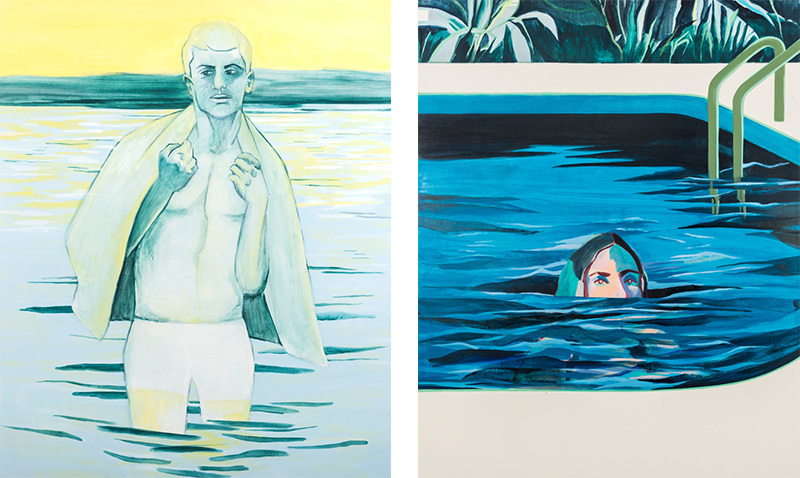 Aníbal Vallejo, Untitled #621, 2022, Acrylic On Canvas, and Untitled #613, 2021, Acrylic On Canvas
The Tool That Saved Aníbal’s Art Business
As Aníbal’s career progressed and he started getting more interest in his work from around the world, he realized that a successful art career is not just about what happens on the canvas. It is about “mastering the entire chain”—from the initial research that goes into a piece, to the painting of the piece, to its exhibition and final sale.
“You have to be prepared to handle all those details that are fundamental to an artist’s career,” he advises. “There are no hidden geniuses in a globalized world.”
To be an artist today is to be a manager, an archivist, and a publicist all in one. As demand for Aníbal’s work increased, he discovered that he was spending an unsustainable amount of time digging through photo archives and old studio files every time a gallery or client asked about availability. He would create PDFs with images and data for each piece, only to have to repeat the entire process the following week for a different gallery.
The friction was taking him away from the studio, and he realized he needed a way to organize his entire body of work as rigorously as he had structured his creative practice.
Then, he found Artwork Archive. The platform’s robust tools allowed him to sort by year, format technique and whether the piece was sold, on loan, or currently in an exhibition. He can filter exactly the type of work a client is looking for in seconds, when it would have taken hours with his old messy file system.
He can also use the Private Rooms feature to curate a specific selection of work and share that private link directly with a gallery.
With Reports, he can also generate a PDF of a specific body of work and send that professional-looking document to collectors interested in his work.
And best of all, he can do all of this from wherever he finds himself in his busy career. He’s found it immensely helpful to have "an inventory available on your computer or phone, and be able to share files or images quickly and efficiently.”
“That ease and efficiency are essential in today’s art market,” he tells Artwork Archive.
Create a Perfectly Curated Selection of Your Work
With Artwork Archive's Private Rooms tool, you can easily create a selection of your work tailored to any occasion. A gallery wants to see more of your work? A client is interested in a specific theme? A collector wants to see what's currently available? Private Rooms make it easy to share your work on your terms. Give Private Rooms a try today.
Aníbal’s Advice For All Artists
When asked what advice he would give to an artist just beginning their journey, Aníbal’s answer is practical and direct.
“From the very beginning, I recommend organizing your entire body of work—the good and the not-so-good—because it’s all part of an ongoing process,” he advises.
Even the work that fails to live up to your standards charts your evolution as an artist, and can be helpful to look back upon years from now to see how far you’ve come.
He urges young artists to realize that all the work that goes on in your studio has to be supported by equally rigorous business management. By establishing an effective and sustainable art inventory system early, artists can ensure that when a major opportunity finally comes along, you’ll be ready to meet it with professionalism and poise.
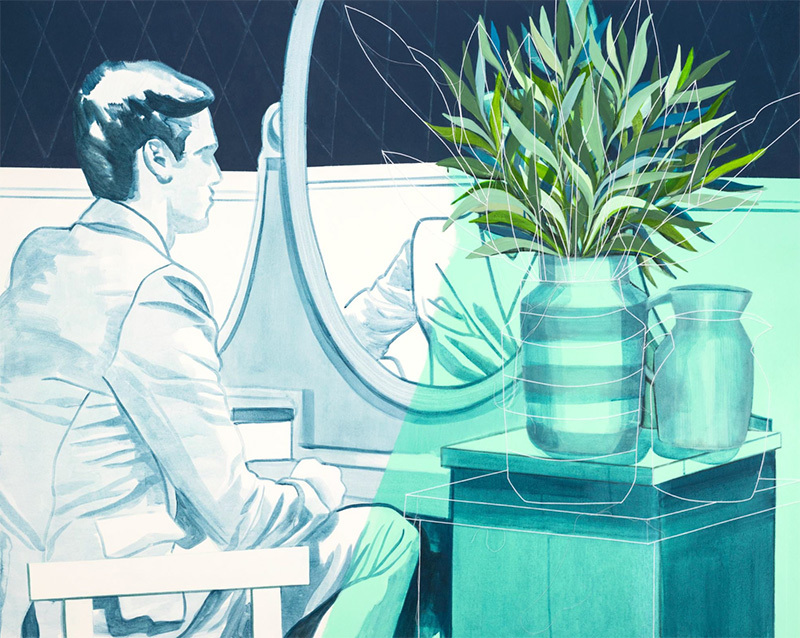 Aníbal Vallejo, Untitled #535, 2018, Acrylic and Hand Embroidery on paper
Success in the art world doesn’t happen overnight, but it can be built slowly, methodically, and with care. If you start now, you’ll be much better placed when that exhibition opportunity, or commission, or even late-career retrospective comes your way. Start planning for the future you want, today.
Aníbal Vallejo’s practice is a testament to the power of self-imposed structure. By teaching together the technical precision of fashion, the intellectual rigor of his painting practice, and the professional polish of a modern business, he has create a space where his art can truly flourish.
He has turned the intimidating freedom of the artist’s life into a sanctuary of creative, ensuring that his work will be preserved and shared for years to come.
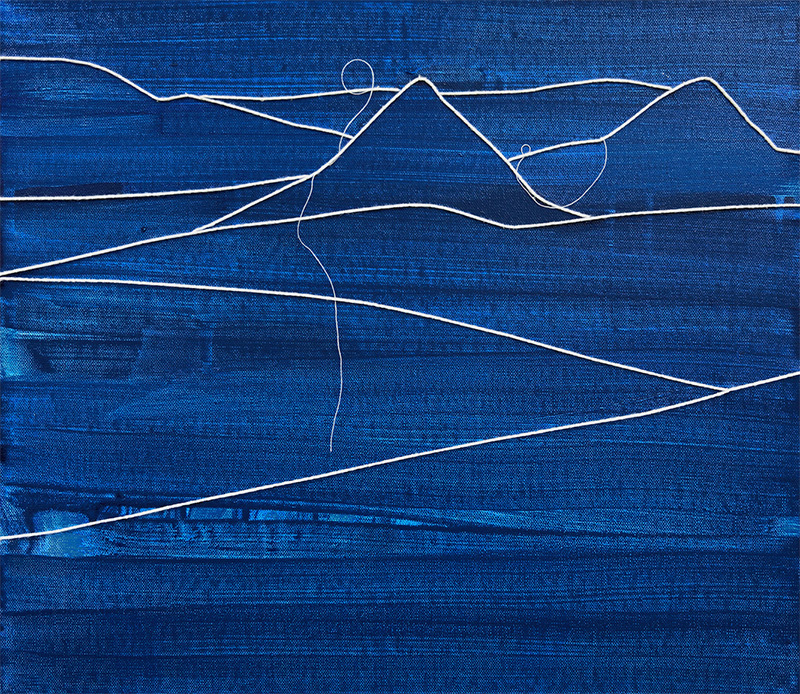 Aníbal Vallejo, Las horas (6:40 p.m.), 2025, Acrylic and hand embroidery on canvas
Is your studio in need of more “structure?” Like Aníbal, you can move away from fragmented file systems and laborious PDFs to a system that grows with your art career. Start a free 14-day trial of Artwork archive to get organized, present your work professionally, and give yourself the mental space to focus on your next big breakthrough.