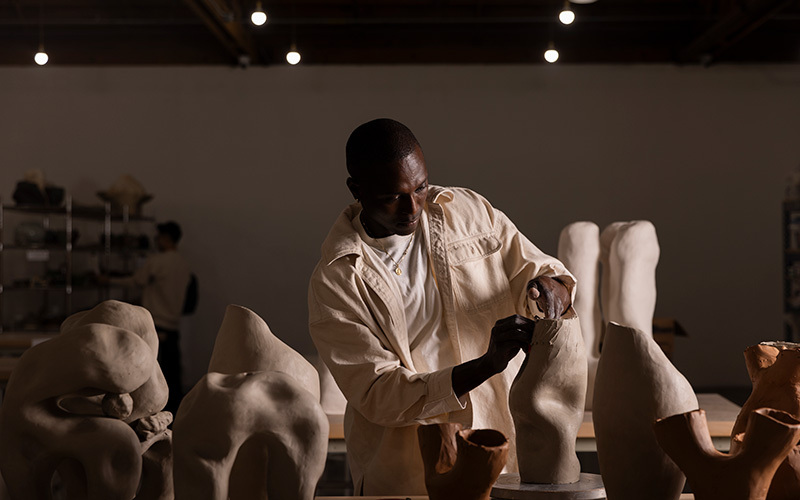
 Featured Artist Mohamed Ouedraogo creates ceramic objects inspired by the curves and wrinkles of the human body. Photo by Maxwell Poth.
There’s a vital inspiration at the heart of Featured Artist Mohamed Ouedraogo’s ceramic pieces: the human body. His vessels, wall pieces, and tables shift and bulge like muscles rippling under the skin, a limb compressing and then pulling taut.
It’s fitting, then, that he hand-builds his pieces, rather than wheel-throwing as many ceramicists do. The Los Angeles-based artist feels drawn to earthy glazes that let the experimental forms he creates remain the center of attention.
“I love that my work feels dynamic rather than fixed,” he tells Artwork Archive. “I’m drawn to asymmetry and pieces that transform depending on how you view them; even a slight rotation can completely change their identity.”
Want to learn how Mohamed Ouedraogo creates his pieces that exist between function and form, how he has learned to prioritize opportunities that feel like the right fit, and how a date turned into a life-changing new path for him? Read our full conversation below.
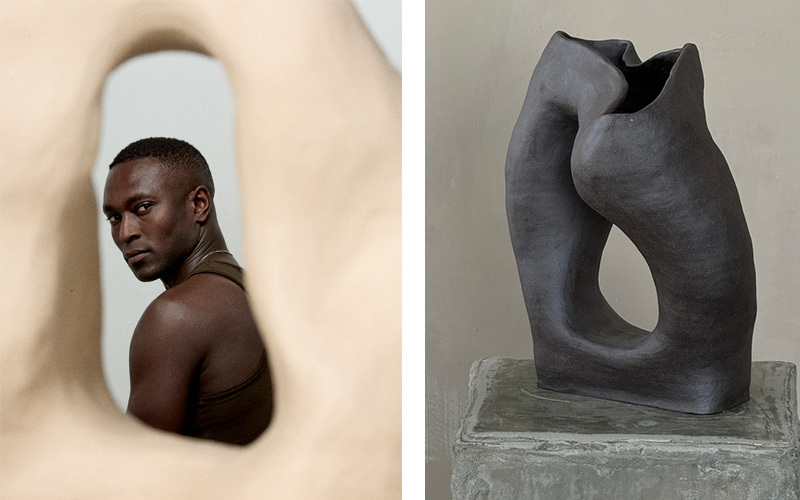 In his ceramic forms, Mohamed has found a way of capturing the dynamic way our bodies move. Artist photo by Ted Menne Heron. Right: Mohamed Ouedraogo, Vessel 3, 2023, Ceramic, 13 x 10.5 x 7 in.
How Mohamed Found His Ideal Artistic Medium
Mohamed has a date to thank for his artistic practice. He was telling his date how he wanted to work with his hands, and they suggested he try out ceramics.
“I tried the wheel first and didn’t love it,” he admits, “but once I discovered hand-building, I completely fell in love.”
He now creates his pieces using a coil-building technique, which he says, “allows the clay and me to have a kind of conversation.” He lets his pieces evolve as he’s building the piece, so while he might start with an idea for a vessel or a sculptural piece, the clay will lead him where it wants to go.
“My favorite part of the process is entering that flow state,” he tells Artwork Archive, "when the clay begins to lead and the piece transforms into something unexpected.”
His pieces can look otherworldly but still be quite functional. “At the moment, I’m focusing on pieces that bridge function and art,” he shares. Right now that means modular ceramic coffee tables that can stand alone or be grouped together to support a sheet of glass. It means ceramic-framed mirrors and lighting.
All of these explorations are motivated by a clear ethos: “While beauty and individuality always guide my forms, I love when a piece finds practical purpose in a space. To me, the most powerful objects are those that feel sculptural yet fully livable.”
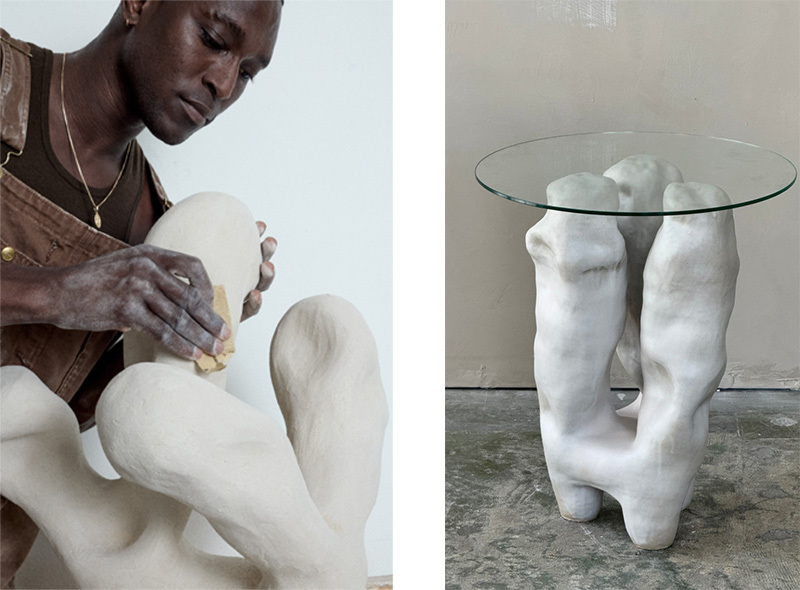 Mohamed at work in his Los Angeles studio. Artist photo by Ted Menne Heron. Right: Mohamed Ouedraogo, Simmer Down, 2023, Ceramic, Glaze, Glass, 23 x 12 x 12 in.
How the Human Body Inspires Mohamed’s Ceramics
Ceramics is a very embodied art form. There’s the way your hands mold the clay, the way you can sense whether it’s too dry or getting too thin in one area, the way you can feel the weight of a well-crafted vessel.
Mohamed is drawn to this physicality, and the human body is one of his key inspirations for his work: “muscles, movement, and the way skin shifts and compresses” are all reference points for his pieces.
“I love that my work feels dynamic rather than fixed,” he explains. “I’m drawn to asymmetry and pieces that transform depending on how you view them; even a slight rotation can completely change their identity.”
He often works on multiple pieces at the same time, so that the clay can rest and he can return to a piece with fresh ideas.
“I naturally move fast, but clay—and gravity—force me to slow down,” he reveals. “That tension between speed and structural limits creates pieces that feel almost precarious, like they’re tipping or shifting.”
The end result is that the pieces feel organic, and he picks glazes to match that feeling, “colors that echo stone, clay, coral, and matte black.” All of these choices add up to a signature aesthetic vision: “I want my pieces to feel grounded and connected to nature, yet timeless in a space.”
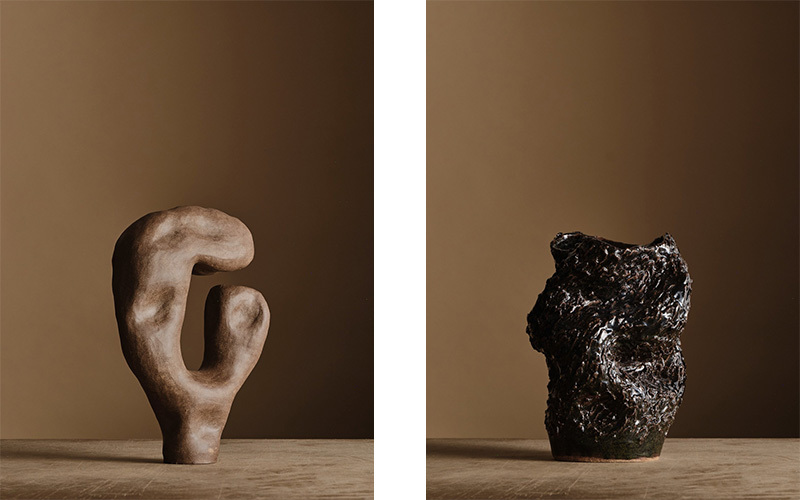 Mohamed Ouedraogo, Sculpture 6, 2024, Ceramic, 17 x 11 x 6.5 in, and Vessel 27, 2025, Ceramic, Glaze, 14 x 10 x 10 in.
Why Mohamed Chose Artwork Archive to Run His Art Business
As Mohamed started working with multiple galleries and getting his art accepted into more shows, he hit a familiar wall that many artists face.
“I was struggling to format inventory lists and keep track of where everything was located,” he remembers. It’s a nice problem to have, but it’s also one that can slow down your art career unnecessarily. He knew he needed a solution.
Then, help came from someone close to him: “My mentor, Ben Medansky, suggested Artwork Archive because it helped him stay organized,” he recalls. “Once I started using it, I loved being able to track whether a piece was in my studio, at a gallery, loaned, or gifted.”
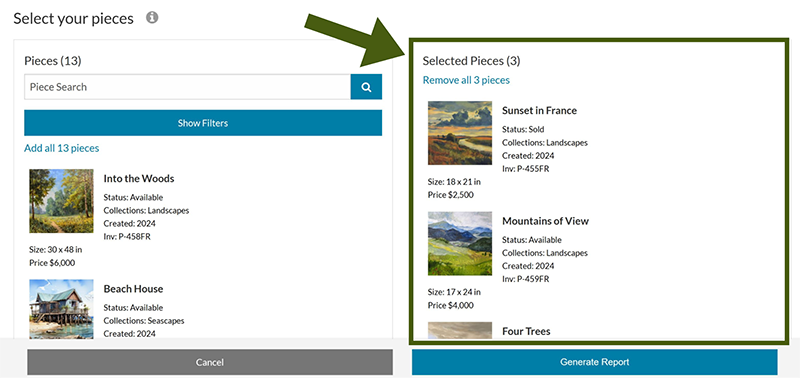
With Artwork Archive, he is now able to create inventory lists in a snap. “When a gallery or store asks what’s available, I can simply select the pieces and instantly generate a clean PDF with sizes, materials, and pricing,” he marvels. “It saves an incredible amount of time and makes me feel confident sending out professional documentation.
Mohamed is glad that he found Artwork Archive when he did, so that his career has been able to continue growing with the assurance that his artworks are documented, their details recorded, and their exhibition history noted.
Keeping such meticulous track of his art business, and being able to present his work in such a polished way, is something that galleries and clients have definitely noticed as well: “It immediately elevated my organization and professionalism.”
All of which gives him the peace of mind he needs to keep making his dynamic ceramic forms: “As long as I keep my inventory updated, everything runs smoothly.”
Stop making inventory lists from scratch:
What if generating a list of all your available works was a matter of a few clicks?
There's one Artwork Archive feature that Mohamed Ouedraogo relies on every week: “My favorite feature is the ability to generate inventory lists.”
With the Inventory Report feature, he can create a professional PDF to send to galleries, collectors, and clients as soon as they express interest. Want to see how easy it is? Try it for yourself for free for 14 days.
How Mohamed Learned to Prioritize His Own Artistic Vision
As Mohamed has built his art business with Artwork Archive, he’s learned that patience is a virtue. But there were some bumps early in his career that he encountered because he felt pressure to get his work out there, regardless of how well the opportunity fit his long-term vision.
“Early on, I thought visibility was everything—but I’ve realized alignment matters more,” he recounts. “I learned that not every opportunity is the right opportunity.”
Just because a gallery or store expresses interest in his work, Mohamed has realized that that doesn’t mean they’re necessarily the right fit for him or for his work.
“The biggest mindset shift is patience—with yourself and with your work,” he urges. “Being selective and patient ensures your work is represented in spaces that truly reflect your values and long-term vision.”
He recognizes that it’s difficult to stop and check in with your inner voice when everyone is posting their new work on Instagram, or people are sharing their new website redesigns, or announcing their new shows. But he believes that patience will lead you to make better work in the long run.
“It’s easy to compare yourself to other artists, but your work will resonate with the people it’s meant for,” he advises. “Being selective and patient ensures your work is represented in spaces that truly reflect your values and long-term vision.”
Not every piece you create will resonate with everyone. But that doesn’t mean you shouldn’t keep following the path you’ve set out on. “It’s easy to compromise out of fear or comparison, but the right people will connect with your work in time,” he cautions. “Stay true to your vision—the audience meant for you will find you.”
Because ultimately, there’s nothing more important than staying true to your personal vision. “Art is an extension of who you are, and not everyone will connect with it—and that’s okay,” Mohamed says. “Trusting that the right audience will find you is powerful. Authenticity and patience are everything.”
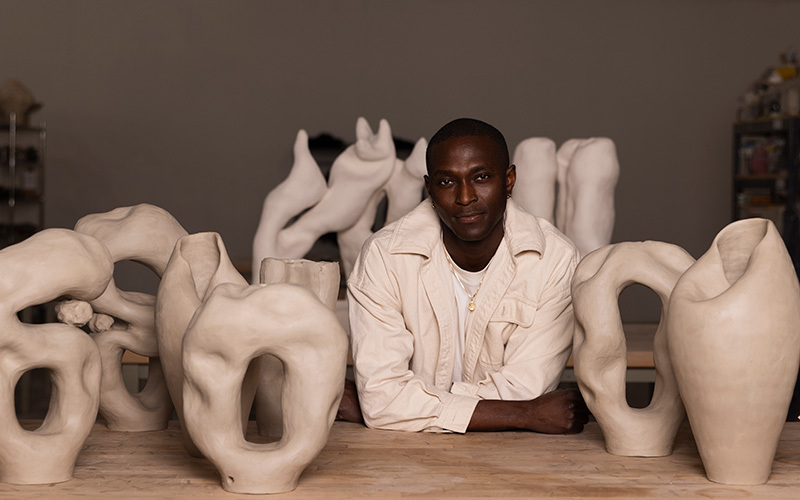 For Mohamed, patience was the key that unlocked authenticity, depth, and satisfaction in his art career. Artist photo by Maxwell Poth.
No matter where you are in your art journey, getting your business side in order doesn’t have to feel overwhelming. A bit of structure now can mean more time and headspace for the work you actually want to be doing.
Artwork Archive helps artists build an online portfolio, stay on top of their inventory, and create things like tear sheets and invoices in just a few clicks. Start a free trial and see how it fits into your own process.