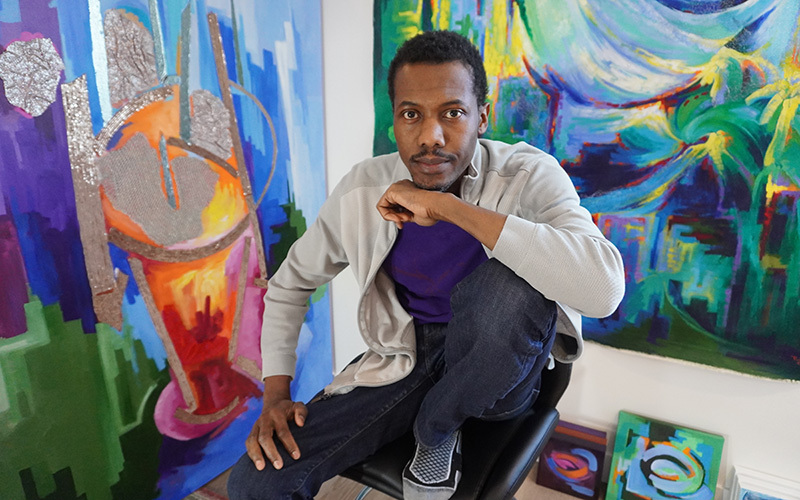
 With paint, reclaimed fabrics, and coffee grounds, Renold Laurent evokes the homeland he has left behind.
“Each canvas becomes a site of reconciliation, where fragments of history, identity, and inheritance are gathered and reassembled.”
In Featured Artist Renold Laurent's intense canvases, acrylic and oil paint join reclaimed fabrics and everyday materials like coffee grounds to summon memories of his past.
The Haitian artist, now based in the US, uses his paintings to evoke movement, migration, memory, and ancestral presence in a heady mix.
"Displacement reshaped my relationship to time, memory, and identity," he explains. "My studio practice emerged as a way to stabilize that instability."
Want to learn how Renold Laurent weaves these disparate threads together in a practice that is rooted in his personal history but still attuned to his contemporary experiences? Read on to find out, and hear his advice for artists looking to build their own sustainable art careers.
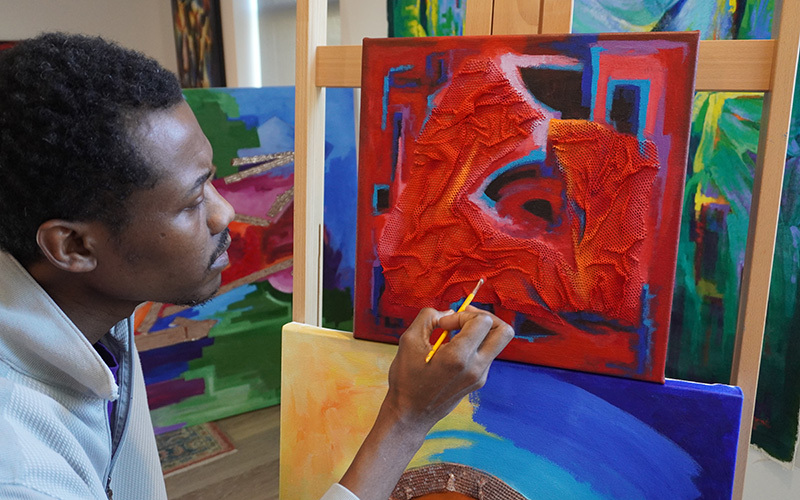 For Renold Laurent, his early life in Haiti is never far from his mind.
Memories of Haiti Animate All of Renold’s Paintings
As Renold was growing up in the village of Source Bretoux in Haiti, he first started painting through lessons from his artist father, an experience he still cherishes.
As he became more fascinated with the art-making process, he also soaked up the sights and sensations of his surroundings, making trips to the nearest big town—Jacmel—and to the capital in Port-au-Prince to deepen his artistic lexicon and improve his painting techniques.
Through careful study, he developed the way of working that he still uses to this day. “My creative process unfolds as a sustained dialogue between material, memory, and intuition,” he tells Artwork Archive. “Rather than beginning with a fixed plan, I start with an impulse—an object, texture, or color that carries meaning.”
Now that he has moved to Cambridge, Massachusetts, he cultivates his connection to these memories through his canvases. Those “saturated reds, solar yellows, and deep blues” that characterize his abstract paintings are now his way of recalling his homeland, of “importing Caribbean luminosity into my studio.”
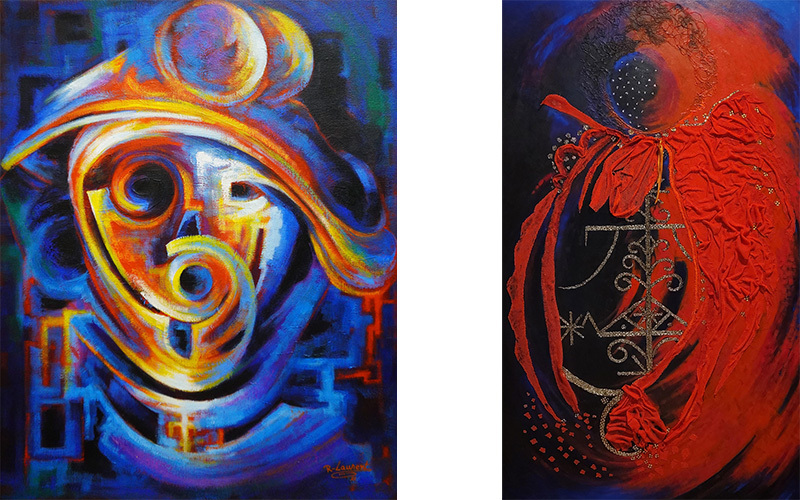 Renold Laurent, Hero 2, c. 2021, Acrylic On Canvas, 20 x 16 x 1.5 in, and Ogou Feray, 2023, Acrylic - Mixed Media on canvas, 60 x 36 x 1.5 in.
Your Art Should Draw From Your Own Life
When Renold starts working on a painting, “each choice is informed by what is already present, as well as by intuition and experience.” It’s a slow, deliberate process, but “over time, recurring themes—migration, ancestral presence, resistance—surface naturally through the interaction between material and process.”
He’s not afraid to move beyond traditional paints either, and a lot of his canvases contain some unconventional materials. He will often include scraps of reclaimed clothing, textiles, and other fabrics in his compositions: “Drawn from everyday garments, they bear traces of bodies, journeys, and displacement.”
There’s one material in particular that he feels especially connected to, and includes in many of his works. “Coffee grounds are deeply connected to daily life in Haiti—rituals, conversations, and economic history,” he shares. “They introduce a grounded, earthy spirituality that connects the work to soil, labor, and time.”
All of these traces of his childhood and young adulthood make their way into his work, but in his new environment they strike a note of longing.
“In New England, under a different light and pace of life, the fragments of my original culture grew sharper and more valuable precisely because they were no longer physically present,” he explains. “Distance turned them into necessities.”
Even as he looks forward with his work, pushing new boundaries and always experimenting with new techniques, Renold is proud of his homeland and his family’s history.
“Each canvas becomes a site of reconciliation, where fragments of history, identity, and inheritance are gathered and reassembled,” he explains. “In this sense, my Cambridge studio extends my father’s studio in Source Bretoux.”
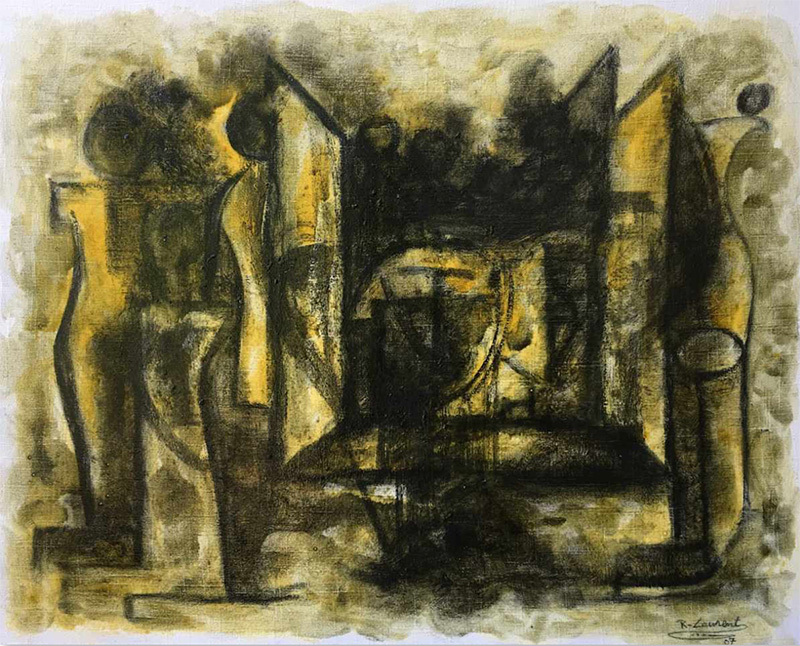 Renold Laurent, Family Reunion, 2007, Mixed Media on Canvas, 24 x 30 x 1.2 in.
Artists Can’t Afford to Neglect Their Administrative Tasks
Renold has exhibited his work in major institutions in the US and Europe, and he’s also collaborated with cultural institutions in Haiti to make sure his art is seen in the context that inspires it. He loves to share his creations, but mastering all the work that goes into presenting his art to the public didn’t come easily to him.
“Early in my career, I focused entirely on creation and neglected what came afterward,” he recounts. The process of painting was so important to him that when he finished a piece, he just wanted to start on the next one. He realized he wasn’t organizing his practice in a way that support his long-term growth as an artist.
“I lost track of works, overlooked dimensions and materials, and struggled to retrieve information when opportunities arose,” he recalls with regret. “Preparing for exhibitions or publications became a race against time.”
But being the resourceful artist that he is, Renold turned each of these challenges into lessons on how he could fix his struggling processes.
He found that even though he might convince himself that he would get around to filing away all the details about a piece, if he didn’t have a system that was easy to access and easy to update, he’d frequently lose vital information: “I learned that an undocumented artwork can easily disappear—from memory, from exhibitions, from future possibilities.”
If your artwork isn’t documented, and you don’t know where it lives in your studio, you might forget it even exists.
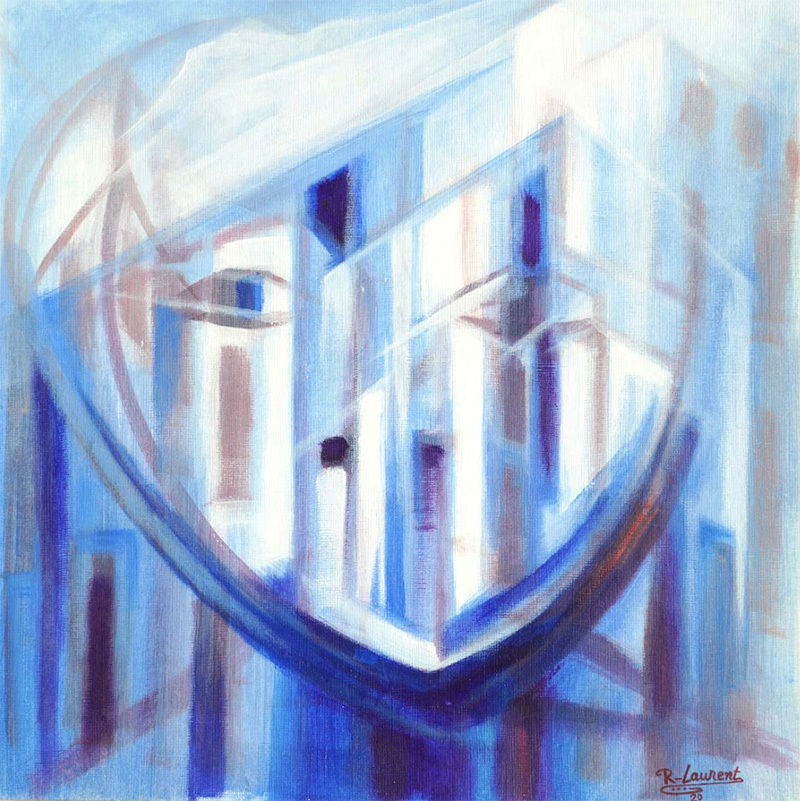 Renold Laurent, #01, Acrylic on paper, 12 x 12 x 0.1 in.
How Renold Uses Artwork Archive to Power His Art Business
Renold knew that something had to change if he was going to keep his practice expanding as he continued to grow as an artist: “The turning point came a few years ago, when my work began circulating more widely—through exhibitions, loans, sales, and international projects—I realized how much time I was losing searching for scattered information.”
He decided that the best way forward was to adopt a new identity when it came to his art admin: “An artist is also the archivist of their own legacy.”
Prioritizing his role as an archivist, he started setting aside time after every piece was finished to enter all the information that might be important for a future gallery show, collector acquisition, or his own artistic legacy. He developed routines where he could look back through his work and see how far he’d come with a certain process, or theme, or body of work.
The one remaining stumbling block was that he had no central place to organize his entire inventory. “My previous system—images stored across devices, scattered spreadsheets, paper folders—collapsed under pressure,” he remembers. “I needed a centralized, reliable database to support a professional and international practice.”
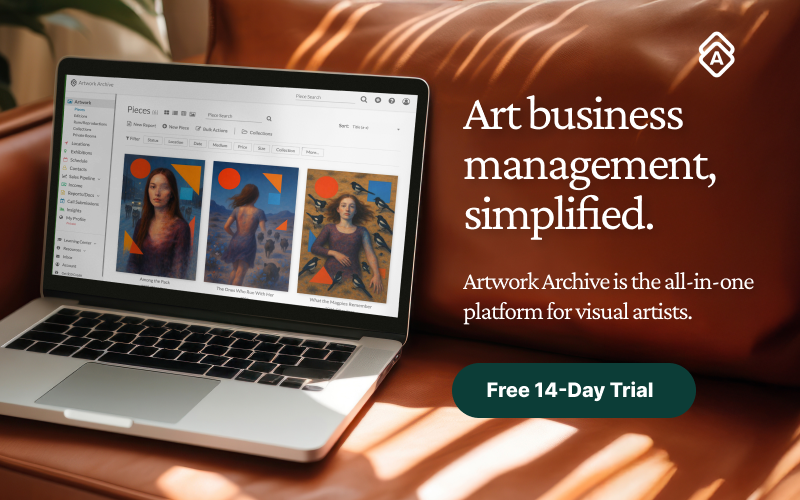
Then he discovered Artwork Archive. He liked that it combined several different functions into one easy-to-use software: it could replace his spreadsheets, image folders, paper records, even his list of galleries, curators, and collectors. It just seemed to check all the boxes of what a working artist needs to run their studio.
“I chose Artwork Archive because it is designed specifically for artists,” he shares. “It goes beyond inventory, allowing me to manage images, provenance, condition, location, and exhibition history in one place.”
Switching to Artwork Archive has made it so much easier for him to breeze through art admin, allowing him to get back to painting as soon as possible.
“While this administrative work is not glamorous,” he laughs, “it is essential for professional credibility and for protecting the long-term integrity of one’s practice.”
Your Art Inventory Is the Backbone of Everything Else You Do As An Artist
When Renold switched to Artwork Archive, he discovered just how easy art admin can be.
If you're still struggling with messy spreadsheets, missing image files, and paper records that never seem to be where you left them last, try Artwork Archive free for 14 days to see how the art inventory system designed for artists could streamline your art business admin.
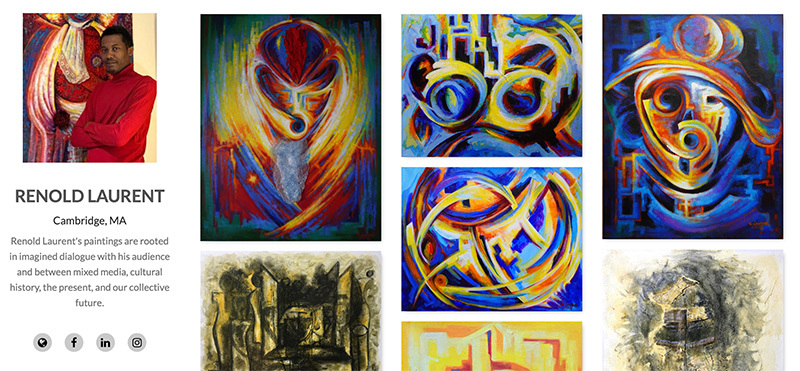 Check out Renold's Public Profile to see how he uses Artwork Archive to present his work professionally to the world.
Renold’s Favorite Artwork Archive Features
Now that Renold has his inventory running smoothly in Artwork Archive, he has started to discover just how useful a Digital Inventory Management system can really be.
“My favorite feature is the customizable Dashboard combined with intelligent reporting,” he offers. “On a weekly basis, I upload works into Artwork Archive, entering detailed information—dimensions, materials, year, and conceptual notes.”
It’s an easy way to steadily keep track of his studio, and Renold also likes to treat it as a kind of ritual: “This process feels like formalizing the birth of a work within my archive.”
Since he now has his full inventory going back years, he can use Artwork Archive to present curated selections of his varied and extensive archive.
“I create a private Collection for ongoing projects, allowing me to group potential works and experiment with sequencing,” he explains. “When preparing an exhibition or proposal, the Dashboard becomes my command center, giving me an immediate overview of availability, scale, and exhibition history.”
He loves Artwork Archive’s Reports functionality, allowing him to present thoughtfully designed PDFs for some of the most common documents that artists need to run their businesses: “I can quickly generate professional inventory lists or certificates of authenticity, tasks that once took hours.”
Being able to create an invoice within seconds, print out shipping address labels, include a Consignment Report in his shipment, and get on with his day is something he especially values. Artwork Archive, he says, “transformed my relationship to the business side of my work and freed my mental space for creation.”
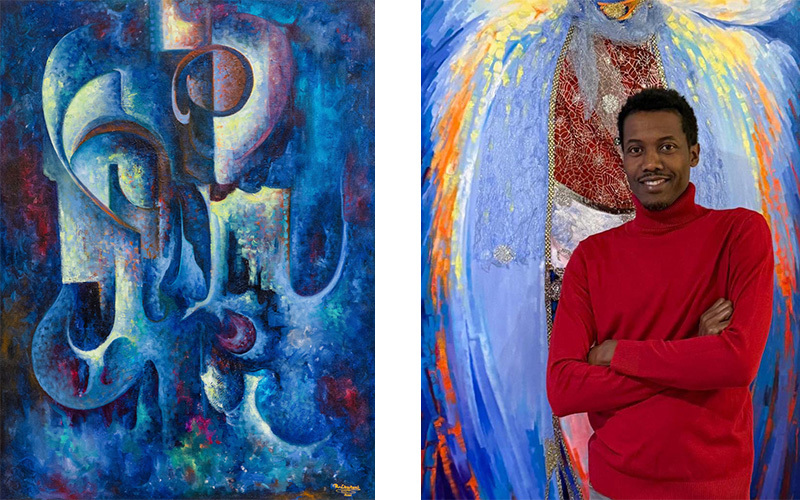 Renold Laurent, Maternity 1, 2001, Oil On Canvas, 40 x 30 x 1.2 in, and Renold in his Cambridge studio.
Renold’s Advice to Artists Looking to Build Sustainable Careers
When Renold decided to become the archivist of his own works, he was making a conscious investment in the future of his practice. He knew he wanted to be an artist for the rest of his life, and he wanted to create a mindset that could allow his art business to thrive: “The most important shift is moving from ‘I create objects’ to ‘I cultivate a practice and a dialogue.’
This mindset shift allows artists to think of whatever they’re currently working on in the studio as part of the much longer arc of their career. Even if a process or project seems like it’s leading you nowhere, there’s no such thing as wasted time in the studio: “A career is not defined by a succession of sales, but by the continuous deepening of research and vision.”
Ultimately, Renold has been able to create the artistic life he has today by developing a unique voice, staying committed to it, and building the support systems he needs to ensure his work is documented and shared with the world. His advice to other artists seeking to do the same is simple: “Study continuously, document your work from the beginning, and build a strong archive. Authenticity, consistency, and care for your practice will support long-term growth.”
No matter where you are in your art journey, getting your business side in order doesn’t have to feel overwhelming. A bit of structure now can mean more time and headspace for the work you actually want to be doing.
Artwork Archive helps artists build an online portfolio, stay on top of their inventory, and create things like tear sheets and invoices in just a few clicks. Start a free trial and see how it fits into your own process.