
- Josiah Wedgwood
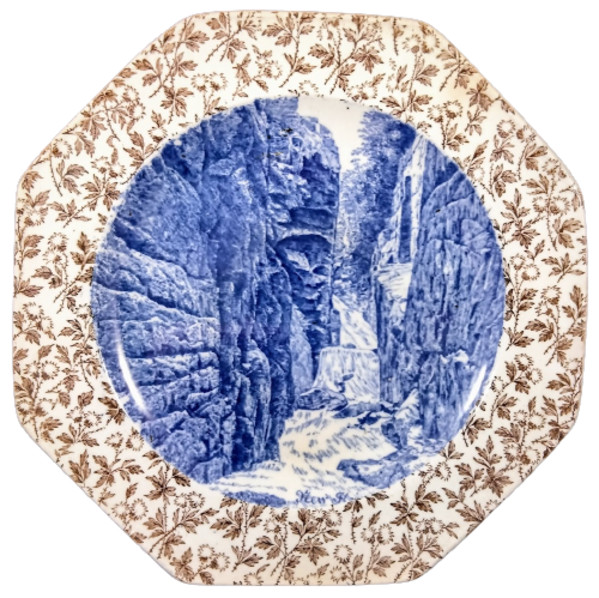
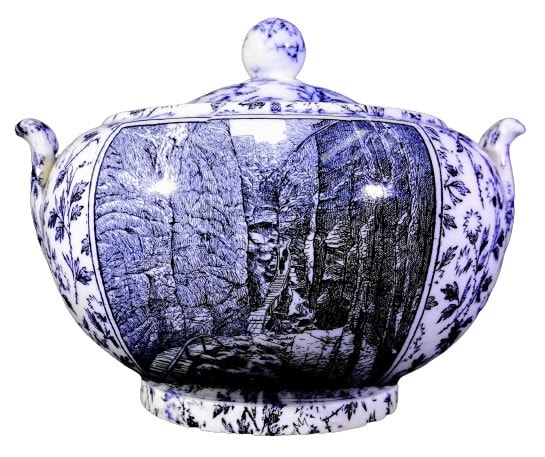
- Unnamed (Canyon Walkway), c. 1885
- Earthenware
- 5 x 4 in (12.7 x 10.16 cm)
-
Not For Sale
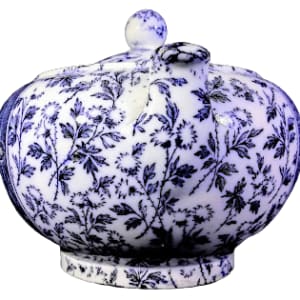
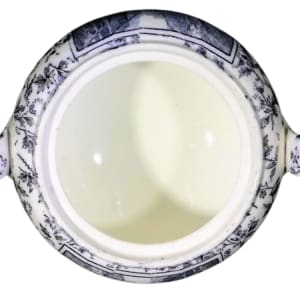
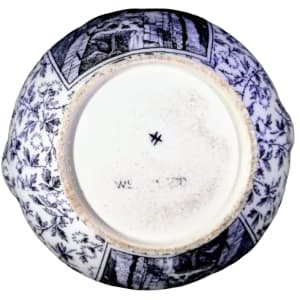
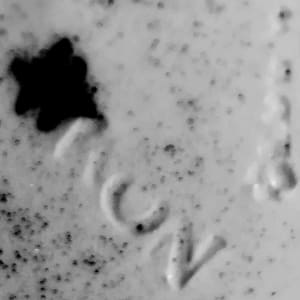
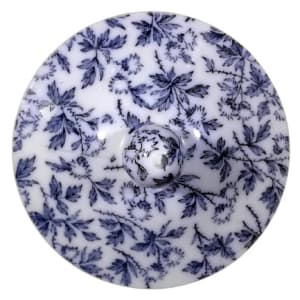
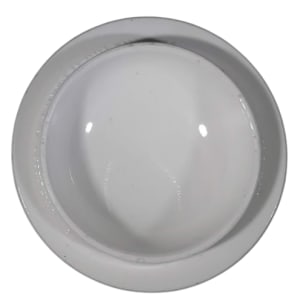
Sugar bowl, 5 x 4 inches (12.7x10.2cm). Printed maker's mark for Wedgwood. The three-letter code seems to end in an 'N,' which would date the production of this sugar bowl to 1885. This seems likely, as the floral sheet pattern around the images is Wedgwood's 'Pompadour' diaper, which appeared on wares in the 1880s. The same image appears on both sides and features a tall, narrow canyon with an undulating wooden walkway hugging one side. Two figures walk away from the viewer in the distance.
Josiah Wedgwood was born in Burslem, Staffordshire, on July 12, 1730, into a family with a long tradition as potters. At the age of nine, after the death of his father, he worked in his family's pottery. In 1759 he set up his own pottery works in Burslem. There he produced a highly durable cream-colored earthenware that so pleased Queen Charlotte that in 1762 she appointed him royal supplier of dinnerware. From the public sale of Queen's Ware, as it came to be known, Wedgwood was able, in 1768, to build near Stoke-on-Trent a village, which he named Etruria, and a second factory equipped with tools and ovens of his own design. At first only ornamental pottery was made in Etruria, but by 1773 Wedgwood had concentrated all his production facilities there. During his long career Wedgwood developed revolutionary ceramic materials, notably basalt and jasperware. After Wedgwood's death in Etruria on January 3, 1795, his descendants carried on the business, which still produces many of his designs.
- Subject Matter: Aesthetic (Vignette)
- Collections: Aesthetic Transferware, Josiah Wedgwood