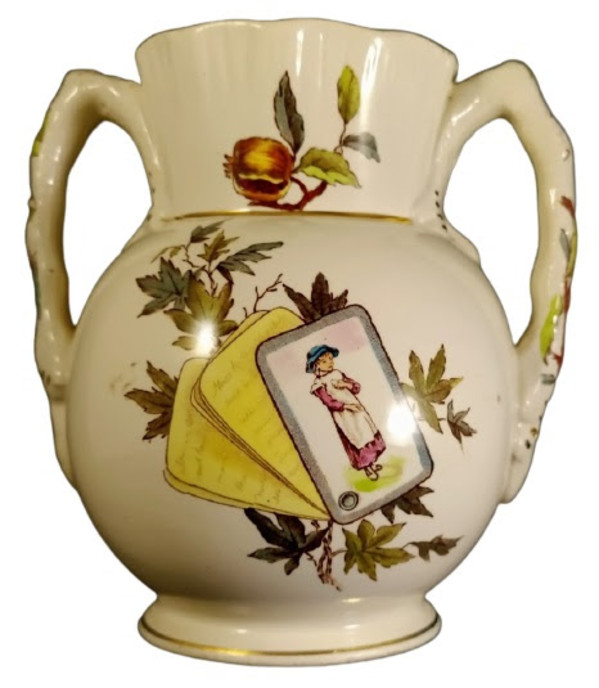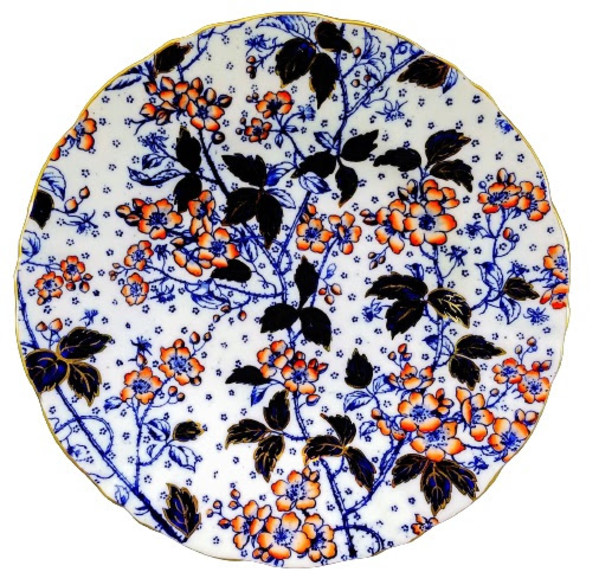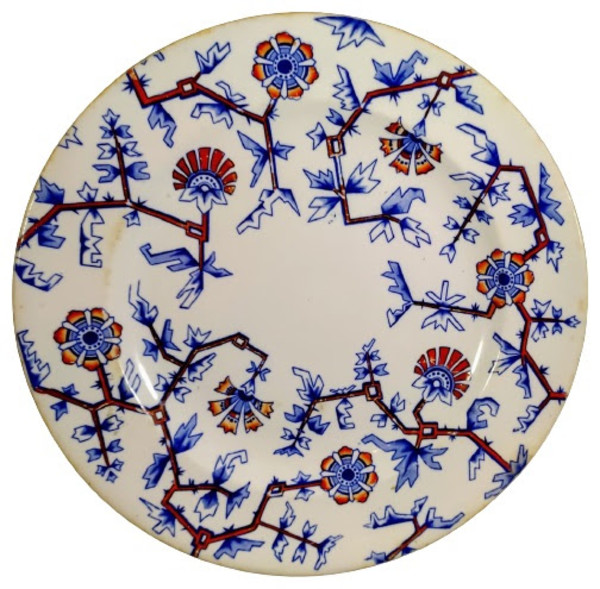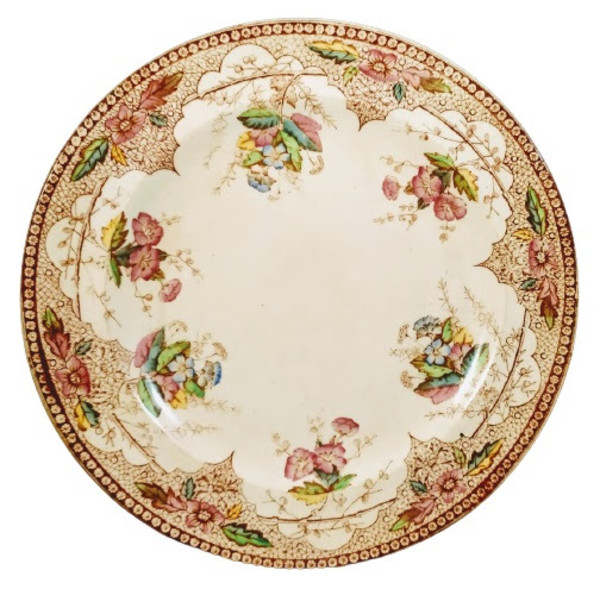

- J. F. Wileman
- Pippin, c. 1869-1890
- Earthenware
-
Not For Sale
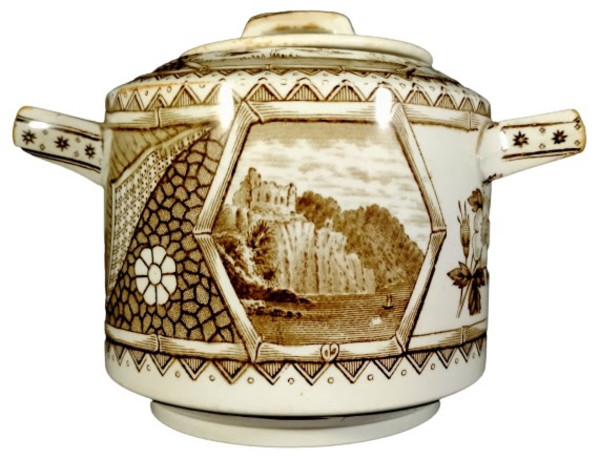
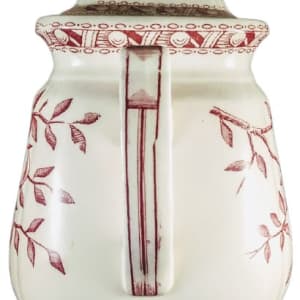
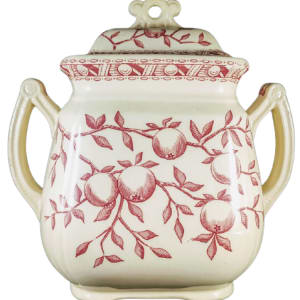
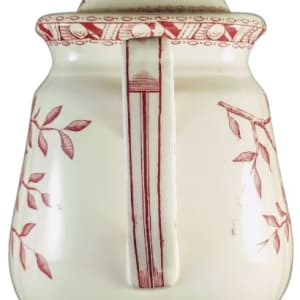
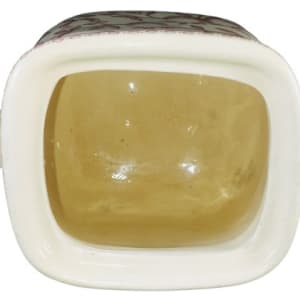
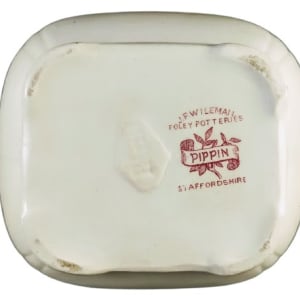
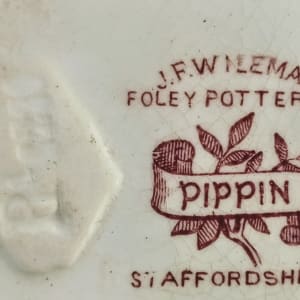
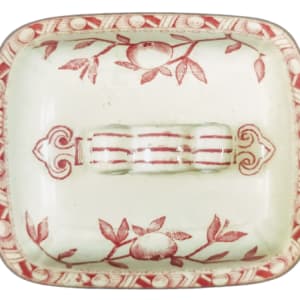
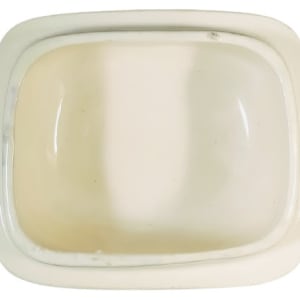
Sugar bowl, red transfer. Printed maker's mark for J. F. Wileman. The impressed diamond shape registry is illegible. This pattern, as the name "Pippin" suggests, features a branch of apples on either side. The lid features a smaller branch with apples along both long sides. The lid and body handles are decorated with simple lines. The border around the body and lid rims features a band with a repeating geometric motif consisting of circles, horizontal and diagonal lines, bordered on top and bottom with pointed ovals.
The Foley Potteries took their name from the Foley family who owned property in the neighborhood. They were built by John Smith of Fenton Hall about 1820. The first firm by whom they were worked was Elkin, Knight & Bridgwood. On the retirement of the latter, the style was changed to Knight & Elkin and subsequently (on the retirement of Mr. Elkin) to J. K. Knight alone, until 1853, when he was joined in partnership by the late Henry Wileman, wholesale china dealer, of London, the style being Knight and Wileman. On the retirement of Mr. Knight until his death in 1856, Mr. Wileman carried on the works alone until 1864, when his two sons succeeded him as J. & C. Wileman. In 1866 the partnership was dissolved, and from that time the business belonged to James F. Wileman. The goods produced were the usual granite ware, printed wares, lustres, Egyptian and shining black, and cream-colored wares. All of these were of the ordinary classes for household use and the great bulk of the trade was exported to the States, Panama, Australia, South Africa, Ceylon, Java, and India. The firm of Wileman & Co. was in business at the Foley Pottery, Fenton, Staffordshire from c. 1892 to 1925, when they were renamed Shelley.
- Subject Matter: Aesthetic (Floral & Botanical)
- Collections: Aesthetic Transferware, J. F. Wileman