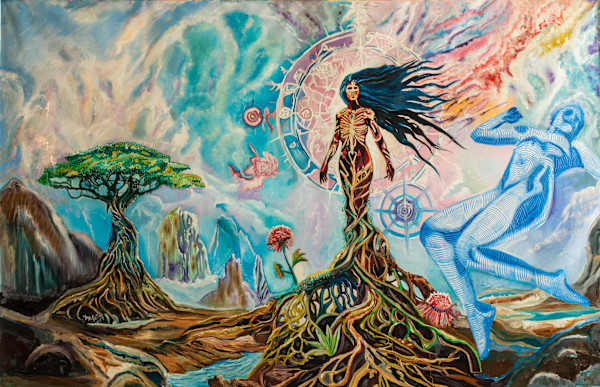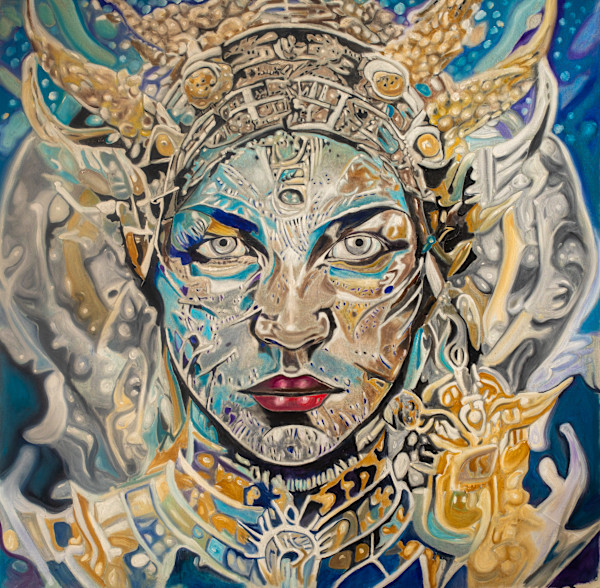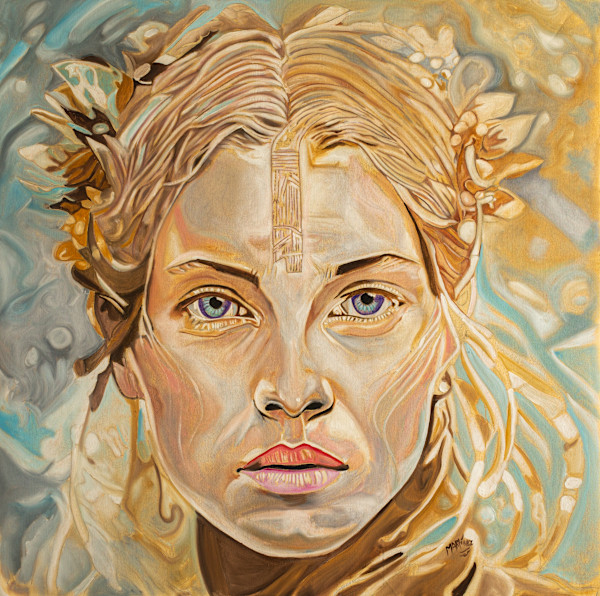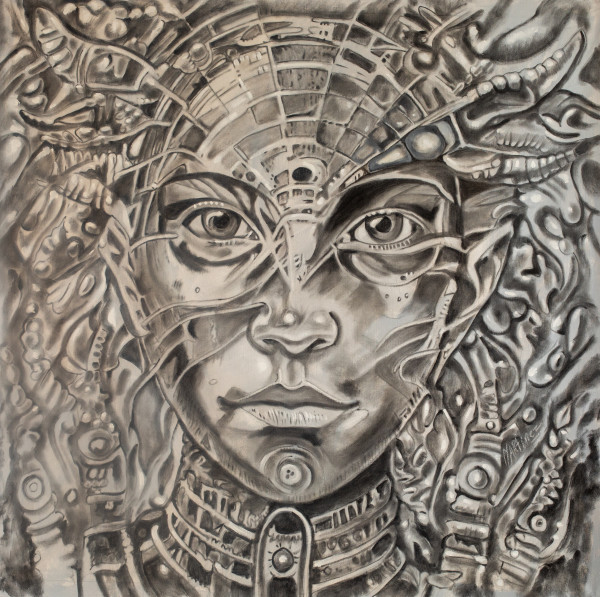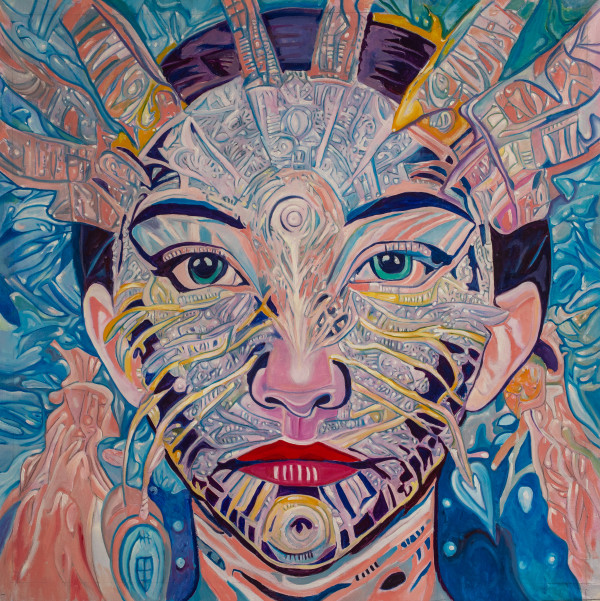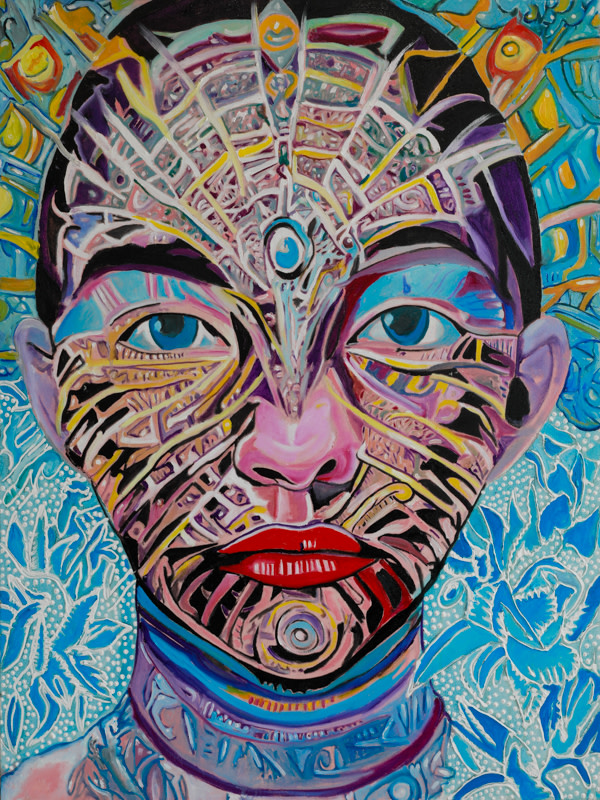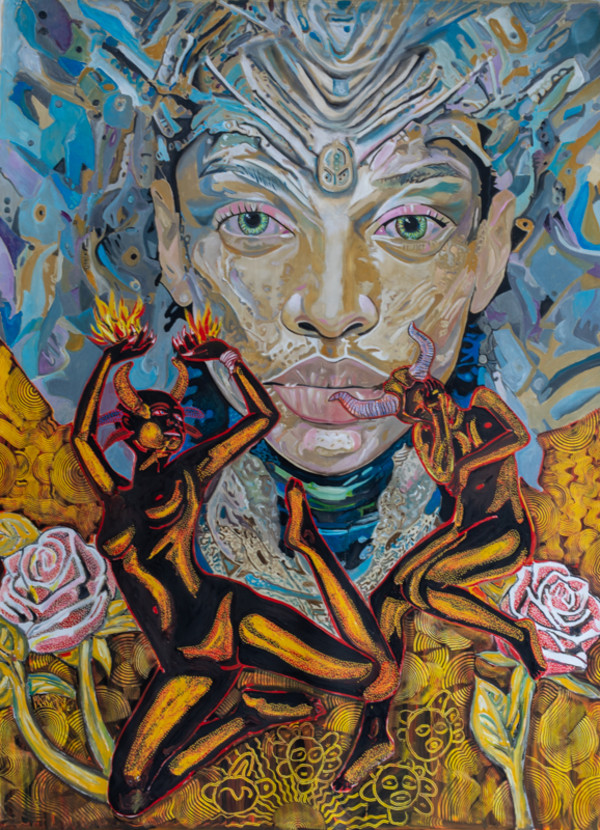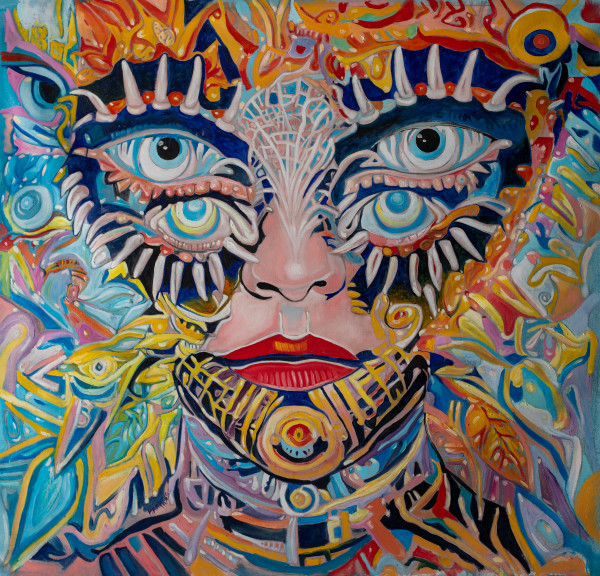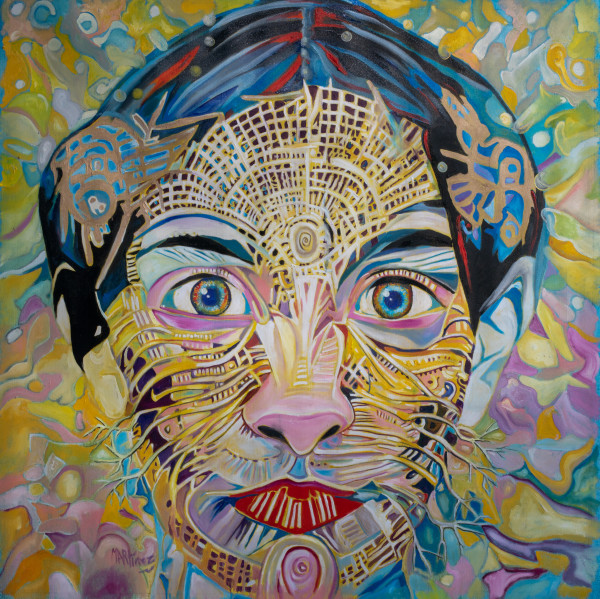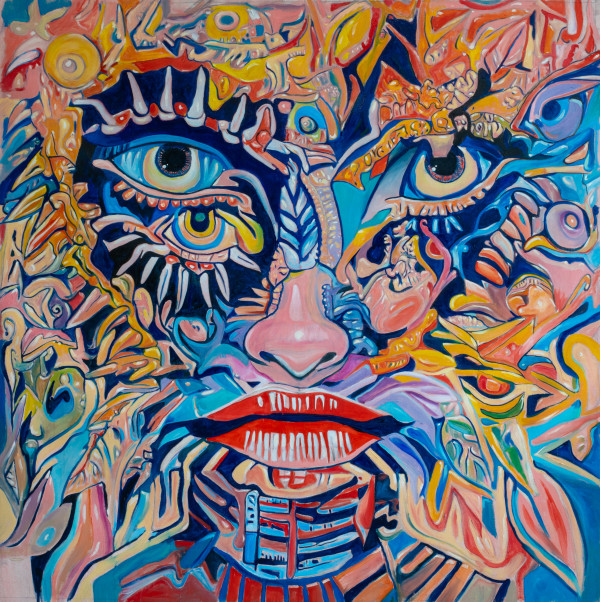

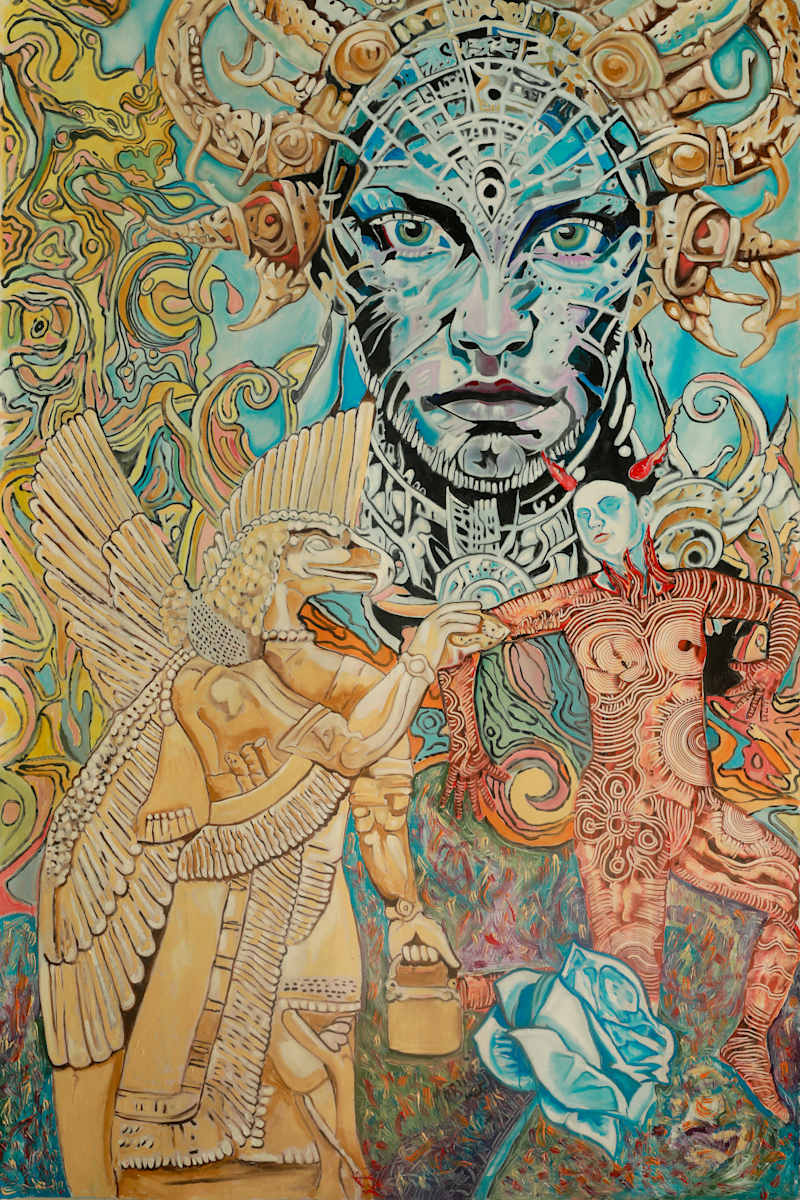
This painting is a mesmerizing fusion of ancient cultural symbols and mystical themes, drawing from a broad tapestry of historical influences to create a deeply layered, spiritual composition. The central figure, with a solemn and penetrating gaze, is adorned with a complex pattern of sacred geometry and symbols that evoke cosmic harmony. The geometric patterns and labyrinthine designs across the face echo traditions of sacred geometry, an artistic and spiritual tool used across civilizations to represent the universe's underlying order and interconnectedness. This intricate detail calls to mind both mandalas and the visionary aesthetics of shamanic artwork, suggesting the central figure as a spiritual intermediary—an entity bridging the earthly and divine realms.
The headdress of the central figure is particularly striking, resembling a crown made of horns, shells, and bone-like structures that bring to mind the ceremonial headdresses worn by deities and royalty in ancient Mesopotamian and Sumerian cultures. These cultures frequently used horned headdresses to signify divinity and power, and here, the artist seems to draw on these historical motifs to endow the figure with an otherworldly authority. The use of horns not only recalls ancient mythological traditions but also speaks to the artist's engagement with archetypal symbols of wisdom and guardianship that transcend time and place. By invoking these forms, the painting alludes to the timeless reverence held for the divine across cultures.
To the left of the central figure stands a winged creature reminiscent of the *lamassu*, a protective spirit in Mesopotamian art. The *lamassu* was a hybrid guardian deity, often depicted with the body of a bull or lion, wings of an eagle, and a human head. Here, this ancient protective figure reaches out with a gesture that suggests an offering or blessing, symbolizing the bestowal of wisdom or spiritual power. This imagery connects the painting to rituals of guardianship and invokes the protective spirits of ancient temples and palaces, reinforcing the painting’s sacred atmosphere. The gesture of the *lamassu* figure also hints at the concept of an initiation, inviting the viewer to enter a space of spiritual or mystical insight.
On the right side of the composition, we see a figure with intricate, tattoo-like markings that evoke indigenous body art from Mesoamerican and Polynesian traditions. Tattoos in these cultures often held profound spiritual and social significance, marking rites of passage or embodying protective powers. The body art on this figure suggests a transformative process, perhaps symbolizing rebirth, initiation, or a deep connection to ancestral knowledge. The figure’s posture, poised yet introspective, contrasts with the central face’s direct gaze, highlighting a narrative of inner transformation and self-discovery.
At the bottom of the painting, a blue flower emerges—a symbol commonly associated with purity, enlightenment, and the transient nature of life. In various spiritual traditions, blue flowers, like the lotus in Eastern philosophies, signify transcendence and the pursuit of wisdom. The flower's placement beneath the central figure represents a grounding force, anchoring the spiritual and mythical elements of the painting in the natural world. It also serves as a reminder of the fragility of human life and the continuous cycles of growth, decay, and renewal that define existence.
The painting weaves together multiple layers of history, mythology, and mysticism. Through its fusion of sacred geometry, ancient deities, and symbolic motifs, it functions as a contemporary homage to the universal human quest for understanding the mysteries of existence. The artist’s incorporation of these historical symbols invites viewers into a timeless exploration of spirituality, transformation, and cosmic order, reflecting the enduring human desire to connect with the divine and understand one’s place in the cosmos. This work transcends mere representation, becoming a portal into the ancient and the mystical—a visual meditation on the sacred and the eternal.
- Subject Matter: FIGURE