
Dr Rangihiroa Panoho
Auckland, AUCKLAND
My visual practice grows out of my background as a Foundational Māori Curator & Māori Art Historian .
Message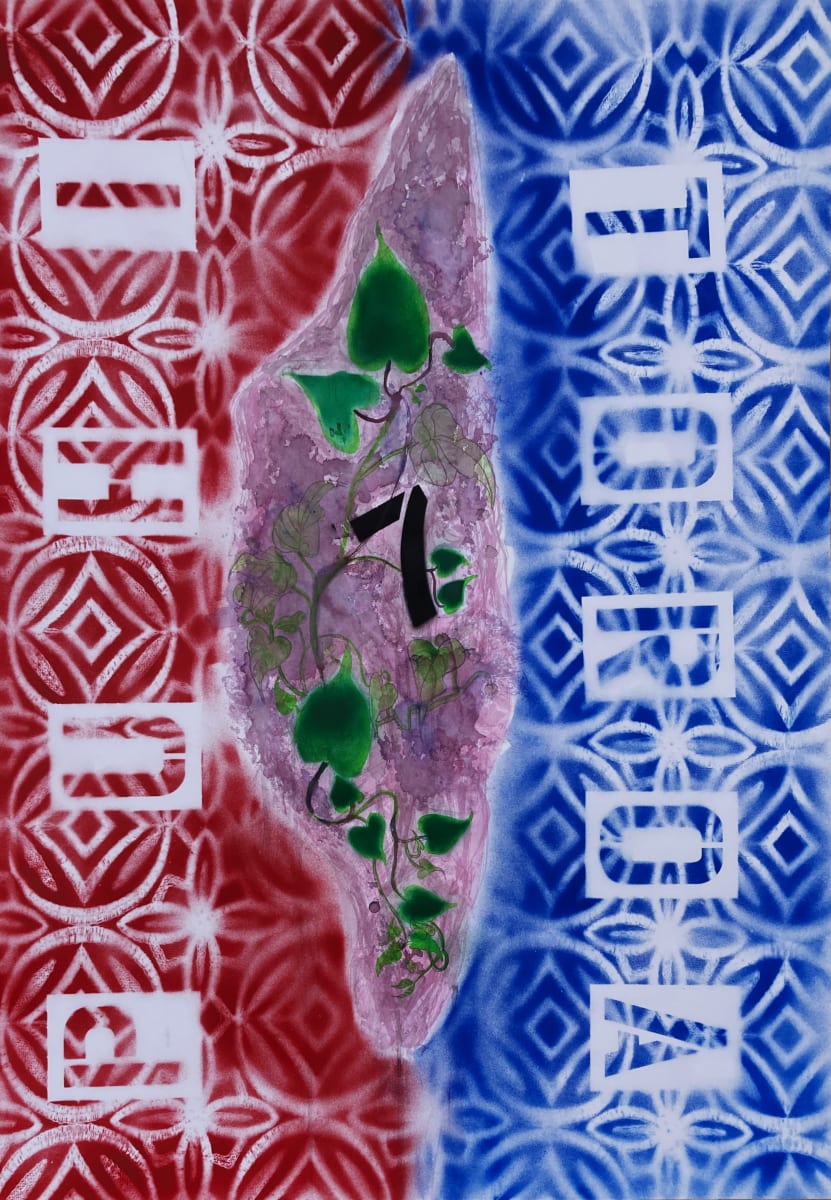
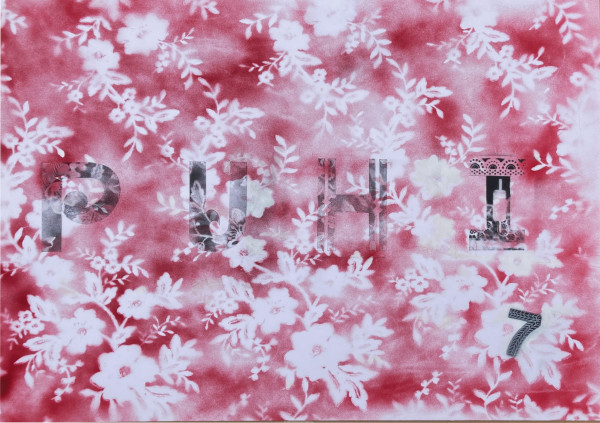
What is it that causes conflicts amongst family members? It seems unusual today describing the importance of the kūmara plant in the dispute between Toroa and Puhi. However, at the time growing, maintaining, accumulating and storing the root crop was perhaps one of the most important assets of a tribe and an indication of its wealth, status and propensity for survival. Being given the responsibility of conducting rituals around the kūmara acknowledged the seniority, power and status Toroa was being afforded by his community over his younger brother Puhi Moana Ariki.
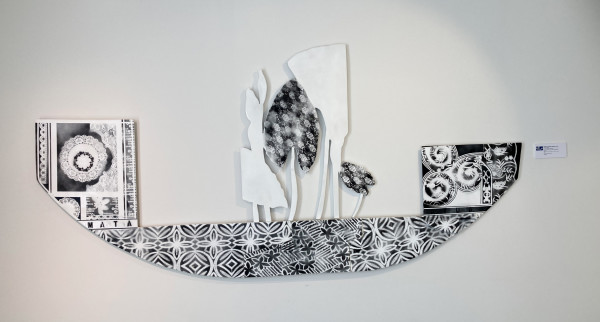
There may also have been an element of jealousy with Puhi resenting Toroa being invested with the special privileges connected with karakia for planting. The kūmara therefore sits central in the composition and the reference to 7 or whitu marama 'seven lunar cycles' taken to plant and harvest the crop gave more than enough time for the conflict between the brothers to brew and escalate to such a stage that one member inevitably had to leave his family. Stories involving departures from Hawaiki often involve family, community or intertribal conflicts usually connected with disputes over land, food resources, women and chieftainship or status.
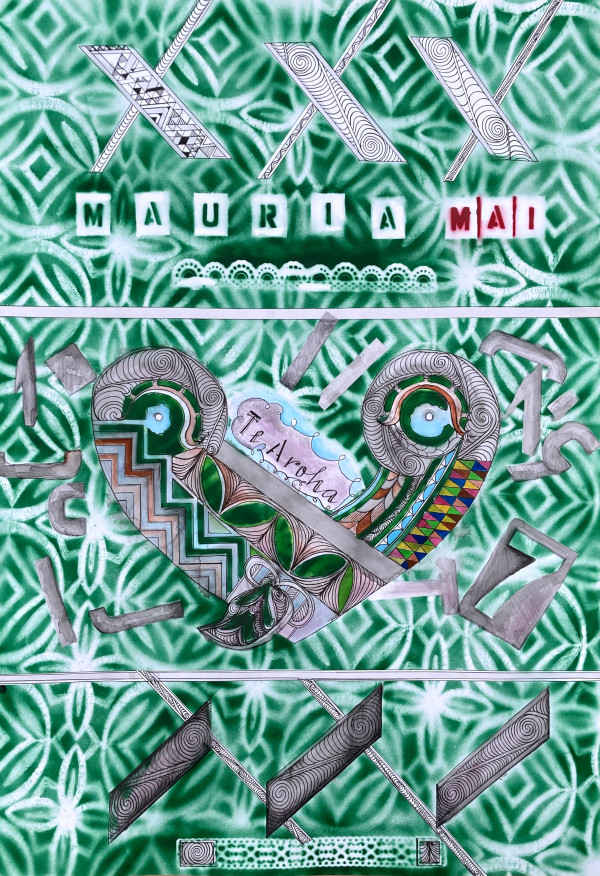
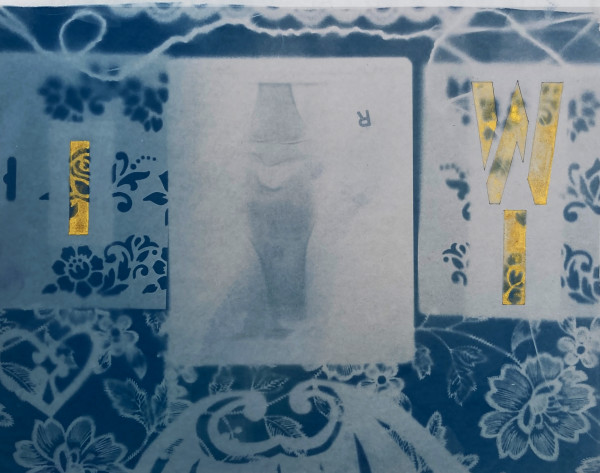
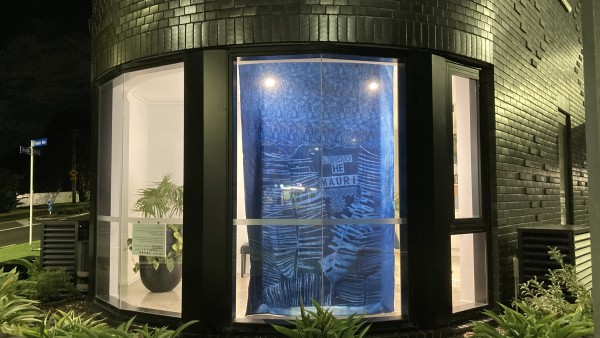
Compositionally blue and red make purple, one might say that regardless of the individual status of these tūpuna they are still cut from the same cloth. The wider confederation of Mataatua is still recognised by the descendant iwi Ngai Tūhoi, Ngāti Awa, Whakatohea and Ngā Puhi as a founding waka and therefore as a connecting point. One might say this wānanga definitely has its own mauri.
- Subject Matter: Wānanga 'Maori tribal narrative', Maori art,