- Josiah Wedgwood
- Panama, c. 1882
- Earthenware
- 5 x 5 in (12.7 x 12.7 cm)
-
Not For Sale
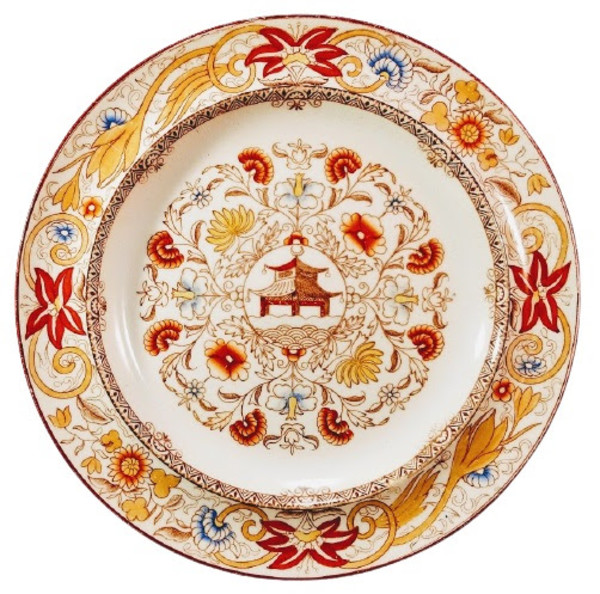
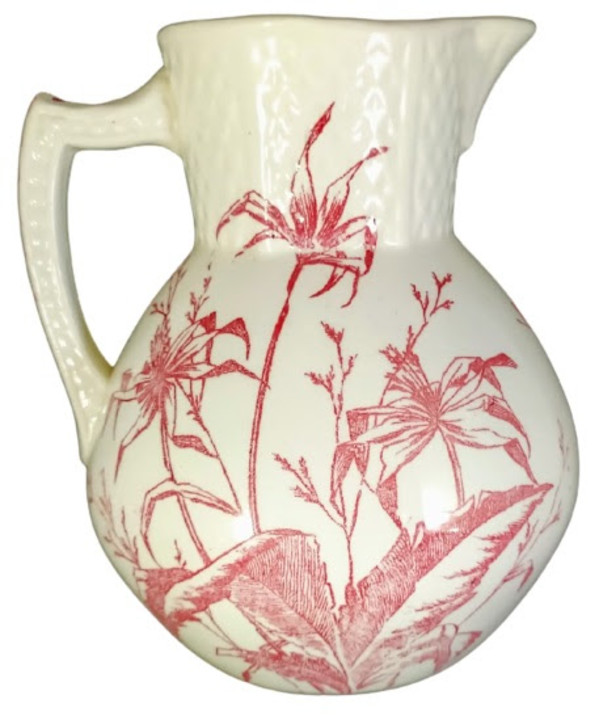
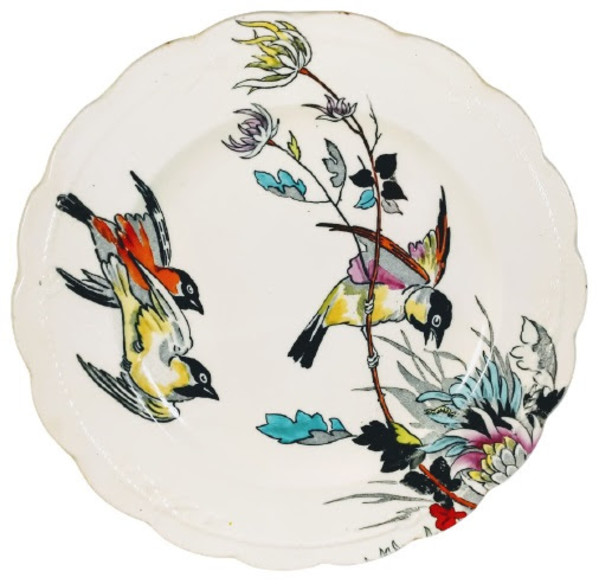
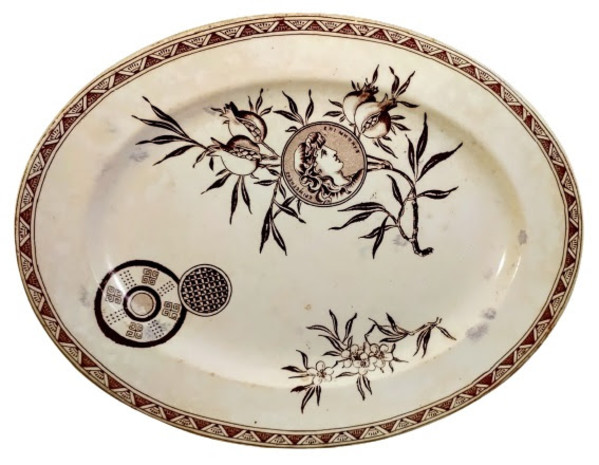
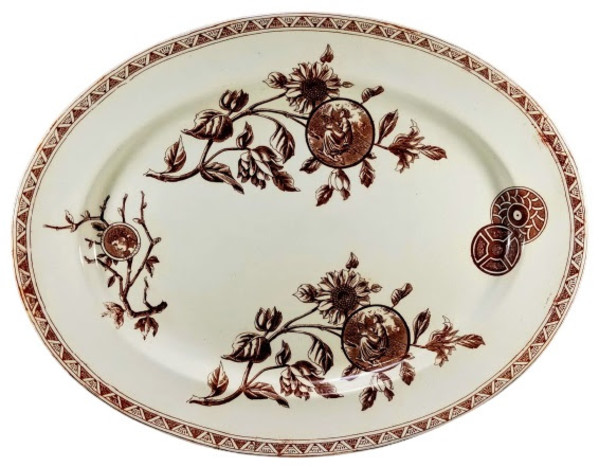
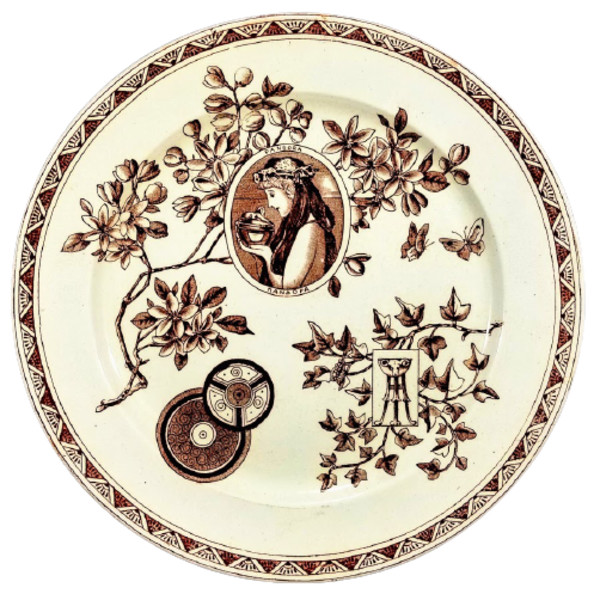
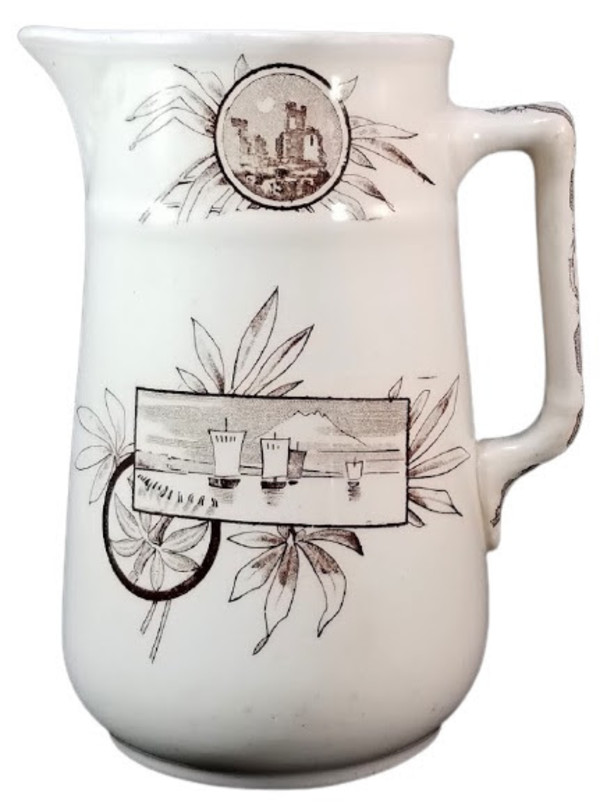
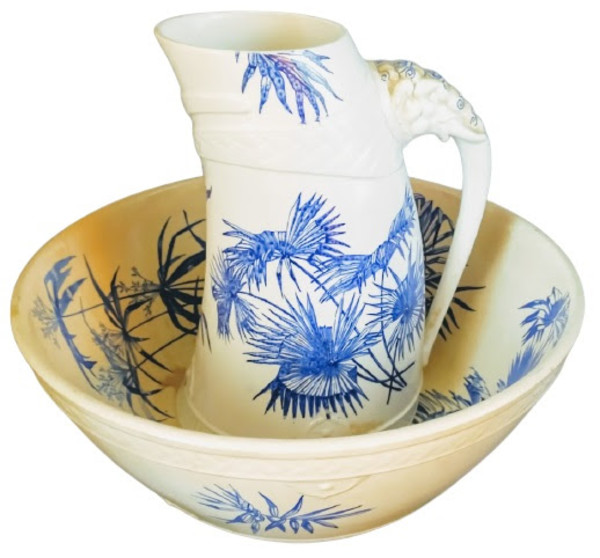
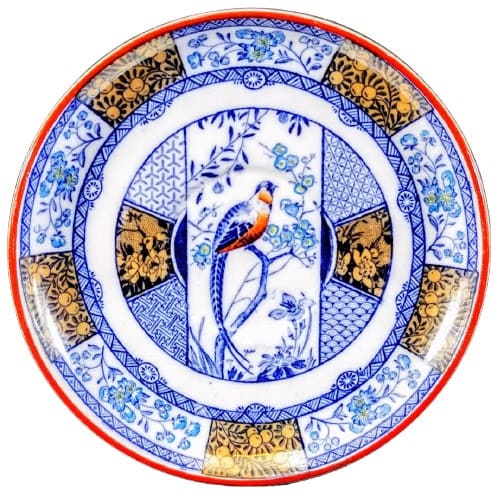
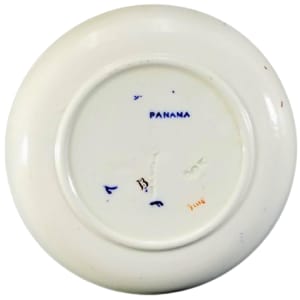
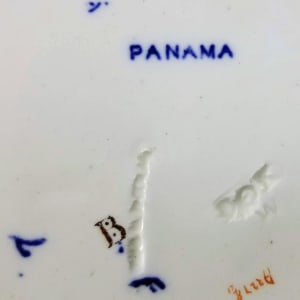
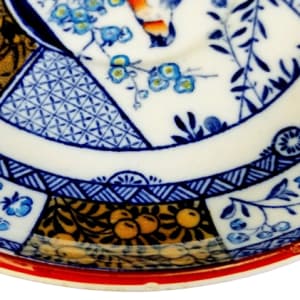
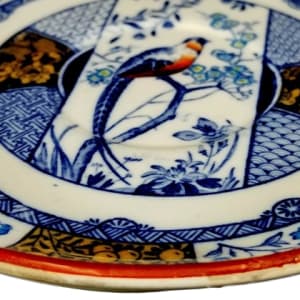
Saucer, 5 inches diameter. Blue transfer with polychrome clobbering. Impressed maker's mark for Josiah Wedgwood. The impressed three-letter code indicates a manufacture date of 1882. This pattern is a complex composition of cartouches that form the central image. A broad rectangular cartouche extends from top to bottom of the well and contains a large bird on a flowering branch. Framing this central band are two semi-circular cartouches and alternating sections of geometric patterns and flowers. The outer border consists of alternating bands of oranges with flowers and flowers on white background.
Josiah Wedgwood was born in Burslem, Staffordshire, on July 12, 1730, into a family with a long tradition as potters. At the age of nine, after the death of his father, he worked in his family's pottery. In 1759 he set up his own pottery works in Burslem. There he produced a highly durable cream-colored earthenware that so pleased Queen Charlotte that in 1762 she appointed him royal supplier of dinnerware. From the public sale of Queen's Ware, as it came to be known, Wedgwood was able, in 1768, to build near Stoke-on-Trent a village, which he named Etruria, and a second factory equipped with tools and ovens of his own design. At first only ornamental pottery was made in Etruria, but by 1773 Wedgwood had concentrated all his production facilities there. During his long career Wedgwood developed revolutionary ceramic materials, notably basalt and jasperware. After Wedgwood's death in Etruria on January 3, 1795, his descendants carried on the business, which still produces many of his designs.
- Subject Matter: Aesthetic (Cartouche)
- Collections: Aesthetic Transferware, Josiah Wedgwood